
Some people reach a point where the pattern becomes painfully familiar. They stop using for a while, start to feel hopeful, then a smell, an argument, a lonely night, or a memory hits hard, and the urge comes roaring back. From the outside, it can look like a lack of discipline. From the inside, it often feels like being pulled by something deeper that words alone haven't touched.
That deeper layer is often trauma, stress, or an old emotional wound that the nervous system still treats like a current threat. For many people, substances didn't begin as a search for chaos. They began as a way to quiet panic, numb shame, sleep, feel normal in social situations, or escape memories that never fully settled.
That's where EMDR and addiction often connect in a meaningful way. EMDR, short for Eye Movement Desensitization and Reprocessing, is a structured therapy that helps the brain process experiences that feel stuck. It isn't a magic fix, and it isn't the whole treatment plan. But for people whose addiction is tied to trauma, it can become one of the missing pieces that finally makes recovery feel possible.
The Unseen Link Between Addiction and Trauma
A person can work hard at recovery and still feel trapped. They may attend therapy, promise loved ones they're done, and they mean it. Then a body memory shows up. A flash of fear. A wave of shame. A sudden sense of emptiness. The brain reaches for the fastest relief it knows.
That's one reason addiction can feel so confusing. The problem isn't always the substance alone. Sometimes the substance has been acting like a temporary shield against pain the person never had the support to process.
Trauma doesn't always look dramatic from the outside. It can include obvious events, but it can also involve repeated neglect, emotional abuse, chronic instability, or experiences that taught the nervous system to stay on alert. When those experiences remain unresolved, recovery can feel like trying to build a house on shifting ground.
For readers who want a clearer picture of how these conditions overlap, Addiction Resource Center LLC on PTSD treatment offers a useful overview of the relationship between trauma symptoms and substance use. A related look at PTSD treatment options can also help explain why trauma-informed care matters so much in addiction recovery.
When relapse is really a trigger response
A simple example helps. Someone gets into an argument with a partner and suddenly feels the same fear they used to feel in a chaotic home. Another person walks past a place tied to a painful memory and their chest tightens before they even know why. In both cases, the substance can start to feel less like a choice and more like an emergency tool.
EMDR is often helpful when a person says, “I know using is hurting me, but something in me still goes there when I'm overwhelmed.”
EMDR offers a different path. Instead of only focusing on stopping the behavior, it helps address the emotional charge underneath it. That matters because many people don't need more shame. They need help processing what their system has been trying to survive all along.
What Is EMDR and How Does It Work
EMDR can sound mysterious until it's explained clearly. A useful analogy is a messy filing cabinet. Most experiences get stored away in the brain in an orderly way. A person remembers them, learns from them, and moves on. But traumatic or overwhelming experiences can get stuck. Instead of being filed away, they stay loose in the system, ready to spill out when something reminds the brain of danger.
EMDR helps the brain sort and store those stuck experiences so they're no longer running the show in the present.
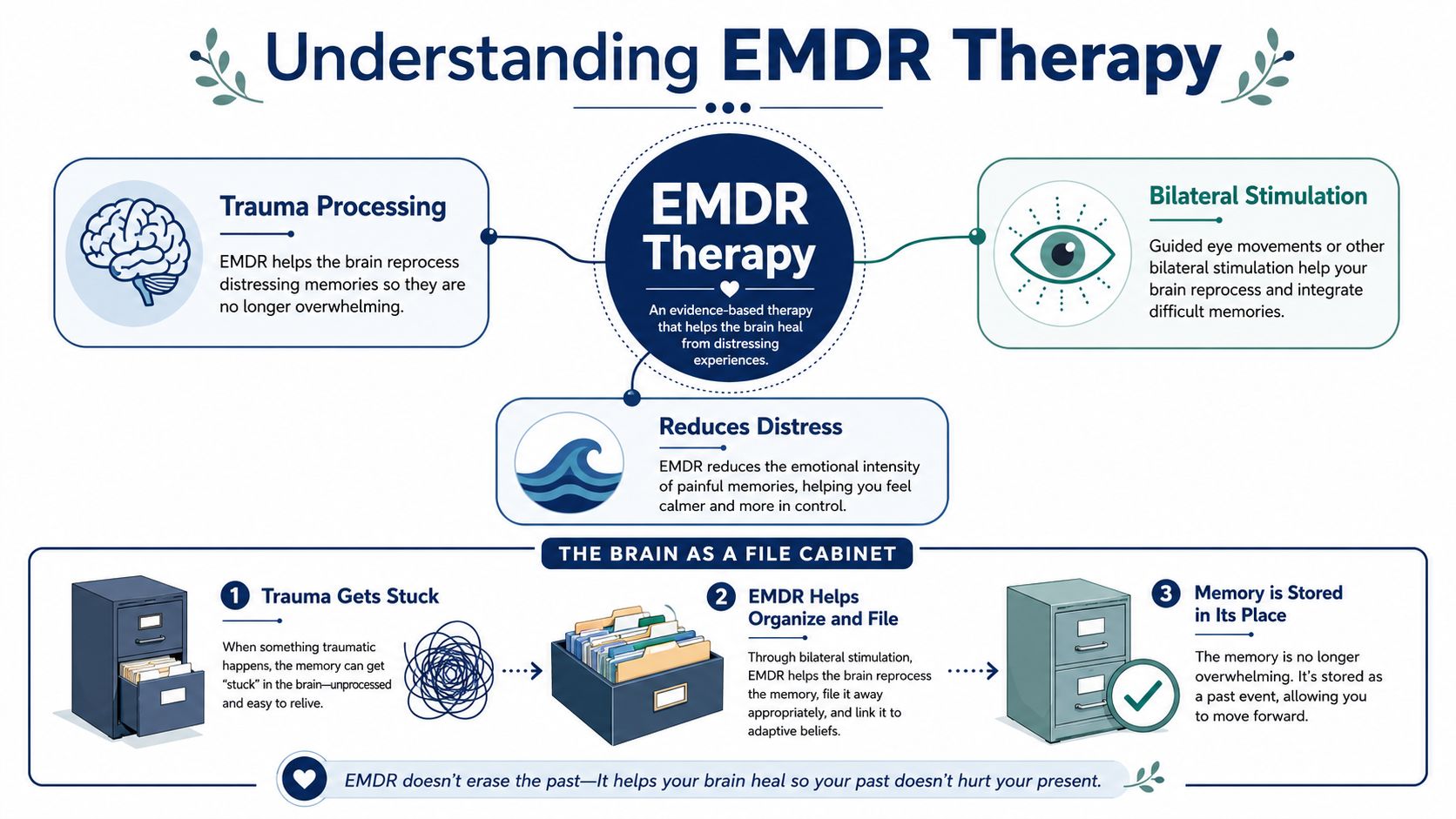
The basic idea behind EMDR
The therapy is based on the idea that the brain has a natural ability to heal and process difficult experiences when the right conditions are in place. In EMDR, a therapist helps the client bring up a memory, belief, sensation, or trigger in a careful and contained way. While doing that, the client uses bilateral stimulation, which may involve guided eye movements, tapping, or alternating sounds.
According to this overview of EMDR therapy for addiction, EMDR for addiction follows a structured eight-phase protocol that uses bilateral stimulation to support adaptive information processing of unresolved trauma. That same source explains that the Desensitization and Body Scan phases are central to reducing the emotional intensity of triggering memories.
What the eight phases look like in plain language
A full EMDR course isn't just “thinking about trauma while moving the eyes.” It's organized and paced. At a high level, the process usually includes:
- History gathering. The therapist learns about trauma history, substance use, triggers, strengths, and current stability.
- Preparation. The client builds coping tools and learns how to stay grounded.
- Assessment. A target memory or trigger is chosen, along with the negative belief connected to it.
- Desensitization. Bilateral stimulation is used while the memory or trigger is processed.
- Installation. A healthier belief is strengthened.
- Body scan. The client notices whether distress still shows up physically.
- Closure. The therapist helps the client leave the session feeling stable enough for daily life.
- Reevaluation. Progress is checked over time.
What confuses many people
Some people worry EMDR means losing control. It doesn't. The client stays awake, aware, and able to pause at any time.
Others think they'll need to retell every painful detail. Usually, they don't. EMDR often works without long, graphic storytelling. The focus is less on explaining everything and more on helping the brain finish processing what got stuck.
Practical rule: Good EMDR moves at the speed of the nervous system, not the speed of pressure.
That's especially important in addiction treatment, where safety, pacing, and stabilization come first.
How EMDR Helps Break the Cycle of Addiction
A relapse often starts long before a substance is in someone's hand. It can begin with a body sensation, a flash of shame, an argument, a lonely drive home, or a memory that hits so fast the person barely has words for it. By the time the craving shows up, the nervous system may already feel cornered.
That is one reason addiction can feel so confusing. A person may want recovery and still get pulled back into the same pattern. The cycle often looks like this: distress rises, the brain reaches for the fastest form of relief, relief fades, and guilt or withdrawal adds even more distress. If trauma is part of the wiring underneath that cycle, treatment has to address more than the substance itself.
EMDR helps by reducing the charge attached to the experiences that keep feeding the urge to use. For one person, that may be a traumatic memory. For another, it may be the panic in their chest before they drink, the shame after conflict, or the automatic link between a cue and a craving. In plain terms, EMDR helps the brain stop treating certain triggers like emergencies.
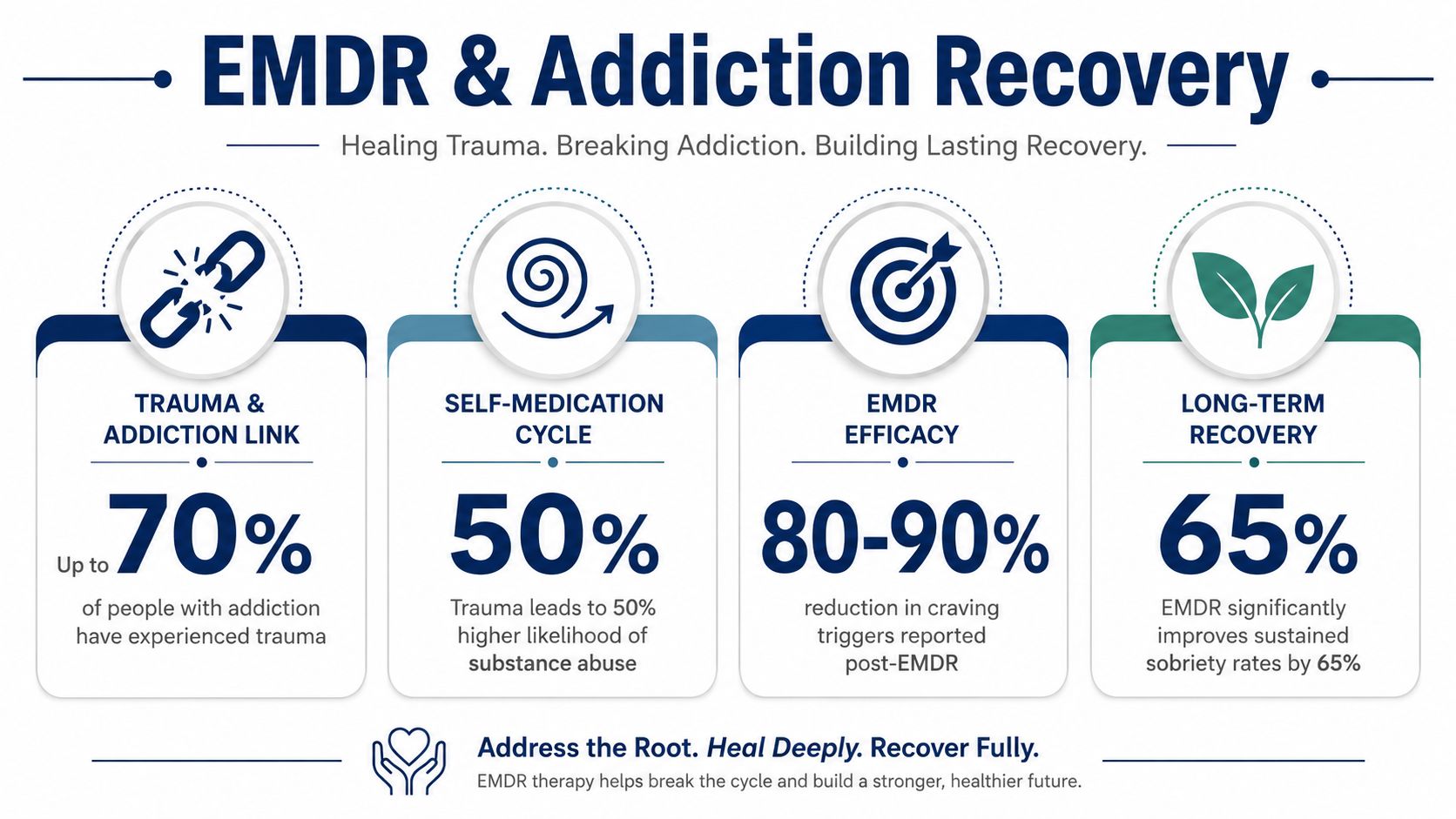
What changes when cravings are tied to unresolved pain
Cravings are not always about pleasure. Many are about escape. They can function like a fire alarm that goes off when the brain senses danger, even if the danger is an old memory, a familiar body sensation, or a painful belief such as “I'm not safe” or “I can't handle this.”
A review published in the Journal of Clinical Medicine found that EMDR was associated with reduced cravings in people with substance use disorders, compared with control conditions, in the studies it examined, according to the published review. That finding fits what many addiction clinicians see in practice. As the emotional intensity of certain triggers comes down, people often have more space between the urge and the action.
That space matters. Recovery often depends on a few extra seconds to pause, use a coping skill, call support, or ride out the wave instead of obeying it.
Why EMDR can help where insight alone has not been enough
Many people in treatment already understand the consequences of using. The problem is not a lack of intelligence or motivation. The problem is that the alarm system in the brain can overpower logic when it believes survival is at stake.
EMDR works a bit like helping the brain update an old file that keeps opening at the wrong time. The memory, trigger, or cue is still part of the person's history, but it no longer has to control the present moment with the same force. Some addiction-focused EMDR approaches also target the chain right before use, including cue reactivity, rituals, and body sensations that show up in the minutes or hours leading to substance use.
That broader view of healing shows up in discussions of holistic drug addiction recovery. In addiction treatment, though, EMDR works best as part of an integrated plan that may include detox support, residential care, outpatient therapy, medication when appropriate, group support, and relapse prevention work.
EMDR works best inside a full treatment plan
This point is easy to miss. EMDR is powerful, but it is not a stand-alone fix.
If someone is in detox, the first goal may be physical safety, sleep, hydration, and helping the nervous system settle enough to stay present. In residential treatment, EMDR may be introduced alongside daily structure, therapy groups, psychiatric care, and strong support between sessions. In an intensive outpatient program, EMDR can be woven into real-world recovery, where clients practice coping skills while still facing work stress, family triggers, and everyday exposure to reminders of past use.
That continuum matters because trauma treatment and addiction treatment should support each other. A person does not always need to wait for long-term perfect sobriety before beginning trauma-focused work. Many people can start with stabilization, resource-building, and carefully paced EMDR while still early in recovery, as long as the treatment team is watching safety, dissociation, withdrawal risk, and current level of functioning.
In other words, the question is often not “Are you sober enough for trauma work?” The better question is “What kind of trauma work is safe and useful for you right now?”
EMDR can lower the pressure that keeps the cycle going
People with both trauma symptoms and substance use problems often describe a similar pattern. They are not only fighting a habit. They are trying to quiet a nervous system that feels stuck on high alert, shut down, or flooded with shame.
Research reviews on EMDR for addiction and co-occurring symptoms suggest it may help reduce distress linked to trauma, anxiety, depression, and cravings in some patients, especially when it is delivered within structured treatment rather than in isolation. That is why many programs use EMDR as one part of a larger recovery approach instead of treating it like a magic solution.
When trauma is one of the engines driving addiction, easing that trauma can reduce the internal pressure to use. The goal is not perfection. The goal is to make recovery feel more possible, more stable, and less like a daily fight against invisible forces.
Is EMDR the Right Choice for Your Recovery
EMDR isn't right for every person at every moment, but it can be a strong fit when recovery keeps getting derailed by triggers that feel bigger than logic. The best candidates often aren't the people who are “failing treatment.” They're the people whose nervous systems are still carrying too much unresolved pain.
A person may want to ask about EMDR if any of these sound familiar:
- Recovery keeps stalling. The person understands the consequences of using, but stress or emotional pain keeps overriding that insight.
- Specific memories or situations set off cravings. The urge to use shows up around certain places, arguments, anniversaries, body sensations, or shame spirals.
- Trauma symptoms are present. Nightmares, hypervigilance, dissociation, panic, or emotional numbing often point to a deeper layer that standard addiction counseling may not fully address.
- A dual diagnosis is involved. People dealing with both substance use and conditions like PTSD, anxiety, or depression often need treatment that addresses both at the same time.
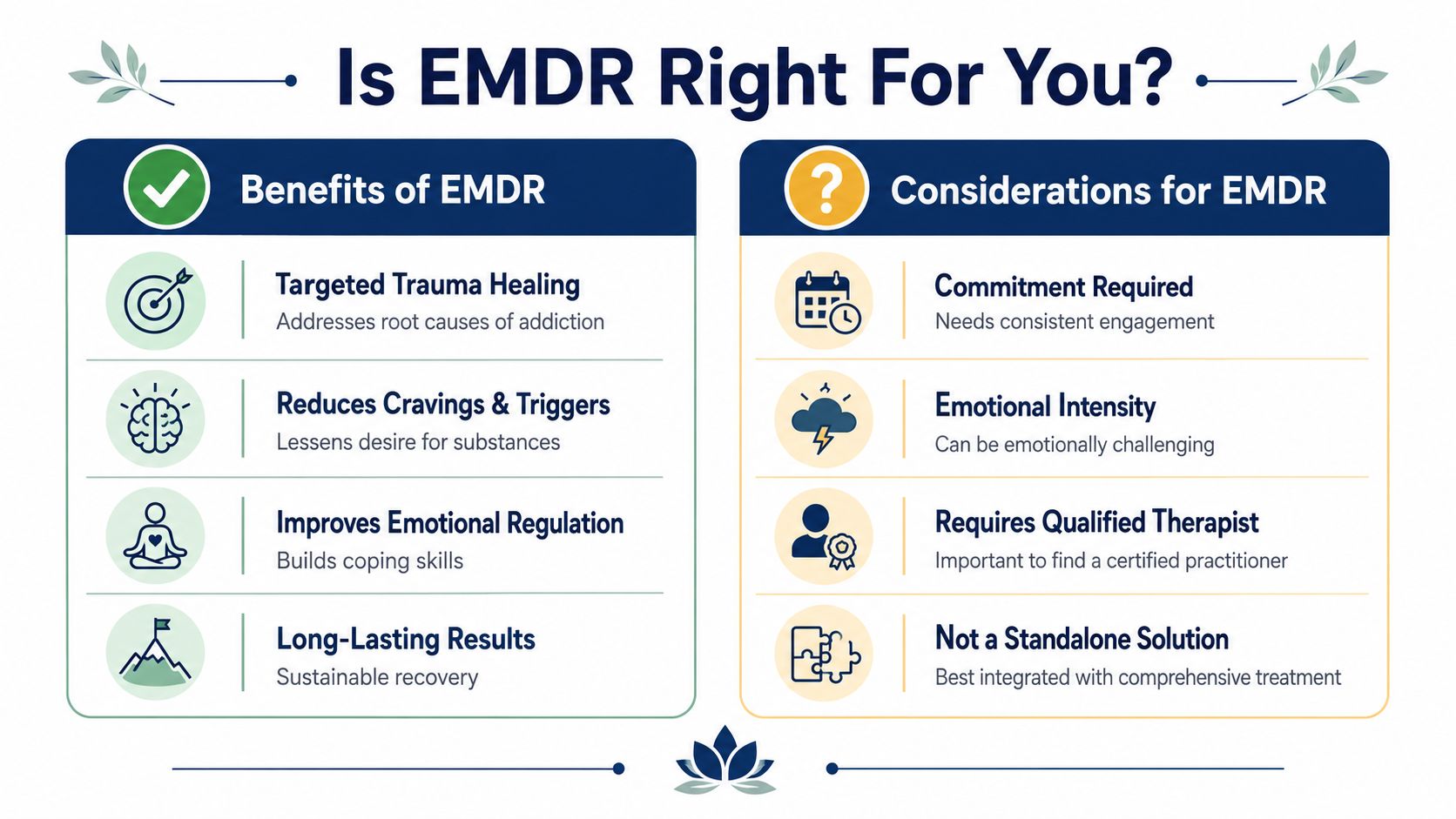
The sobriety myth that keeps people stuck
One of the most common misunderstandings is that trauma work must wait until a person is fully sober and completely stable. That belief can leave people stuck in a painful holding pattern. They're told to stop using first, even when unresolved trauma may be one of the reasons they keep returning to use.
EMDRIA experts state that clients can begin EMDR at the start of recovery, and that delaying EMDR because of addiction status is often unnecessary when the early phases focus on resource building and distress tolerance, according to EMDRIA's guidance on addiction and recovery.
What readiness actually looks like
Readiness has less to do with perfection and more to do with safety. A skilled clinician will usually ask questions like these:
| Consideration | Why it matters |
|---|---|
| Can the person stay within a workable emotional range? | EMDR works best when the client can remain grounded enough to process without becoming overwhelmed. |
| Can they collaborate in treatment? | The person doesn't need to have all the answers, but they do need enough stability to participate. |
| Can they use support between sessions? | Recovery tools, supportive contact, and structure help the work hold. |
Another important concept is the window of tolerance. That means the range in which a person can feel emotion without becoming flooded or shut down. According to EMDRIA's discussion of active medication or substance use, EMDR can be used under a harm-reduction model when the person isn't over-intoxicated during sessions, can collaborate on treatment, attend regularly, and manage difficult emotions between visits.
Readiness for EMDR isn't “never struggling.” It's being supported enough that the struggle can be worked with safely.
For some people, that means beginning with stabilization and resourcing before deeper reprocessing starts. That still counts as trauma work. It's often the foundation that makes later progress possible.
Integrating EMDR into Your Treatment Plan
A lot of people picture trauma therapy as something that happens later, after every crisis has passed and sobriety feels secure. In real treatment, it often works more like physical rehab after an injury. You do not wait for life to become perfect. You begin when there is enough safety, support, and structure to help the work hold.
EMDR tends to help most when it is woven into a larger recovery plan. Addiction affects the nervous system, daily routines, relationships, judgment, sleep, and the way a person responds to stress. One therapy cannot carry all of that by itself. EMDR is better understood as one strong part of treatment, used alongside medical care, counseling, recovery planning, and ongoing support.
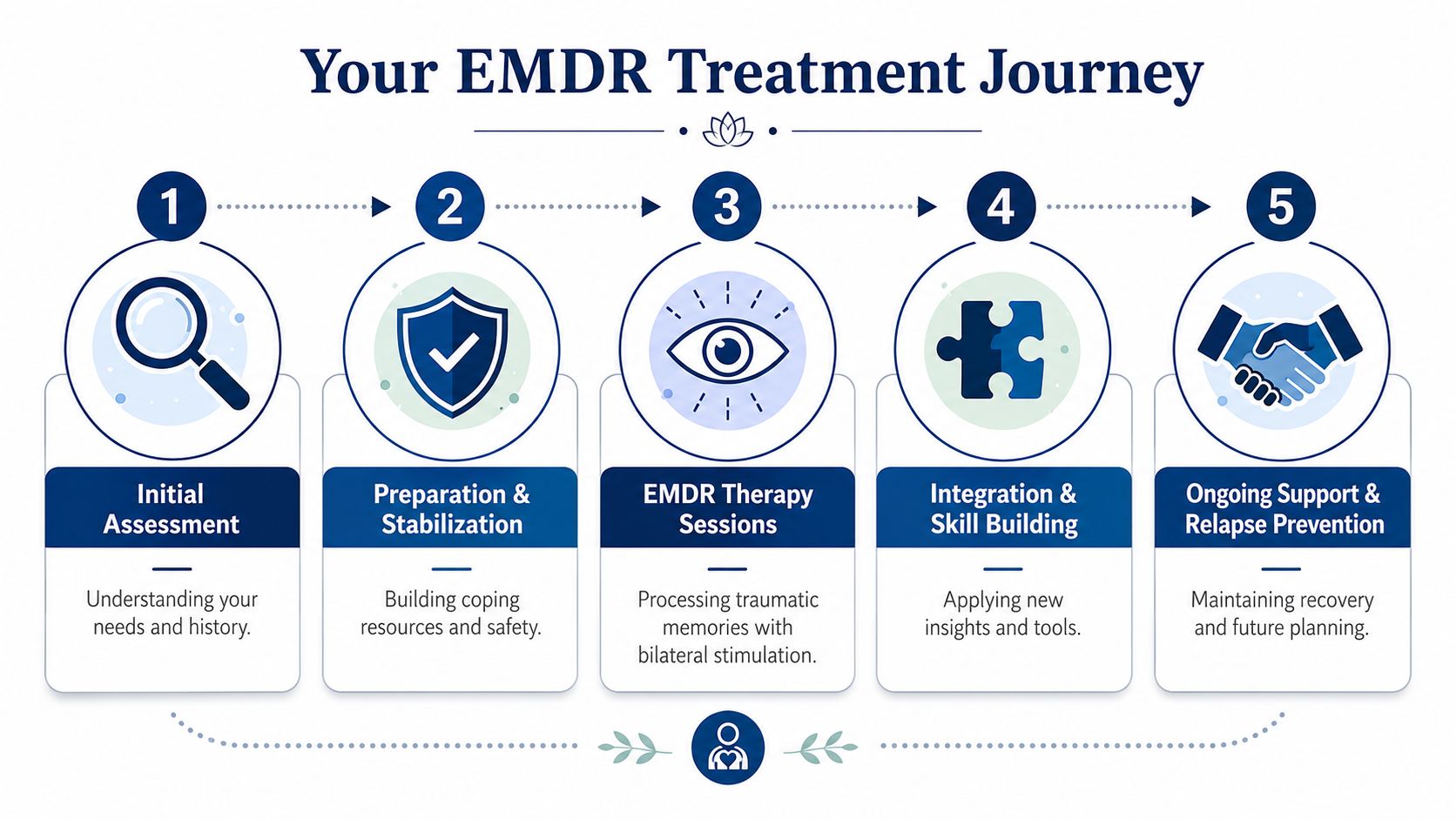
How EMDR fits across levels of care
A full continuum of care gives EMDR the right job at the right time.
In detox, the main goal is safety and physical stabilization. That usually means EMDR stays focused on preparation skills, such as grounding, calming the body, and helping the person feel less overwhelmed. Trauma treatment can start here, even if it does not yet involve deep memory reprocessing.
In residential treatment, there is more daily structure. That structure matters. A person has staff support, fewer outside demands, and a steadier routine, which can make it easier to begin addressing trauma triggers that feed substance use.
In intensive outpatient treatment, EMDR often becomes a way to work with real-life stress as it appears. A difficult phone call, a conflict at home, a lonely evening, or a high-risk environment can become useful material for therapy. The person is not just talking about recovery in theory. They are practicing it while still getting clinical support.
What should surround EMDR
EMDR works best inside a treatment plan addressing the parts of recovery trauma therapy does not address on its own, such as:
- Medical care. Detox support and medication-assisted treatment can reduce immediate risk and help the body settle enough for therapy.
- Individual and group counseling. These settings help people build insight, repair trust, and learn from others in recovery.
- Relapse prevention planning. Identifying triggers, routines, and warning signs helps protect gains made in therapy.
- Daily life supports. Sleep, nutrition, movement, mindfulness, creative outlets, and stress management help the nervous system absorb change.
For readers who want a clearer picture of how these pieces work together, this guide to mental health and addiction rehab explains how care can be coordinated across both substance use and emotional health needs.
The goal is not to ask EMDR to do everything. The goal is to place it where it can do its best work, inside a recovery plan with enough support to help healing last.
What to Expect from Your EMDR Sessions
Many people feel nervous before the first EMDR session because they assume it will be intense from the start. Usually, it begins much more gently than expected. The therapist spends time understanding the person's history, current triggers, strengths, and stress level before moving into any deeper target.
During sessions, the client remains in control. They are awake, present, and able to stop, slow down, or ask questions at any time. The therapist acts more like a steady guide than a director pushing for disclosure.
What it can feel like in the room
A client might be asked to notice an image, a belief, an emotion, or a body sensation connected to a painful experience or a craving trigger. Then the therapist introduces bilateral stimulation through eye movements, tapping, or sound. The client notices what comes up, reports briefly, and the process continues in short sets.
That experience can feel unusual, but it isn't supposed to feel chaotic. Some sessions bring relief quickly. Others stir up emotion before things settle. In a planned single-blind randomized controlled trial for people with substance use disorder and comorbid trauma, the EMDR protocol involved 20 individual 60-minute sessions over 6 months, and results from that design indicated significant improvements in craving, depression, anxiety, self-esteem, and dissociative symptoms compared with the control group, though the sample sizes were small, according to the ClinicalTrials.gov record.
What people often notice afterward
The change isn't usually that a person forgets what happened. It's that the memory or trigger no longer hits with the same force. A person may still remember the event, but the body doesn't react as if it's happening again right now.
Some clients notice:
- Less emotional charge around old memories or present-day triggers
- More choice between feeling an urge and acting on it
- A shift in beliefs from “I'm broken” toward something more balanced
- A lighter body response, such as less tightness, panic, or dread
The goal isn't to erase the past. The goal is to help the past stop hijacking the present.
That's why EMDR can feel liberating. It doesn't ask people to pretend they weren't hurt. It helps them stop living under the constant weight of what happened.
How to Start Healing with EMDR in Orange County
Starting can feel harder than continuing. Many people know they need help but freeze when it's time to make the call. A simple first step is often enough. The goal isn't to figure out the whole treatment journey in one afternoon. The goal is to connect with a qualified team that understands both trauma and addiction.
A strong starting point is to ask practical questions. Does the program treat co-occurring trauma and substance use together? Can EMDR be integrated with detox, residential care, or outpatient treatment? How does the team decide when a person is ready for reprocessing work versus stabilization work?
What to ask when reaching out
A brief consultation can answer a lot. Helpful questions include:
- Does the program offer dual-diagnosis treatment?
- How is EMDR used within the full continuum of care?
- What happens if the person needs detox first?
- Can the team verify insurance before admission?
- What level of care makes sense right now?
For families comparing therapy approaches, this discussion of a DBT center of Orange County may also be useful, especially when emotional regulation is part of the clinical picture.
Taking the next step
Still Water Wellness Group offers EMDR therapy as part of integrated dual-diagnosis addiction treatment in Orange County and Southern California. Treatment may include detox, residential care, PHP, IOP, and ongoing support, depending on what the individual needs.
A confidential, no-obligation call can help determine the right starting point and verify insurance benefits. Admissions support is available at (866) 450-0391.
Common Questions About EMDR for Addiction
Is EMDR the same as hypnosis
EMDR is a therapy method, not hypnosis. During sessions, the client stays awake, aware, and in control. They can slow down, ask questions, or pause at any point. A helpful way to picture it is this: the therapist is a guide, but the client remains in the driver's seat.
Does a person have to describe every traumatic event in detail
No. Many people worry they will have to retell the hardest parts of their life from start to finish. EMDR usually does not work that way.
The therapist gathers enough information to understand what needs attention and how to keep the process safe. From there, the work often focuses more on what the memory feels like now, including thoughts, emotions, and body sensations, rather than a long verbal retelling.
How long does it take to notice change
The timeline varies. It depends on a person's current stability, the intensity of cravings, the history of trauma, and whether treatment is also addressing depression, anxiety, or other mental health concerns.
Some people notice early changes, such as fewer body-based stress reactions, less panic around triggers, or more space between an urge and the decision to act on it. Others need a longer preparation phase first. That is not a sign that EMDR is failing. It often means the nervous system needs more support before deeper trauma processing begins.
Can EMDR start while someone is early in recovery
Often, yes. A person does not always need long-term sobriety before trauma work can begin. That idea can keep people stuck, especially when trauma symptoms are part of what keeps substance use going.
Early EMDR work may focus on stabilization skills, reducing overwhelm, building a sense of safety, and strengthening the ability to stay present. In a full treatment setting, that can happen alongside detox planning, residential treatment, PHP, or IOP, depending on what the person needs. The goal is to match the work to the person's current level of stability, not force them into a one-size-fits-all timeline.
Is EMDR enough by itself
EMDR is often most helpful as one part of a larger recovery plan. Addiction treatment may also include detox, medication support, psychiatric care, individual therapy, group therapy, relapse prevention, family support, and aftercare.
EMDR can help address the painful memories and nervous system patterns that feed substance use. Other parts of treatment help a person build daily structure, practice coping skills, repair relationships, and stay safe during vulnerable stages of recovery. That combination is often what gives healing room to last.
Does insurance cover treatment that includes EMDR
Coverage depends on the insurance plan, the level of care, medical necessity, and whether the provider is in network. The clearest next step is to contact the treatment center for a confidential insurance verification.
Still Water Wellness Group provides trauma-informed addiction treatment in Orange County, including EMDR within a full continuum of care. For anyone considering the connection between trauma, cravings, and relapse, a confidential call can help clarify options, answer questions, and verify coverage. Learn more at Still Water Wellness Group or call (866) 450-0391 to speak with admissions.