
You complete detox or residential treatment. Discharge is on the calendar. Then the hard question hits fast. Where do you go that is sober, stable, and realistic enough to protect the progress you just fought to make?
For families in Long Beach, that decision gets confusing for two reasons. First, sober living is not the same as licensed treatment, and plenty of people do not understand the difference until they are already under pressure. Second, Long Beach is an expensive market, so the monthly cost, house rules, transportation, and work expectations need to make sense before move-in day, not after.
Sober living in Long Beach California can be a smart next step because it gives people time to practice recovery in real life with structure still in place. The right home offers accountability, routine, peer support, and a safer buffer between treatment and full independence.
That practical middle step matters.
A good sober home should be clear about what it does and what it does not do. It provides housing, rules, community, and recovery expectations. It does not replace clinical care unless licensed treatment services are also being provided separately and legally. Families need that distinction upfront because it affects safety, staffing, services, and cost.
Long Beach makes this choice especially relevant. Southern California offers access to meetings, employers, outpatient care, and recovery communities, but it also brings higher living expenses and more variation in housing quality. That means the smart move is not picking the first bed available. It is choosing a house that is transparent about operations, honest about price, and set up to support the next stage of recovery without surprises.
The Next Step in Your Recovery Journey
A discharge date can feel good and scary at the same time. Families feel relief because treatment is working. They also feel exposed because the next step often seems less defined. That's where sober living earns its place.
Sober living works best when it's treated as a bridge, not a finish line. It sits between clinical treatment and completely independent living. That middle ground matters. It gives a person time to rebuild ordinary habits like getting to work, managing stress, keeping a room clean, showing up for meetings, and living around other people without using.
Why this stage matters
The biggest mistake after treatment is rushing. Returning straight to an unstable apartment, a triggering household, or an old social circle can undo a lot of progress quickly. A sober home gives recovery a controlled setting where responsibility increases, but risk stays lower.
Families should think about this stage in simple terms:
- Treatment builds momentum. It helps a person get physically and mentally clear.
- Sober living protects that momentum. It adds structure where relapse risk is often highest.
- Independent living becomes the long-term goal. It just doesn't need to happen all at once.
Practical rule: If the home environment isn't fully sober, stable, and supportive, a direct return home usually isn't the safest next move.
Who benefits most
Sober living is often a strong fit for people leaving detox, residential treatment, PHP, or IOP who still need daily accountability. It's also useful for people with shaky housing, strained family dynamics, or a work-and-recovery schedule that needs guardrails.
The right house won't do recovery for anyone. It will, however, make recovery easier to practice every day. That's a real advantage, especially in a busy, expensive coastal city where stress, traffic, and access to old contacts can complicate early sobriety fast.
What Is Sober Living and Why Choose Long Beach
Sober living is substance-free shared housing for people who are actively committed to recovery. It isn't detox. It isn't residential rehab. It usually isn't therapy. It's a structured living environment where sobriety is required and daily behavior matters.
A simple way to think about it is this. Treatment is where a person learns recovery tools under clinical supervision. Sober living is where that person starts using those tools in everyday life, with accountability still in place.

What sober living usually includes
Most homes focus on the basics that keep recovery grounded:
- Sobriety requirements. Residents are expected to remain alcohol and drug free.
- House accountability. Curfews, chores, and shared standards are common.
- Meeting participation. Many homes expect regular recovery meeting attendance.
- Peer community. Residents live with other people who understand early recovery.
A broader look at sober living in Southern California can help families compare Long Beach with other nearby recovery settings.
Why Long Beach draws so much recovery housing
Long Beach makes sense for sober living because it offers a practical mix of urban access and recovery culture. People can find meetings, outpatient support, jobs, transportation options, and a large community without being dropped into total isolation. That combination matters. Recovery gets stronger when a person can build a real routine instead of living in a bubble.
There's also meaningful evidence behind the model itself. Independent California research found that in a multilevel study of 330 newly admitted residents across 49 sober living houses, residents had increased odds of total abstinence with an adjusted odds ratio of 3.98 and p < 0.001 (California sober living outcomes study).
Sober living isn't supposed to feel luxurious or punitive. It's supposed to feel stable enough that recovery can become normal.
That's why Long Beach stays on the radar for people leaving treatment. It gives them access to a recovery-centered environment in a city large enough to support work, community, and the next stage of adult life.
A Day in the Life What to Expect
The best sober homes don't feel like lockdown, and they don't feel like a free-for-all either. They feel predictable. That predictability is part of the value.
A typical weekday often starts early. Residents get up, make their beds, get ready for work, outpatient programming, job searches, or appointments, and handle basic house responsibilities before leaving. Even simple routines matter in early recovery because they rebuild discipline without a therapist standing over every decision.
The rhythm of the house
Most residents can expect some version of the following:
- Morning responsibility. Bedrooms, shared spaces, and personal hygiene aren't optional.
- Daytime obligations. Work, school, outpatient care, interviews, or approved recovery activity usually fill the day.
- Evening recovery focus. Many houses expect meeting attendance, check-ins, or house meetings.
- Accountability measures. Drug testing, curfews, and guest restrictions are common.
That structure is healthy, not controlling. A person in early recovery often needs external structure until internal structure becomes reliable.
Freedom with guardrails
A quality sober home doesn't try to freeze someone in treatment mode forever. It gives increasing freedom, but it expects residents to earn trust. Someone may be allowed to work, rebuild family contact, or spend time outside the house, but only while following the rules.
This balance is what families should want. Too much control can create resentment. Too little control can create chaos.
A sober home should answer one question clearly every day. Is this environment helping the resident live responsibly without substances?
The peer factor matters
The house culture often matters more than the furniture, location, or marketing language. Living with peers in recovery creates built-in accountability. Other residents notice changes in behavior. They recognize isolation, dishonesty, and excuses quickly because they've lived through the same patterns themselves.
That doesn't mean every house has the same tone. Some homes are quieter and work-focused. Others are more socially connected and meeting-centered. Neither is automatically better. The right fit depends on the person's clinical history, maturity, relapse risk, and willingness to follow expectations.
Families should expect some discomfort in the transition. Sharing space, accepting feedback, and following rules can feel frustrating at first. That's normal. If the environment is safe and the rules are reasonable, that friction usually means growth is happening.
How to Choose the Right Long Beach Sober Home
Most families search for a sober home the wrong way. They look at photos, amenities, and neighborhood appeal first. Those things matter, but they shouldn't drive the decision. The first question should be much more basic. What is this place offering?
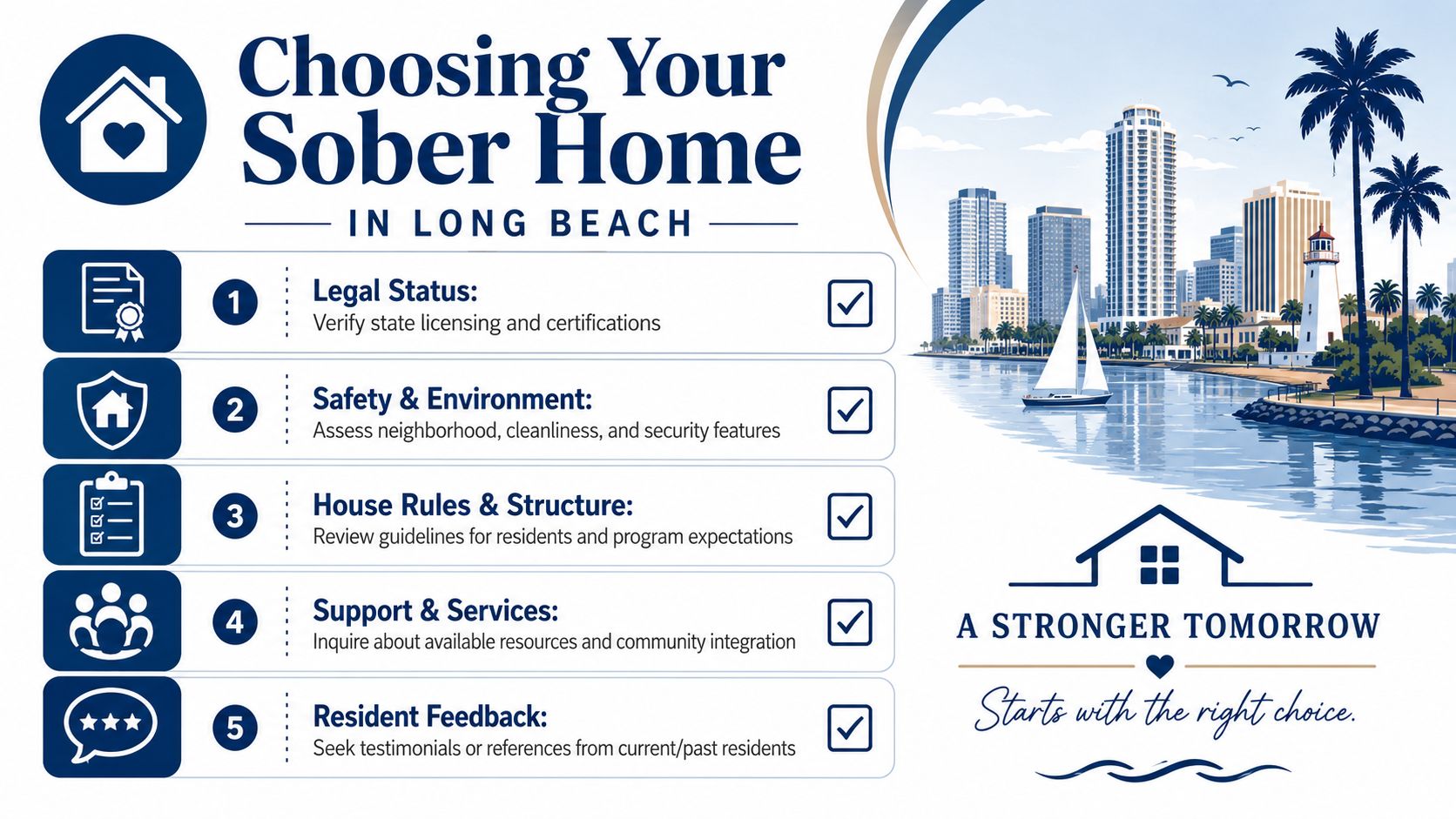
California makes an important distinction here. Most sober living homes are non-clinical recovery residences and don't need a DHCS treatment license unless they provide clinical services such as detox or counseling (California recovery residence licensing distinction). That means families need to verify whether they're paying for housing, treatment, or a mix of both.
Start with the legal and service distinction
If a house describes itself as sober living, families should ask direct questions.
- Housing or treatment. Is the home only providing peer-supported housing?
- Clinical services. Are counseling, detox support, or medication services being provided on site?
- Licensing status. If clinical care is offered, what oversight applies?
- Referral role. Is the website an actual operator or just a listing service?
This isn't nitpicking. It determines what oversight exists, what staff can do, and what kind of support the resident will receive.
A useful companion resource for families comparing networks and standards is this guide to a sober housing network.
What to inspect before saying yes
Walk through the property and pay attention to the ordinary details. That's where the truth usually sits.
| What to review | What families should look for |
|---|---|
| Living environment | Clean common areas, reasonable order, and no obvious safety concerns |
| House structure | Written rules, clear consequences, and consistent expectations |
| Staff communication | Direct answers, not vague promises or evasive language |
| Resident fit | A culture that matches the resident's recovery stage and maturity |
| Daily logistics | Practical access to meetings, work, outpatient care, and transportation |
Questions every family should ask
Some questions should be essential during the screening process:
- What's the relapse policy? A serious operator should answer this clearly.
- What are the requirements for keeping residency? Rules should be written, not improvised.
- How are conflicts between residents handled?
- What recovery participation is expected each week?
- Who supervises the house, and how often are they present?
- What's included in the monthly fee, and what isn't?
- What happens if a resident misses curfew, skips meetings, or breaks house rules?
Families shouldn't be impressed by polished marketing. They should be impressed by clear policies, honest answers, and a stable house culture.
A flashy website can hide a weak program. A simple house with real accountability often produces a better outcome. In sober living in Long Beach California, clarity beats image every time.
Understanding Costs and Financial Planning
A family often gets to this point after finding a house that looks clean, structured, and supportive, then realizes they still do not know the full monthly cost or who is paying for what. That uncertainty creates avoidable pressure. Get clear on the money before move-in, because financial stress can destabilize early recovery fast.
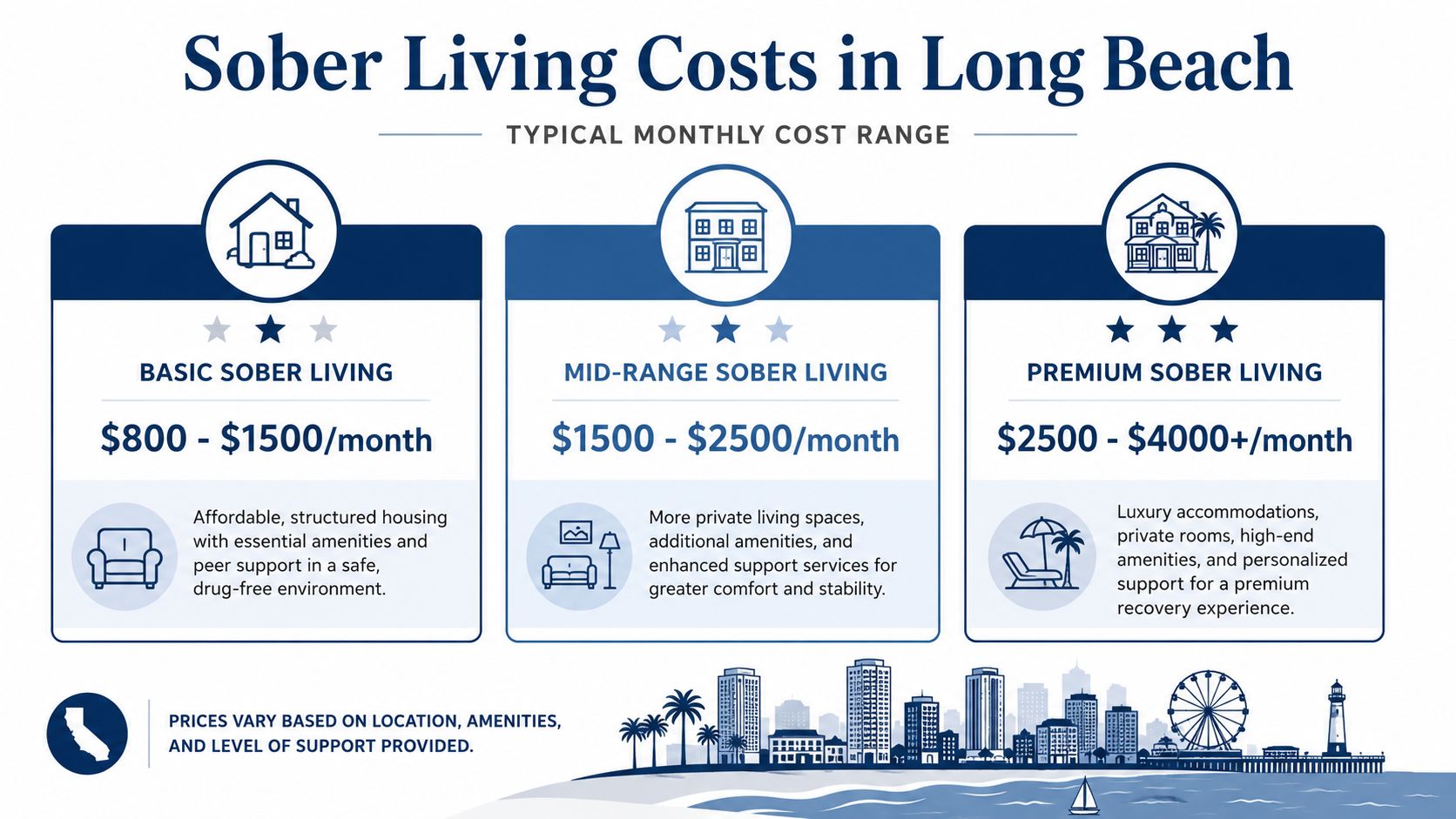
In Long Beach, prices vary widely. Some homes charge a lower rate for a shared room with limited oversight. Others charge much more because they include tighter accountability, more staff involvement, or added recovery services. The number on the website is only the starting point. A key question is what that price truly buys, and whether the resident can afford to stay long enough for the placement to help.
What the monthly fee may and may not cover
Ask for a written breakdown. Verbal answers are not enough.
Some homes include the basics such as rent, utilities, Wi-Fi, and furnishings. Others add drug testing, house meetings, case coordination, or transportation support. Food is often separate. So are admission fees, deposits, medication costs, and rides to outpatient care or work. A lower monthly rate can end up costing more if the resident keeps paying out of pocket for services that were assumed to be included.
Families should also confirm how payment works in practice:
- Move-in charges. Ask about deposits, first-month rent, application fees, and any advance payment requirement.
- Ongoing billing. Confirm whether rent is due weekly or monthly, and whether there is a grace period.
- Refund rules. Ask what happens if the resident leaves early, is discharged, or needs a higher level of care.
- Added service costs. Clarify whether testing, transportation, or recovery coaching creates extra charges.
- Loss of housing triggers. Ask which financial or behavioral issues can end residency quickly.
The legal distinction affects cost
Families in Southern California need to understand one point clearly. Sober living is housing, not licensed treatment. That difference matters financially.
A non-clinical sober home usually does not bill like a treatment program. Insurance coverage may be limited or unavailable for the housing itself, even if the resident is also attending outpatient therapy, psychiatry, or another licensed service elsewhere. If a house blurs that line or makes broad promises about what insurance will pay, treat that as a warning sign. A trustworthy operator explains the difference plainly and gives you a realistic picture of the resident's out-of-pocket responsibility.
Build a budget that can hold for several months
Do not plan only for the first payment. Plan for stability.
A workable recovery budget should include housing, food, transportation, phone service, medications, outpatient care, meeting attendance, work expenses, and a small emergency reserve. This broader look at the cost of recovery after treatment helps families budget for real life, not just rent. If the resident has no income yet, decide now who is covering the gap, for how long, and what changes once work starts.
Money check: Ask for the full move-in amount, the monthly total, every possible extra fee, and the exact refund policy in writing.
The best financial plan is boring. It is clear, sustainable, and honest about what the family can carry. In a high-cost market like Long Beach, that matters as much as the house itself. A resident does better in a solid home they can realistically afford than in a more expensive setting they are likely to lose after a few weeks.
Planning Your Transition from Treatment
The move from treatment into sober living works best when it's planned before discharge, not scrambled together at the last minute. A rushed handoff usually creates avoidable problems. Medications get confused. Transportation is unclear. House expectations don't match the resident's actual needs. That kind of chaos can be dangerous in early recovery.
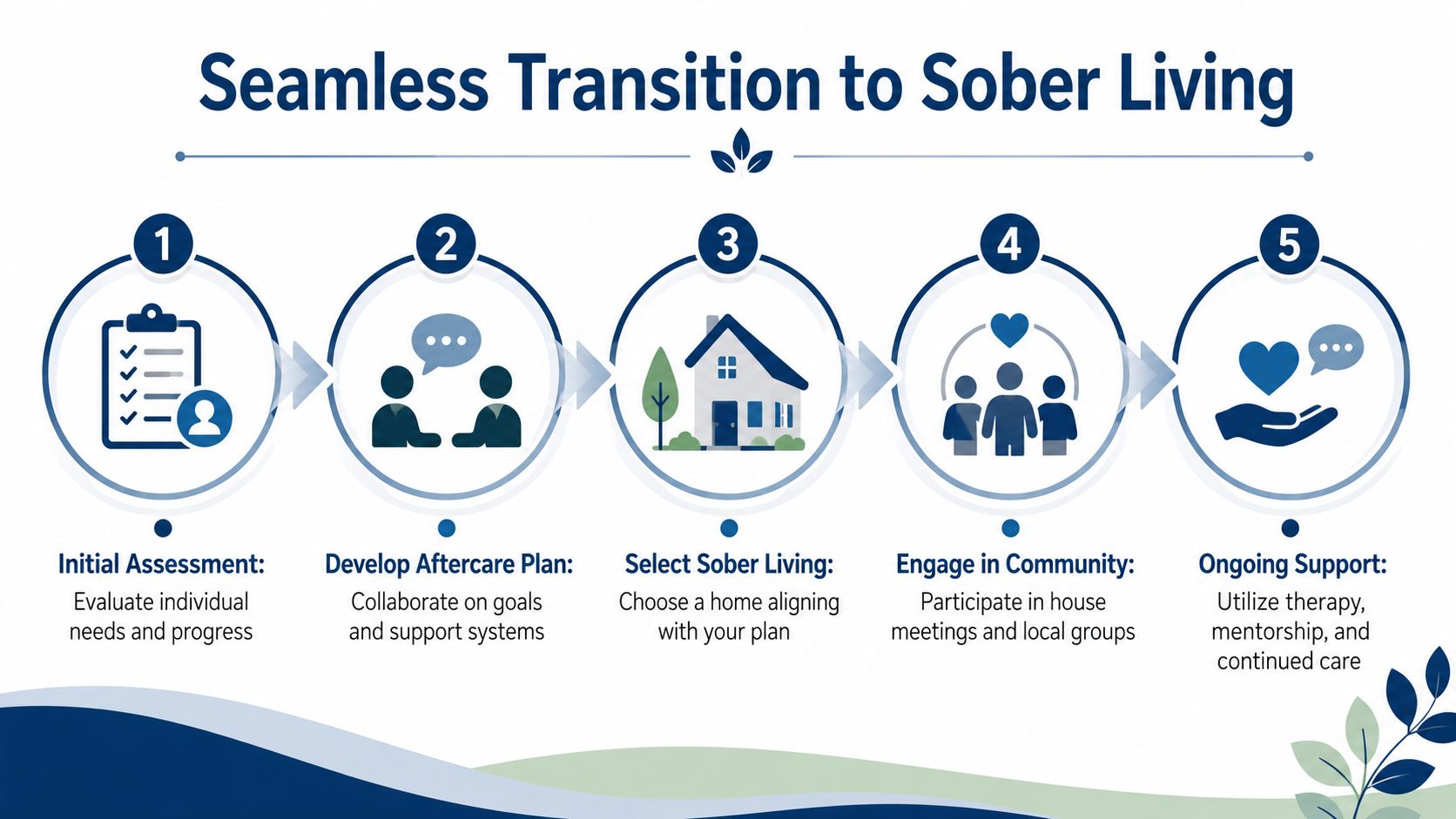
A stronger transition starts with a realistic assessment of what the person still needs every day. Some people need a highly structured house with firm accountability and close coordination with outpatient care. Others need a simpler peer-supported home while they return to work and continue therapy off site.
What a solid transition plan includes
Families should look for a process that addresses the basics clearly:
- Clinical readiness. The resident should be stable enough for a non-hospital, non-detox environment.
- Housing fit. The selected home should match relapse risk, maturity level, and outside obligations.
- Aftercare continuity. Therapy, psychiatry, support groups, and recovery routines should already be lined up.
- Practical logistics. Medication storage, transportation, work plans, and communication expectations should be settled.
- Family alignment. Everyone involved should understand the rules and stop sending mixed messages.
Why the handoff matters so much
Treatment gives people insight. Daily life tests whether that insight can hold under pressure. A careful handoff reduces the gap between those two realities.
When appropriate, programs can help coordinate this next step by identifying housing options, clarifying level-of-care needs, and organizing aftercare. Still Water Wellness Group offers a continuum that includes detox, residential care, outpatient support, and sober living, which allows families to plan the move into a less structured setting without losing recovery momentum.
The transition should feel organized, not improvised. If discharge planning feels vague, families should slow the process down and ask harder questions.
Signs the plan is on track
A person is usually better positioned for sober living when there's a known discharge date, a confirmed bed, a clear outpatient plan if needed, and a written understanding of house rules before arrival. Families should also know who the resident can call if stress rises during the first week.
That first week matters. It sets the tone for whether sober living becomes a launching pad or just another unstable stop.
Find Support and Take the Next Step
Families searching for sober living in Long Beach California often need more than a bed. They need a direction. The strongest next move is usually the one that combines safe housing, realistic budgeting, and a recovery plan that continues after move-in.
Local support matters. Long Beach and the broader Southern California recovery community offer regular peer meetings, outpatient options, employment pathways, and family support networks. A resident doesn't need every resource at once. The key is having enough structure around them to stay engaged instead of drifting.
For some families, spiritual alignment also matters during this phase. If that's part of the decision, this resource on choosing a faith-based program can help clarify what to ask and what kind of support model may fit best.

A short checklist before making the call
- Confirm the service type. Make sure the family understands whether the option is housing, treatment, or both.
- Ask for full costs. Get clear on move-in fees, monthly charges, and anything that could increase expenses.
- Match the house to the person. Recovery stage, work status, mental health needs, and relapse history all matter.
- Plan the first month. Transportation, meetings, outpatient care, and communication should be set before move-in.
A family doesn't need to solve every detail alone. A good admissions conversation can narrow options quickly, verify what level of care fits, and remove a lot of confusion from the process.
If a person or family needs help sorting through treatment, aftercare, or sober living options, Still Water Wellness Group can provide a confidential, no-obligation consultation and help verify insurance for eligible levels of care. For immediate guidance on the next step in recovery, call (866) 450-0391.