A loved one finishes detox or residential treatment, and the relief is real. So is the fear. The family knows that going straight back to the same apartment, the same stress, the same people, and the same habits can undo hard-won progress fast.
That’s where sober living southern california becomes more than a housing search. It becomes a decision about protection. The right home gives recovery room to stabilize before work pressure, family conflict, dating, nightlife, and everyday triggers hit all at once.
Families in Orange County often arrive at this point exhausted and overloaded. They’ve already sorted through admissions calls, insurance questions, medication changes, and treatment recommendations. What they usually need now isn’t more marketing. They need a clear standard for what a quality sober living home looks like, especially when mental health needs are part of the picture.
Southern California can be a strong place to continue recovery, but only if the home is structured, accountable, and connected to ongoing care. A nice house near the coast means very little if the resident has no routine, no support for anxiety or depression, and no plan for outpatient treatment.
The Bridge to a New Life After Treatment
Sober living works best when families stop thinking of it as a fallback plan and start treating it as a bridge. It sits between intensive treatment and fully independent life. That middle step matters because early recovery is rarely stable enough for complete freedom.
Someone may leave residential treatment with insight, motivation, and a discharge plan. That doesn’t mean the person is ready to manage cravings, conflict, loneliness, employment, transportation, and unstructured time without support. Recovery skills need practice in a real-world setting. Sober living provides that practice.
Why returning home can be risky
Home isn’t always restorative. For some people, it’s where alcohol was hidden, pills were misused, or fights escalated. Even in caring families, old roles return quickly. The person in recovery may feel watched, judged, or smothered. Family members may swing between rescuing and policing.
A sober living home interrupts that cycle. It gives the resident a drug and alcohol-free place with rules, peers, and daily expectations. It also gives the family space to shift from crisis management into healthier support.
Recovery usually weakens when structure disappears too soon.
What families should expect from this transition
The purpose of sober living isn’t comfort alone. It’s accountable stability. A strong home should help residents build a daily rhythm around sobriety, meetings, chores, employment or program attendance, and community life.
For Orange County families, this step often makes the difference between short-term improvement and a recovery path that lasts. The resident gets time to strengthen habits. The family gets a clearer role. Everyone gets a more realistic pace.
What Is a Sober Living Home?
Your son finishes treatment, sounds stronger on the phone, and wants to come home by the weekend. Then the real question hits. Is he ready for home, work stress, old friends, family tension, and total freedom at once? For many Orange County families, the right answer is no. A sober living home gives someone a place to practice recovery in daily life before taking on full independence.
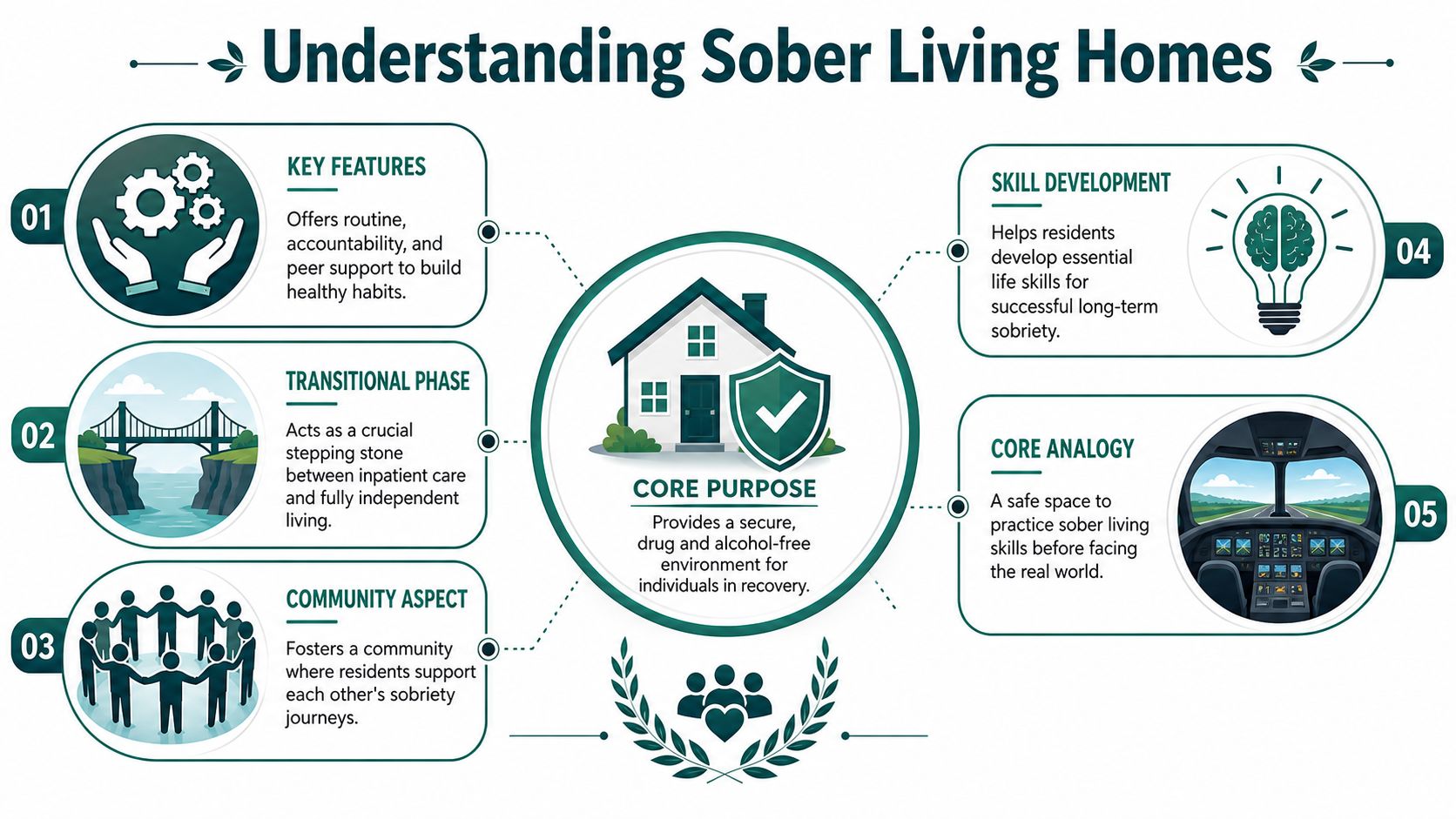
A sober living home is a substance-free residence with rules, accountability, and peer support for people who have already completed detox, residential treatment, or another higher level of care. The goal is simple. Keep recovery active while the resident returns to real responsibilities like work, school, outpatient treatment, transportation, and family contact.
What a quality sober living home actually includes
Families should expect structure, not just housing. A real sober living home usually includes:
- A drug and alcohol-free setting with clear house rules and consequences
- Regular accountability such as curfews, chores, house meetings, and recovery participation
- Peer community with other residents who are also working on sobriety
- Coordination with outside care such as IOP, therapy, psychiatry, or medication management
- A step-down focus that helps residents return to work, school, and healthy routines
For families comparing options, Still Water Wellness Group’s sober living overview explains how this level of care fits between treatment and fully independent living.
What sober living does not provide
Sober living is not a substitute for detox, residential rehab, or full-day clinical treatment. If someone still needs medical supervision, daily psychiatric assessment, or intensive stabilization for a co-occurring mental health condition, a house alone is not enough.
That point matters in Orange County, where families often search for housing first and ask clinical questions later. Reverse that order. If your loved one has bipolar disorder, severe depression, trauma symptoms, psychosis, eating disorder behavior, or repeated relapse after treatment, confirm that the sober living home can work in step with licensed dual-diagnosis care. If the operator cannot explain how residents access therapy, psychiatry, medication support, and higher levels of care when needed, keep looking.
The standard families should use
Do not judge a home by the furniture, the zip code, or the sales pitch. Judge it by daily operations. Ask who enforces rules, how drug testing works, what happens after a relapse, whether medications are monitored appropriately, and how the house communicates with outpatient providers and families.
A weak program sells comfort. A good program provides consistency.
Practical rule: If a home cannot clearly explain its rules, staffing, relapse procedures, and coordination with outside treatment, it is not a safe choice.
At its best, sober living gives residents enough independence to rebuild real life and enough structure to protect early recovery. That balance is the point.
How Sober Living Enhances Long-Term Recovery
A family leaves treatment feeling relieved, then panic sets in two days later. There is no staff on site, no clear schedule, old friends are texting again, and the person who sounded committed on discharge now wants more freedom than they can handle. That is how progress gets lost.
Sober living works because it closes the gap between treatment and ordinary life. It gives people room to practice recovery while daily structure is still in place. For families in Orange County, that usually means one thing. Do not ask whether sober living sounds helpful. Ask whether your loved one is ready to live with less supervision without losing the support that kept them stable.
Someone may leave PHP or IOP with a relapse prevention plan, better insight into triggers, and a treatment team that finally makes sense. None of that means the habits are solid yet. Sober living turns plans into repetition. Get up on time. Go to treatment. Take medication correctly. Work through conflict. Stay honest when cravings or mood swings hit.
The research supports the model
Longitudinal research on California sober living residents found that abstinence rates rose from 11% at entry to 68% at 6 and 12 months, and residents who stayed at least 6 months had 7.8% more abstinent days. Researchers also reported improvement in employment, psychiatric symptoms, and arrests in the California sober living outcomes study.
The practical takeaway is simple. Time and structure matter.
Families should treat length of stay as a clinical decision, not a convenience decision. Early recovery often includes poor sleep, irritability, shame, boredom, impulsive thinking, and the false confidence that tells someone they are ready before they are. A month can help. Real stability often takes longer.
Here is what a good sober living setting strengthens over time:
Daily follow-through under real stress
Residents still deal with cravings, loneliness, work pressure, family conflict, and boredom. They learn to respond without using.Routine that supports mental health and sobriety
Sleep, meals, transportation, appointments, exercise, and work habits are not side issues. They are part of relapse prevention.Peer accountability that is hard to fake
Housemates notice isolation, skipping meetings, sudden attitude shifts, and the small behaviors that often come before relapse.Connection to the full continuum of care
The best homes do not operate as stand-alone housing. They stay tied to outpatient treatment, psychiatry, medication support, and higher levels of care when symptoms worsen. Families can review what established recovery housing standards look like through the Sober Housing Network overview.
This point matters even more for dual-diagnosis residents. If your loved one has depression, trauma symptoms, bipolar disorder, anxiety, disordered eating, or a history of relapse after treatment, sober living should support the clinical plan every day. Missed therapy, inconsistent medication use, and untreated psychiatric symptoms can undo sobriety fast.
Still Water Wellness Group’s sober living in Orange County is part of a broader continuum that includes detox, residential treatment, PHP, IOP, MAT, and dual-diagnosis support. That kind of coordination helps residents step up or step down in care without losing momentum.
A quality sober home improves long-term recovery because it gives people enough independence to grow and enough accountability to stay safe. That balance is what families should pay for.
Navigating the Southern California Sober Living Landscape
Your family gets the discharge date. Treatment is ending. Everyone feels the pressure to choose fast, and Southern California can make weak options look convincing. In Orange County especially, families are often sorting through polished websites, vague promises, and homes that sound supportive but cannot handle real clinical needs.
This market is large, busy, and uneven. Some homes run with clear rules, tight accountability, and strong coordination with outpatient care. Others are little more than shared housing with recovery language attached. That difference matters even more if your loved one has depression, anxiety, trauma symptoms, bipolar disorder, or a history of relapse after prior treatment.
Why Southern California attracts families, and why that alone means very little
Orange County offers access to recovery meetings, outpatient programs, jobs, schools, and medical care. For the right resident, that density can help recovery hold. It is easier to build a real weekly routine when treatment, psychiatry, work, and peer support are all within reach.
A nice setting still proves nothing.
Families should stop giving extra weight to coastal photos, trendy interiors, or vague talk about wellness. Quality sober living is defined by structure, supervision, expectations, and how well the home fits into the resident’s full care plan. If a resident needs dual-diagnosis support, the home must work well with therapists, prescribers, and higher levels of care. A quiet street does not replace that.
Orange County families need to screen for fit, not image
The practical question is simple. Will this home make recovery easier to practice every day?
Start with logistics. A house should support consistent attendance at PHP, IOP, therapy, psychiatry, work, school, court requirements, and 12-step or other recovery meetings. If transportation is unreliable, curfews conflict with treatment, or the home is far from the resident’s real support system, the placement can fail even if the house looks appealing.
Then look at the clinical fit. A resident with co-occurring mental health needs should not be placed in a home that only offers generic peer accountability. The house should know how to respond when someone starts isolating, misses appointments, stops taking medication as prescribed, or shows obvious warning signs. Families who want a better sense of how recovery housing standards and referral relationships work can review this overview of sober housing networks in California.
What matters most in this market
Families in Orange County should prioritize concrete factors over sales language.
Location should support the treatment plan
Choose a home that makes therapy, outpatient care, recovery meetings, work, and medical appointments realistic every week.The surrounding area should lower risk, not add stimulation
Early recovery usually goes better in a setting with fewer obvious triggers and less social chaos.Transportation should be clear and dependable
Residents miss care when rides are uncertain, public transit is unrealistic, or staff cannot explain how daily movement works.The home should make family involvement more effective
In Orange County, families often stay involved. Good homes set boundaries, define communication, and reduce the confusion that fuels conflict.
The right Southern California option is not the prettiest house or the closest beach. It is the home that supports sobriety, mental health stability, and the next level of care your loved one needs.
How to Choose a Quality Sober Living Home in Orange County
Your loved one finishes treatment on Friday. By Monday, your family is getting rushed calls from housing coordinators, conflicting advice from well-meaning friends, and glossy photos of homes that tell you almost nothing about how recovery works inside the house.
This is the point where families need a clear filter. In Orange County, a quality sober living home should fit the resident’s clinical needs, support mental health treatment, and connect cleanly to the next level of care. If a house cannot explain those three things in plain language, cross it off your list.
Mental health support belongs near the top. Co-occurring disorders are common in addiction recovery, and families pay for that oversight later when they choose a house that treats anxiety, trauma, depression, or bipolar symptoms like side issues instead of part of the treatment plan. A good home works with therapy, psychiatry, and medication management. It does not act surprised when those needs show up.
Required support for mental health
A resident with a dual-diagnosis profile needs more than sobriety rules. The house should expect treatment attendance, respect prescribed medications, and know what to do when psychiatric symptoms start interfering with daily recovery.
Ask direct questions. Does the home support MAT when clinically appropriate? Are residents expected to stay engaged in therapy or outpatient treatment? What happens if someone stops taking medication as prescribed, starts isolating, misses appointments, or shows clear mood changes? Vague reassurance is not enough. You need a process.
Sober Living Quality Checklist Green Flags vs. Red Flags
| Green Flag (Look For This) | Red Flag (Avoid This) |
|---|---|
| Clear daily rules about sobriety, chores, curfew, meetings, and house participation | Vague expectations such as “everyone just supports each other” without defined rules |
| Consistent accountability with monitoring and follow-up when residents slip on responsibilities | Selective enforcement where rules seem flexible depending on who broke them |
| Coordination with outpatient care including therapy, psychiatry, IOP, or PHP | Housing disconnected from treatment with no real interest in the resident’s clinical plan |
| Dual-diagnosis awareness and comfort supporting residents with mental health needs | Minimizing psychiatric symptoms or treating all distress as a motivation problem |
| Support for MAT when clinically appropriate | Blanket resistance to medications without clinical justification |
| Stable peer culture where residents are expected to contribute and live responsibly | Chaotic house dynamics with constant turnover, poor boundaries, or no sense of community |
| Transparent fees and house policies in writing | Confusing money conversations or reluctance to provide written expectations |
| A thoughtful admissions process that screens for fit | Anyone can move in immediately with little discussion of readiness or needs |
Questions families should ask on the call
A strong admissions or housing coordinator should answer these calmly and specifically.
What does a normal week look like?
You should hear a real schedule, not broad promises. Ask about wake-up expectations, meetings, therapy, work, chores, curfew, and check-ins.How does the home handle relapse risk before a full relapse happens?
The best homes respond early. They notice missed groups, withdrawal from peers, skipped drug tests, or a sudden drop in structure.How do residents stay connected to IOP, PHP, therapy, psychiatry, or medical care?
In Orange County, families should choose housing that fits the full continuum of care. If transportation, scheduling, and communication with providers are left entirely to the resident, the setup is weak.How are dual-diagnosis needs handled in practice?
Ask who the house contacts when symptoms escalate, how medication concerns are addressed, and whether staff can describe common warning signs without sounding confused.Who is the right fit for this house, and who is not?
Good programs know their lane. They will tell you if your loved one needs a higher level of care, more psychiatric support, or a different housing environment.
Families comparing options can review Orange County sober living connected to a broader treatment continuum if they want an example of housing that is tied to ongoing clinical support rather than treated as a stand-alone bed.
Red flags families should take seriously
Urgency makes people rationalize bad choices. Don’t do that.
Watch for these problems:
Pressure to commit immediately
A house that pushes hard to fill a bed is telling you how it operates.No clear answer about mental health
If staff can only talk about sobriety and meetings, they are missing a large part of what keeps residents stable.Rules that sound loose or inconsistent
Early recovery usually does poorly in houses where expectations change depending on the resident.No coordination with outside care
If the home has no working relationship with therapists, prescribers, or outpatient providers, families should expect gaps.A house culture that feels uncontained
Pay attention to what you see and hear. Residents should look engaged, oriented, and accountable, not aimless or socially chaotic.
The right home feels structured, honest, and clinically aware. Families in Orange County should choose the house that can support sobriety and mental health at the same time, with a clear path to the next step in care if the resident needs more help.
Understanding Costs Insurance and Value in SoCal
Cost is one of the first questions families ask, and it should be. Sober living southern california can be a strong investment in recovery, but only if the family understands what they’re paying for and what insurance is likely to cover.
In Southern California, sober living typically ranges from $1,500 to $4,000 per month and is often self-pay. It’s also important to verify whether an associated IOP or PHP can be bundled in a way that makes the overall plan more financially workable, according to guidance on sober living costs and insurance compatibility in Southern California.
What families are usually paying for
Sober living fees generally cover the residence itself and the structure around it. That can include the room, house management, drug and alcohol-free oversight, peer accountability, and sometimes transportation or other supports depending on the home.
What families should not assume is that “sober living” means every service is wrapped into one bill. Clinical care is often separate. That’s why the housing question and the treatment question should be handled together.
Where insurance usually fits
Insurance often applies to covered treatment services such as PHP, IOP, therapy, psychiatric care, or medication management. It often does not function like rent coverage for the housing portion itself. That’s why bundled planning matters.
A family that only asks, “What’s the monthly rent?” can miss the bigger picture. The better question is, “What does the resident need clinically, what can insurance help with, and what will remain private pay?”
Questions worth asking before committing
What exactly is included in the monthly fee?
Families should ask for a written list.Are outpatient services separate from housing costs?
If yes, ask how scheduling and billing work.Can insurance be verified for PHP or IOP?
This can change the affordability of the full plan.What happens if the resident needs more support?
The house should have a path for stepping care up, not just a move-out conversation.
Price matters. Value matters more. The cheapest home can become the most expensive option if it fails to support recovery.
For many Orange County families, a confidential insurance verification call is the fastest way to get clarity before emotions and urgency take over.
Your Family’s Path Forward and Next Steps
Families don’t need to become addiction experts overnight. They do need to make one grounded decision at a time. The next right step is usually not to search for the nicest house. It’s to find the home that creates the strongest link between sobriety, mental health stability, and daily accountability.
That also means changing the family role. Support helps. Overmanagement doesn’t. Healthy involvement looks like clear communication, consistent boundaries, encouragement for treatment compliance, and a refusal to rescue someone from every discomfort. Sober living works better when the resident is allowed to carry appropriate responsibility.
What support should look like now
A family can be present without taking over. That may include regular check-ins, participation in family therapy when available, and agreement on boundaries around money, transportation, and contact during conflict.
What usually backfires is constant surveillance, emotional bargaining, or removing every consequence. Recovery grows when the resident is supported and expected to act like an adult.
A practical standard for the final decision
Before choosing a home, families should be able to answer yes to these questions:
- Is the house structured and accountable?
- Does it coordinate with treatment instead of operating separately?
- Can it support co-occurring mental health needs and MAT if needed?
- Are the rules, fees, and expectations clear in writing?
- Does the environment feel stable enough for recovery work, not just temporary housing?
If any of those answers is no, the search isn’t over.
The families who do best at this stage are usually the ones who stop chasing reassurance and start insisting on substance, structure, and fit. That’s the standard worth keeping.
Still Water Wellness Group offers a full continuum of care in Lake Forest, including detox, residential treatment, PHP, IOP, MAT, dual-diagnosis services, and sober living in a structured Southern California setting. Families who need help sorting through sober living options, insurance questions, or the right next level of care can speak confidentially with a caring admissions advisor at Still Water Wellness Group by calling (866) 450-0391.