Some families in Orange County know the moment. A loved one who seemed wired, alert, and unreachable suddenly collapses into exhaustion, sadness, irritability, or silence. They may sleep for long stretches, wake up agitated, ask for food, then sink into hopelessness a few hours later. It can look confusing from the outside. It can feel terrifying up close.
That experience often leads people to search for withdrawal symptoms crack because they need clear answers fast. They want to know what is happening, how long it lasts, what is dangerous, and whether recovery is still possible.
It is. Withdrawal is painful, but it is also treatable. What helps most is understanding the process step by step, then connecting each phase to the right level of care close to home.
The Aftermath of the High Acknowledging the Crash
The first stage after crack use often feels less like a simple comedown and more like a collapse. A person may go from intense energy to deep fatigue, heavy sleep, irritability, restlessness, and a depressed mood in a short span of time. Family members sometimes mistake this for laziness, avoidance, or manipulation.
It is not that simple.
Crack changes how the brain handles reward, energy, and mood. When use stops, the body and mind react quickly. That is why the early withdrawal period can feel so raw. A person may say little, snap at loved ones, seem emotionally flat, or look panicked and desperate all in the same day.
For many families, this is the part that creates the most fear. They expect someone to feel sick in a visible way. Instead, they see emotional pain, exhaustion, agitation, and craving. That can be harder to interpret.
A more helpful way to view this stage is as a real withdrawal state, not a character flaw. The crash is the brain and body struggling to function without the drug.
A person in the crash phase usually does not need judgment. That person needs safety, close support, and a plan.
In Orange County, that plan matters because local access can shape what happens next. Someone in Irvine, Huntington Beach, Santa Ana, or Lake Forest may need immediate detox support, then a structured next step instead of being sent home to “just rest” and hope for the best.
The good news is that withdrawal follows patterns. It is not random. Once a family understands those patterns, the fear starts to loosen. That clarity can turn a chaotic day into a practical next move.
Understanding What Happens to Your Brain During Withdrawal
The hardest part of crack withdrawal is often psychological. That can confuse families because the person may not always look medically ill in the way people expect. Still, the brain is under serious strain.
One of the clearest ways to understand it is to think of the brain’s reward system like a bank account.
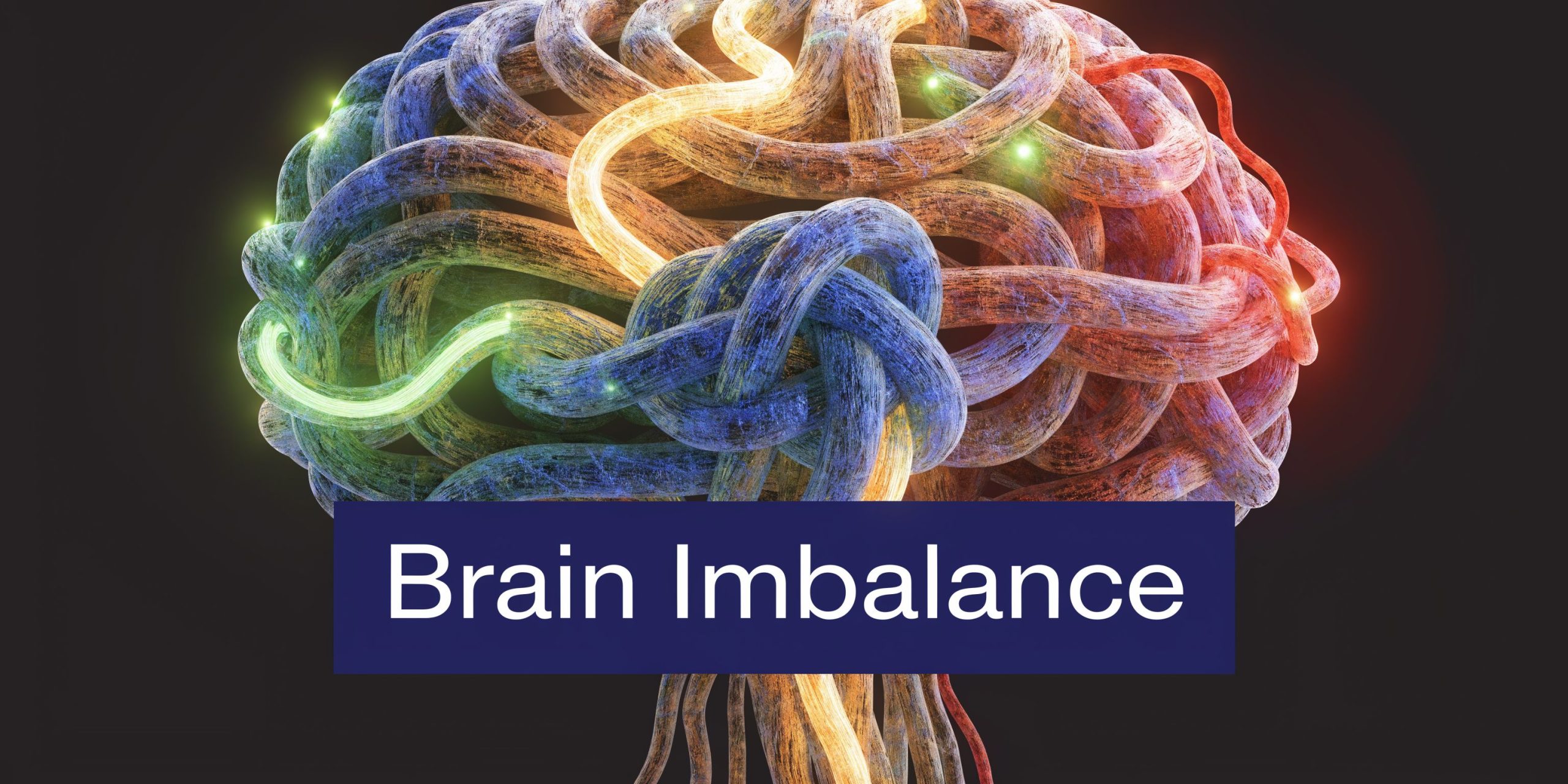
The overdrawn account analogy
In day-to-day life, the brain uses dopamine to help a person feel motivation, pleasure, alertness, and reward. Healthy activities create manageable changes in that system. Crack does something very different.
It creates a dramatic surge. Then the brain has to recover from that surge.
One verified description puts it plainly. Crack cocaine withdrawal is driven by profound dysregulation of the brain's dopaminergic reward system, where chronic use causes massive dopamine release leading to depleted levels upon cessation, manifesting as the 'crash' phase within hours to 72 hours post-last use (Topsail Addiction Treatment on crack withdrawal and dopamine dysregulation).
That is the overdrawn account. The brain gets pushed far beyond its normal balance, then cannot instantly refill what was depleted.
Why mood drops so hard
When the reward system is depleted, ordinary life can feel emotionally colorless. Things that once felt good may feel flat. A meal may not feel satisfying. A conversation may not feel comforting. A walk outside may not lift mood at all.
This helps explain symptoms such as:
- Profound fatigue: The person may feel drained in a way that sleep does not fix right away.
- Depression: The emotional low can feel sudden, heavy, and frightening.
- Anhedonia: This means an inability to feel pleasure. Families often misread this as indifference.
- Cravings: The brain remembers the fast dopamine surge and pushes hard for relief.
- Irritability and agitation: The person may feel constantly uncomfortable in their own skin.
That reaction is not weakness. It is the nervous system trying to function after repeated overstimulation.
Why a person can seem unlike themselves
Families often say, “This does not seem like the person known before crack.” That observation makes sense.
During withdrawal, a person may have trouble concentrating, struggle to make decisions, or become suspicious and emotionally unstable. In more severe cases, paranoia, hallucinations, or psychotic features can appear. Some people also become hopeless.
This is one reason quitting alone can be dangerous. A person may be too exhausted to care for basic needs, too depressed to stay safe, or too distressed to resist using again.
When shame is removed from the conversation, treatment becomes easier to accept. Withdrawal is a medical and psychological response, not a moral failure.
Why professional support helps the brain recover
The brain does not snap back to normal because someone wants it to. It heals over time, with stability, rest, nutrition, emotional support, and treatment for cravings, depression, anxiety, and co-occurring mental health conditions when needed.
That is why medical detox and follow-up care matter. They create a controlled setting where the person is protected during the lowest point of the crash. Instead of chasing immediate relief through more drug use, the person has support while the brain slowly begins to regain balance.
For families, this explanation often brings relief. The person is not “choosing misery.” The brain is in a depleted state. Understanding that can replace blame with urgency, patience, and action.
The Crack Withdrawal Timeline A Phase-by-Phase Guide
The timeline matters because withdrawal symptoms crack often feel unpredictable when a family sees them for the first time. In reality, the course usually moves through recognizable phases.
A verified source notes that crack cocaine withdrawal begins rapidly, with acute symptoms emerging within 30 minutes to 72 hours after the last use. This initial phase, often called the 'crash,' includes extreme fatigue, irritability, and restlessness, peaking around days 3-7 with profound depression and strong drug cravings. Post-acute withdrawal syndrome (PAWS) can extend up to 10 weeks or even 28 weeks in heavy users (American Addiction Centers on crack withdrawal timeline).
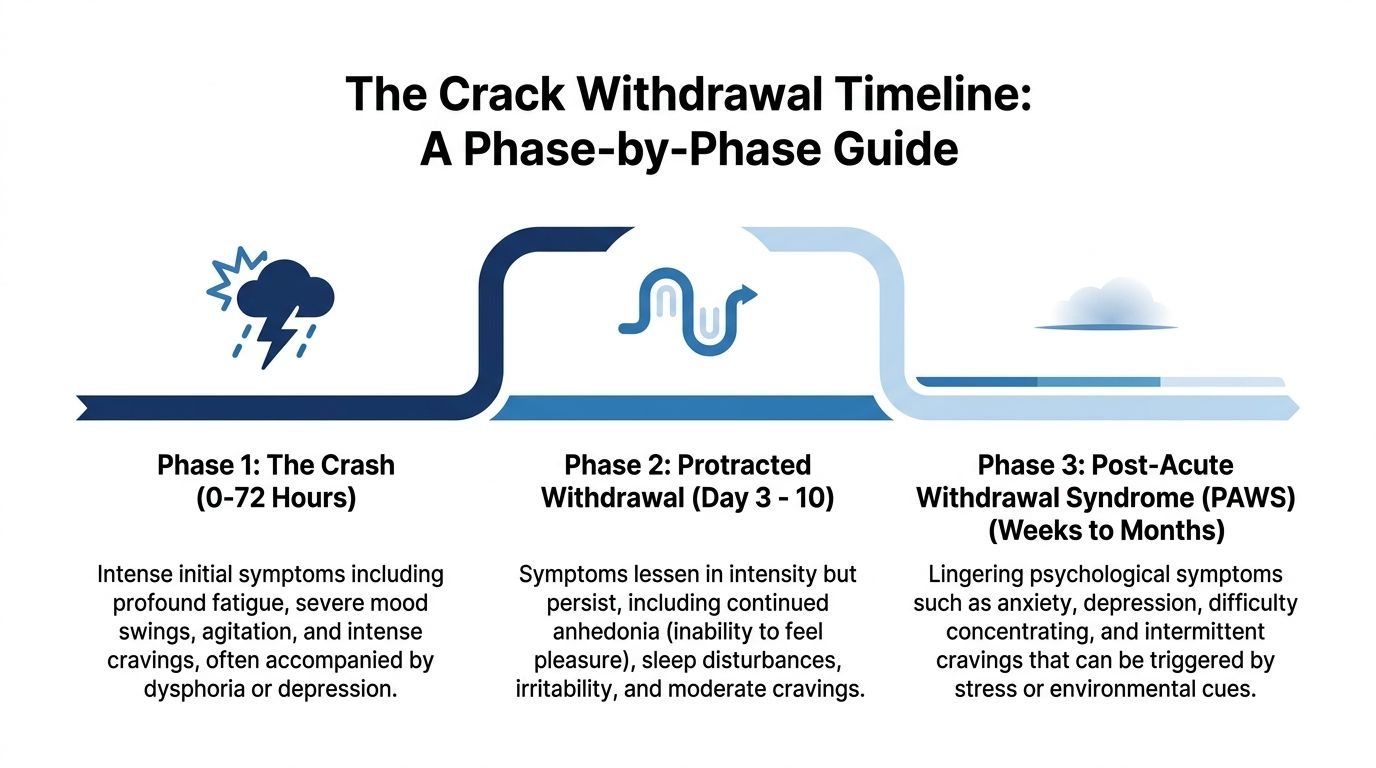
Crack Withdrawal Symptom Timeline
| Phase | Typical Timeline | Common Physical & Psychological Symptoms |
|---|---|---|
| Crash | 30 minutes to 72 hours after last use | Extreme fatigue, increased appetite, hypersomnia, irritability, restlessness |
| Acute withdrawal | Days 3 to 14, often peaking around days 3 to 7 | Strong cravings, depression, anxiety, trouble sleeping, mood swings, poor concentration |
| Protracted withdrawal or PAWS | Up to 10 weeks, and up to 28 weeks in heavy users | Anhedonia, emotional instability, panic attacks, short-term memory difficulties, intermittent cravings |
The crash phase
The crash usually arrives fast. A person may go from stimulation to exhaustion with very little warning. Many sleep heavily. Others are restless and unable to settle. Appetite often increases after a period of poor eating.
This phase can look contradictory. Someone may seem half asleep one hour and sharply irritable the next. That swing is part of the instability.
Families often ask whether the person should be allowed to sleep it off at home. Rest can help, but home is not always safe if severe depression, paranoia, psychosis, or relapse risk is present.
The acute withdrawal phase
After the earliest crash, many people expect steady improvement. Sometimes that happens. Often, the more difficult emotional symptoms become clearer during this period.
Days 3 through 7 can be especially hard. Depression can deepen. Cravings can become intense. Sleep may shift from oversleeping to trouble sleeping. Anxiety, agitation, and poor concentration can make even simple tasks feel impossible.
A few patterns often show up here:
- Mood instability: The person may cry, isolate, lash out, or become numb.
- Mental fog: Reading, working, and conversation may feel hard to follow.
- Strong urge to use: The brain starts bargaining for relief.
- Lower frustration tolerance: Small stressors can feel overwhelming.
For anyone trying to understand how long detox may take, this guide on how long cocaine detox can take can help frame what families may expect from the early treatment window.
The longer tail of withdrawal
The physical intensity often settles before the emotional and cognitive symptoms do. At this point, many families get caught off guard. They see the person eating, talking, and moving around more normally, then assume the crisis is over.
It may not be.
Some people move into a protracted phase often called PAWS, or post-acute withdrawal syndrome. During that stretch, cravings can return suddenly. Pleasure can still feel muted. Memory, focus, and motivation may remain weak. Stress can trigger a powerful urge to use again.
The most dangerous mistake in recovery is assuming that “feeling a little better” means the problem has passed.
What this timeline means in real life
A practical example helps. A person in Orange County may stop using on a Friday night. By Saturday, there may be exhaustion, heavy sleep, hunger, and irritability. By Monday or Tuesday, cravings and depression can feel much stronger. A week or two later, that person may still feel emotionally raw and unable to trust their own judgment.
That is why a single intervention rarely works. A ride home, one serious talk, or a few days of rest usually does not address the whole pattern. Recovery works better when care follows the actual timeline, not wishful thinking.
Factors That Influence Withdrawal Severity
Not everyone experiences crack withdrawal in the same way. Two people can use the same drug and still have very different symptoms. That difference is one reason generic advice often fails.

A verified source notes that crack is among the most addictive substances, with addiction possible after just one use, and withdrawal symptoms affecting both body and mind severely, including up to a 4.2% lifetime experimentation rate among U.S. teens and young adults (6.2 million people) (Skywood Recovery on crack withdrawal symptoms and prevalence).
That statistic matters for one reason beyond scale. It reminds families that crack use is not rare, and seeking help should not carry shame.
The person’s pattern of use
Severity often rises when crack use has been frequent, prolonged, or heavy. More exposure generally means the brain has had more disruption in reward, sleep, mood, and stress response.
A person who has been using in repeated binges may also enter withdrawal depleted from poor sleep, poor nutrition, and emotional exhaustion.
Co-occurring mental health conditions
Withdrawal can hit harder when a person already lives with depression, anxiety, trauma symptoms, bipolar disorder, or another mental health concern. In those cases, stopping crack does not just reveal withdrawal. It can also expose symptoms that the drug had been masking or worsening.
This is why dual-diagnosis care matters. Treating addiction without addressing mental health often leaves the deepest drivers untouched.
Physical health and resilience
General health shapes withdrawal too. A person who is sleep deprived, undernourished, dehydrated, or medically fragile may struggle more during early detox. Even when physical symptoms are not the main feature, the body still needs strength to stabilize.
Sleep disruption can also magnify everything. When a person cannot rest well, cravings, irritability, and emotional swings tend to feel stronger.
Environment and support
A person trying to stop in the same place where crack was used may face immediate triggers. That could be certain people, neighborhoods, routines, arguments, or even times of day.
Support systems also matter. A calm, informed family can help. A chaotic home, active substance use around the person, or constant conflict can make symptoms feel harder to manage.
Why personal assessment matters
A checklist cannot tell a family exactly how hard withdrawal will be. It can, however, identify risk.
A stronger plan is usually needed when any of the following are present:
- Heavy or repeated use
- Severe depression, paranoia, or emotional instability
- Past relapse during withdrawal
- Limited family support
- A history of trauma or another mental health condition
These factors do not mean recovery is less likely. They mean the person may need more structure, more monitoring, and more time.
Why Medical Detox Is Your Safest First Step
Many families hope the person can stop at home, sleep for a few days, eat well, and push through. That hope is understandable. It is also risky.
Crack withdrawal can bring severe psychological distress. Depression can become overwhelming. Cravings can escalate quickly. Some people develop paranoia, hallucinations, or psychotic features. Others become so emotionally desperate that relapse feels like the only escape.

What makes home detox dangerous
The main danger is not always dramatic physical collapse. More often, it is impaired judgment during a period of intense emotional pain.
A person detoxing alone may:
- Return to use quickly: Cravings can feel urgent and persuasive.
- Become unsafe: Severe depression or suicidal thinking may emerge.
- Lose touch with reality: Paranoia or psychotic symptoms can distort decision-making.
- Refuse help: Shame, fear, and confusion often peak during withdrawal.
Families also carry a burden at home that they may not be prepared for. They may not know when sadness becomes a crisis, when agitation becomes dangerous, or how to respond if the person becomes delusional, panicked, or intent on leaving to get more crack.
What medical detox changes
Medical detox gives the person distance from triggers and access to trained staff in a controlled setting. That changes the entire early recovery picture.
In a monitored detox setting, staff can assess mood, watch for psychiatric instability, support sleep and nutrition, and respond quickly if symptoms intensify. Medication may also be used to ease related symptoms such as anxiety, depression, or sleep disruption when clinically appropriate.
This is not about making withdrawal disappear. It is about making it safer, more tolerable, and less likely to end in immediate relapse.
The first goal of detox is stabilization. A person does not need to solve every life problem in the first few days. That person needs to get through the first days safely.
Families looking for local care can learn more about medical detox options in Orange County.
Why the first call matters
When someone is in the crash, delay can make the next hours harder. A same-day conversation can clarify whether the person needs urgent detox, psychiatric support, or a broader treatment plan after stabilization.
For a confidential consultation, call (866) 450-0391.
Finding Your Path to Recovery in Orange County
Detox is the opening step, not the full answer. A person may get through the crash and still feel emotionally vulnerable, mentally foggy, and highly reactive to triggers. That is why long-term recovery works best as a sequence of care, not a single event.
For Orange County residents, one of the biggest advantages is access to a full local continuum. That means someone does not have to detox in one place, search for therapy elsewhere, and then piece together support alone.
Detox and residential treatment
Some people need a fully structured environment after detox. Residential treatment, often called RTC, can help when cravings remain strong, home is unstable, or co-occurring mental health symptoms need close attention.
This level of care is often a good fit for people who:
- Need distance from triggers
- Have relapsed quickly in the past
- Struggle with depression, anxiety, trauma symptoms, or unstable mood
- Need a daily treatment routine before returning to work, school, or family demands
In residential care, the day is organized around therapy, education, skill-building, and recovery structure. That routine helps a person regain stability while the brain continues healing.
Partial hospitalization as a step down
A Partial Hospitalization Program, or PHP, offers a high level of support without overnight residence for some clients. It can work well for someone who is medically stable but still needs substantial daytime care and accountability.
PHP often fits people who are no longer in immediate detox danger but still need:
- Frequent therapy
- Ongoing psychiatric support
- Daily structure
- Close monitoring of cravings, mood, and relapse risk
This can be a strong option for people in Orange County who want intensive treatment while beginning to reconnect with life outside a fully residential setting.
Intensive outpatient for rebuilding daily life
An Intensive Outpatient Program, or IOP, gives people more flexibility while keeping treatment active. This level can support someone who is returning to work, school, parenting, or other responsibilities but still needs meaningful clinical support.
IOP often focuses on practical recovery in real time. That includes managing cravings, navigating triggers, repairing relationships, building routine, and preventing relapse while living in the community.
A person in Irvine may attend treatment and then go home to practice new coping skills that same evening. A person in Huntington Beach may use IOP to stay anchored while returning to work. That real-world practice matters.
People comparing local options can review this guide to drug rehab centers in Orange County.
Why the setting matters
Environment shapes healing. A calm setting can lower stress, reduce stimulation, and make treatment more tolerable for someone emerging from crack withdrawal. In South Orange County, many families look for a location that feels removed from the noise and pressure tied to active addiction.
That local accessibility matters too. Family involvement is often easier when treatment is nearby. Aftercare planning also becomes more practical when the care team understands the rhythms, triggers, and pressures of Orange County life.
A local roadmap that makes sense
A workable recovery path often looks like this:
- Medical detox for stabilization and safety.
- Residential treatment if the person needs strong structure and separation from triggers.
- PHP for continued intensive support.
- IOP for reintegration into daily life with accountability.
- Aftercare and community support to protect progress.
Not every person needs every level. The right path depends on symptoms, relapse risk, mental health, home environment, and readiness. What matters most is that the path exists and can be adjusted as recovery unfolds.
Building a Life Beyond Addiction Coping Strategies
Stopping crack is one milestone. Building a life that does not keep pulling a person back toward crack is the deeper work.
That means recovery has to become practical. A person needs ways to handle stress, boredom, sadness, conflict, and craving without reaching for the drug that once seemed to solve all of those states at once.
Daily tools that support sobriety
Some coping strategies sound simple, but they become powerful when used consistently.
- Structured routine: Regular sleep, meals, treatment attendance, and movement help stabilize mood and reduce impulsive choices.
- Trigger mapping: A person can identify people, places, feelings, and routines tied to past use.
- Craving response plans: Instead of debating with a craving, the person follows a prepared sequence such as leaving a triggering place, contacting support, eating, resting, or attending a meeting.
- Short-term thinking: Early recovery often works best when the person focuses on getting through today, then the next day.
Why integrated support matters
Recovery is not only cognitive. The body stores stress. The nervous system stays activated. Many people in early recovery feel restless, flat, emotionally disconnected, or unable to calm themselves.
That is where integrated practices can help. Yoga, meditation, breathwork, art therapy, nature hikes, and similar supports give the person non-drug ways to regulate emotion and reconnect with the body. These are not cosmetic extras. They can become real relapse-prevention tools.
For example, a person who once used crack during emotional overwhelm may learn to slow breathing, move through agitation physically, or express pain in therapy and art instead of acting on impulse.
Long-term recovery becomes stronger when a person builds a life that feels manageable, connected, and worth protecting.
Relationships and aftercare
No one does well in isolation for long. Recovery usually improves when a person has honest support, clear boundaries, and ongoing care after formal treatment ends.
That can include:
- Family therapy or education
- Peer support
- Sober living when needed
- Relapse-prevention planning
- Continued individual therapy
- Psychiatric follow-up for co-occurring mental health needs
Families can help by staying steady rather than trying to control every outcome. Encouragement helps. Clear boundaries help too. Rescue patterns, denial, and chaos usually do not.
A future that feels different
Early recovery can feel dull or fragile because the brain is still healing. That stage does not last forever. With time, support, and consistent treatment, people often regain motivation, emotional range, trust, and the ability to enjoy ordinary life again.
That is the hope underneath this entire process. The person is not trying to “go back” to the exact life that existed before. Recovery works best when the person builds something sturdier, calmer, and more honest than what addiction allowed.
Still Water Wellness Group offers Orange County residents a full path forward, from medical detox and residential care to PHP, IOP, dual-diagnosis treatment, and integrated aftercare in Lake Forest. Anyone searching for help with withdrawal symptoms crack can speak with the admissions team confidentially, verify insurance, and learn what level of care fits the situation best. Help is available now at Still Water Wellness Group or by calling (866) 450-0391.