A spouse notices that a loved one can't seem to get through the evening without Xanax. A parent sees a prescription refill become a source of tension. An adult who started taking Ativan for panic begins to wonder why missing one dose now feels so awful. In homes across Orange County, that moment of concern often arrives insidiously.
Those concerns are valid. Benzodiazepines can help with anxiety, panic, insomnia, and related symptoms, but they also carry real risks that many families don't fully understand until a problem is already taking shape. In the United States, the share of adults with a benzodiazepine prescription increased from 4.1% in 1996 to 5.6% in 2013, while benzodiazepine-involved overdose deaths increased from 0.58 per 100,000 adults to 3.07 in 2010, according to CDC data on benzodiazepine prescribing and overdose trends.
That doesn't mean every person who takes a benzo will develop addiction. It does mean this isn't a rare or fringe issue. It's a common medical and family problem, and it deserves a calm, informed response instead of blame.
Families often get stuck on one painful question. Is this addiction, or is the body dependent on a medication it has been taking for a long time? That distinction matters. It shapes how withdrawal is handled, how treatment is planned, and how much compassion a person needs while healing.
Introduction Acknowledging Your Concerns
A daughter notices her father seems groggy at dinner, then tense and shaky when a dose is late. A husband starts wondering why a medication meant to calm panic now seems to shape the whole day. In homes across Orange County, concern often begins this way: subtly, personally, and with a growing sense that something has changed.
That reaction is reasonable.
Benzodiazepine problems are easy to miss in the beginning because they often start with a legitimate prescription and a real effort to feel better. The person taking the medication may feel relief at first, then confusion, then fear. Family members often feel their own mix of emotions too: protectiveness, frustration, guilt, and uncertainty about whether they are seeing dependence, addiction, or both. This guide is written for that moment. The goal is not to assign blame. The goal is to explain what may be happening and show that recovery is a medical process, not a moral verdict.
Why this concern deserves attention
Benzodiazepines are common medications, and the risks tied to them have become a larger public health concern over time, as noted earlier in this article. For families, the message is straightforward. Worry about benzo use is not overreacting. It is a sensible response to a well-recognized medical problem that can affect mood, memory, sleep, safety, and relationships.
A simple way to understand it helps. Over time, the brain can begin to adjust to a benzodiazepine the way eyes adjust to a dark room. After that adjustment, the medication may no longer feel optional. The person may seem “fine” while taking it, then noticeably unwell between doses or when trying to cut back. That shift can be subtle, which is why families often question their instincts for too long.
Practical rule: If someone needs higher doses, feels significantly worse between doses, or cannot reduce use without symptoms, a professional assessment is warranted.
What families usually need most
Families usually are not asking for textbook definitions. They are trying to answer urgent, human questions:
- What counts as a real warning sign: Is the problem the prescription itself, the way the medication is being used, or the changes showing up in daily life?
- What happens if the person stops: Could withdrawal be dangerous without medical care?
- What does treatment involve: Is detox enough, or does recovery usually require ongoing support?
- Is there a path forward without shame: Can the person get help in a way that protects dignity and builds trust?
Yes. There is.
People recover from benzodiazepine dependence and addiction every day, especially when the problem is recognized early and treated carefully. For Orange County families, hope starts with clear information, a safe plan, and the understanding that this condition deserves medical care and compassion at the same time.
Understanding Benzodiazepine Use Dependence and Addiction
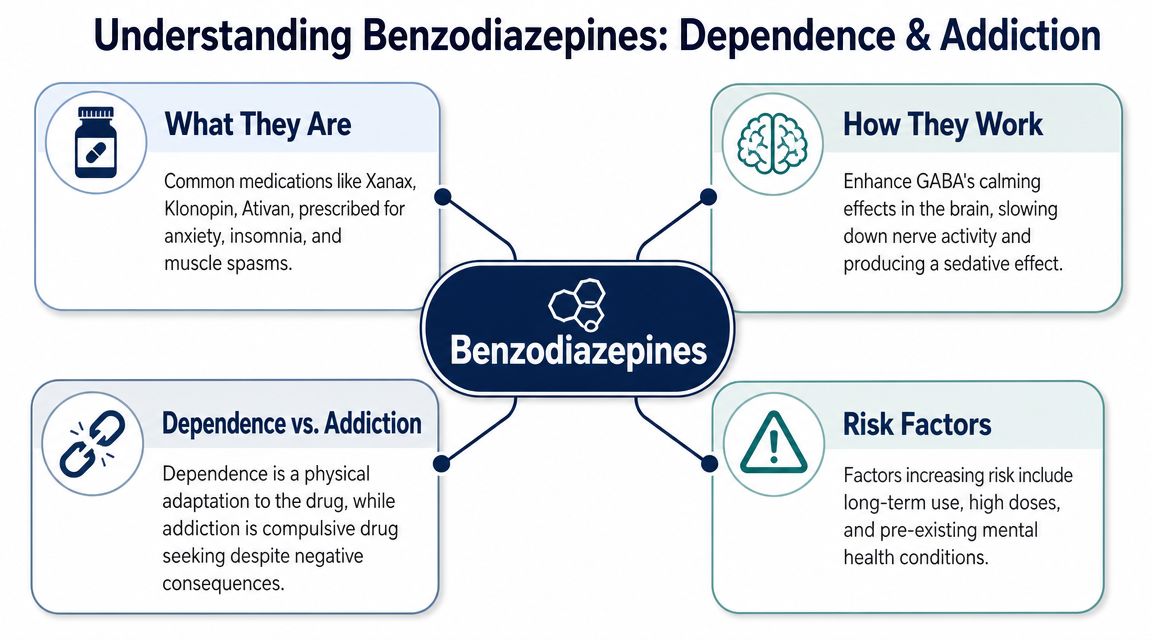
Benzodiazepines include medications such as Xanax, Klonopin, Valium, and Ativan. Doctors prescribe them for anxiety, panic symptoms, insomnia, muscle tension, and other short-term needs. They work by enhancing calming activity in the brain, which is why they can bring quick relief.
That quick relief is also part of what makes addiction to benzos so confusing. A medication can seem helpful at first, then become something the brain and body begin to rely on.
Dependence and addiction aren't the same
Understanding this often challenges many families. Physical dependence means the body has adapted to the presence of the drug. If the medication is reduced too quickly, withdrawal symptoms can appear. That can happen even when someone has taken the medication exactly as prescribed.
Addiction goes further. It involves compulsive use, loss of control, persistent cravings, or continued use despite harm to health, relationships, work, or safety.
A simple comparison helps:
| Pattern | What it usually means |
|---|---|
| A person takes the prescribed dose but feels sick or panicked when trying to stop | More consistent with physical dependence |
| A person repeatedly takes more than prescribed, seeks extra pills, or keeps using despite clear harm | More consistent with addiction |
| A person has both withdrawal symptoms and compulsive use | Dependence and addiction may both be present |
Some experts argue that many long-term benzodiazepine patients are dealing more with physical dependence and difficult withdrawal than compulsive drug-seeking addiction, and that this distinction matters because treatment often requires slow tapering over months or years rather than abrupt detoxification, as described in this expert overview on benzodiazepine dependence and tapering.
How common misuse is
A national study found that 30.6 million U.S. adults, or 12.6%, reported past-year benzodiazepine use. Of those, 25.3 million, or 10.4%, used them as prescribed and 5.3 million, or 2.2%, misused them. The authors also noted that misuse accounted for 17.2% of overall use in this PubMed-indexed study on benzodiazepine use and misuse.
Those numbers matter for two reasons:
- Most users don't develop addiction: Families shouldn't assume that every prescription leads there.
- The scale is still large: Even a minority pattern affects millions of people.
Dependence is not a character flaw. It is the brain adapting to a drug that changes how calm, alert, and safe the body feels.
Why stigma gets in the way
When a person says, “It's prescribed, so it can't be addiction,” treatment may be delayed. When a family says, “Just stop taking it,” withdrawal risk may be underestimated. Clear language helps. It lowers shame and leads to better decisions.
Recognizing the Signs and Overdose Risks
Benzo problems often become visible in everyday life before anyone names them. The person may look tired all the time, miss details, forget plans, or seem strangely detached. Families may notice a pattern long before they know the medical terms.
Common warning signs in daily life
A checklist can help, but context matters. One sign alone doesn't confirm addiction to benzos. A cluster of changes is more meaningful.
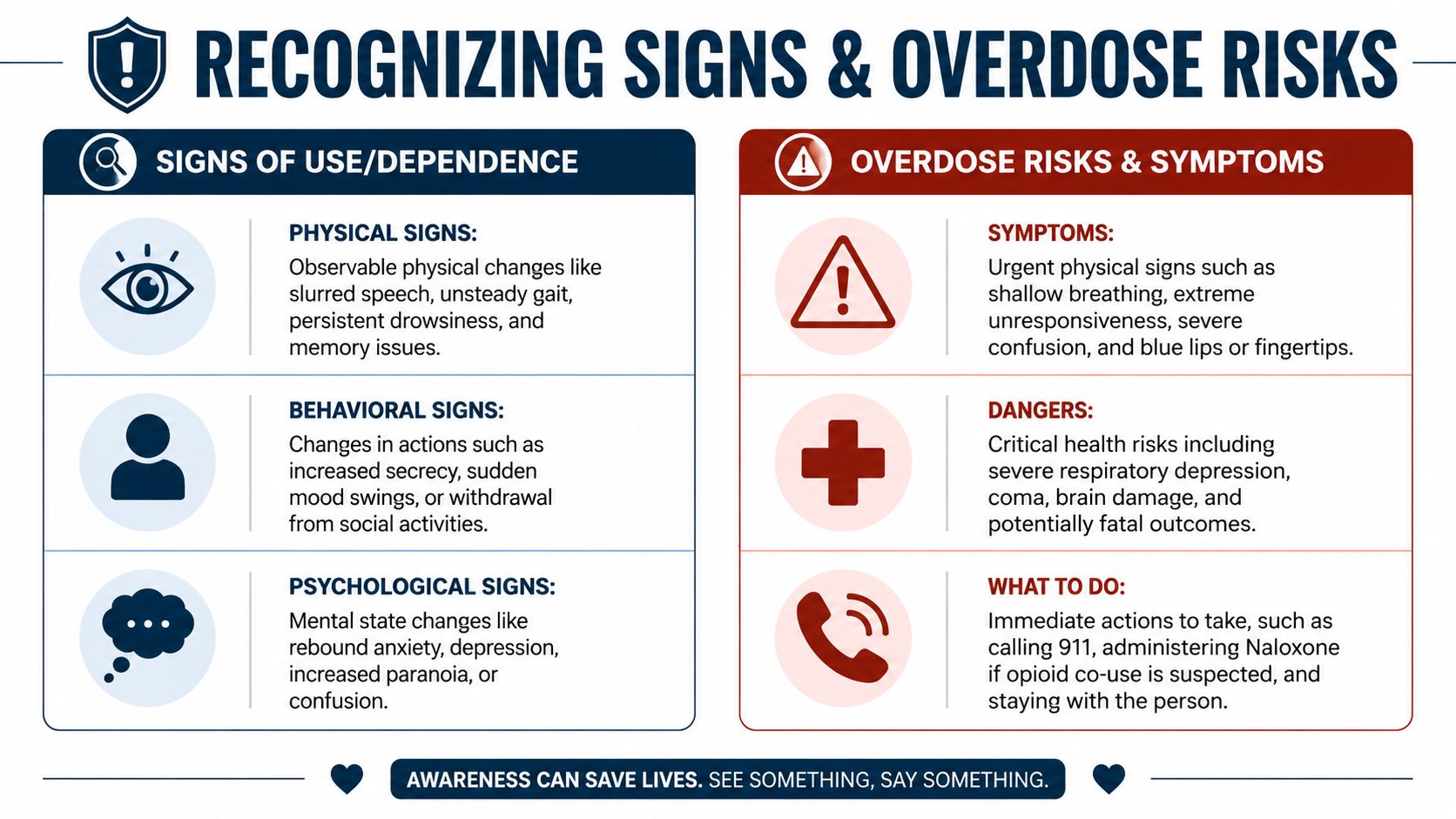
Physical signs
- Speech changes: Slurred or slowed speech can sound like intoxication.
- Coordination problems: A person may stumble, drop things, or seem off balance.
- Persistent drowsiness: They may sleep at odd times or struggle to stay alert.
- Memory lapses: Conversations may be repeated or forgotten.
Behavioral signs
- Dose problems: Taking medication earlier than planned or running out too soon.
- Withdrawal from others: Canceling plans, isolating, or avoiding family discussion.
- Neglected responsibilities: Trouble managing work, parenting, or household tasks.
- Secrecy: Hiding pills, becoming defensive, or changing stories about use.
Psychological signs
- Rebound anxiety: Feeling markedly worse as the medication wears off.
- Mood instability: Irritability, low mood, or abrupt emotional swings.
- Confusion: Difficulty following conversations or making simple decisions.
- Fear around stopping: Panic at the idea of reducing the dose.
The overdose risk families miss
One of the most dangerous misunderstandings is thinking benzos are mainly risky on their own. In real life, the greater danger often comes from combined use. A review in NIH's PMC notes that benzodiazepine abuse most commonly occurs with other drugs, and opioids and alcohol are frequent primary substances among people using benzodiazepines nonmedically. Mixing benzos with other CNS depressants can be fatal, as outlined in this review on benzodiazepine misuse and polysubstance use.
That means the person who takes a benzo and also drinks at night may be at much greater risk than the family realizes. For readers trying to understand that specific combination, this discussion of alcohol and anxiety medication risks offers helpful context.
If a person is hard to wake, breathing slowly, severely confused, or turning blue around the lips or fingertips, emergency care is needed immediately.
What overdose can look like
| Sign | Why it matters |
|---|---|
| Extreme sleepiness or unresponsiveness | The brain is becoming too suppressed |
| Slow or shallow breathing | Breathing can become dangerously inadequate |
| Severe confusion | The nervous system is under heavy depressant effect |
| Blue lips or fingertips | The body may not be getting enough oxygen |
If opioid co-use is suspected and naloxone is available, bystanders should follow emergency guidance while calling 911 and staying with the person.
The Critical Dangers of Benzodiazepine Withdrawal
Withdrawal is the part of this condition that families most often underestimate. A person may assume that because benzodiazepines are prescribed, stopping them should be straightforward. In reality, sudden discontinuation after prolonged or heavy use can be medically dangerous.
The core issue is brain adaptation. With repeated exposure, the nervous system adjusts to the drug's calming effect. Once that effect is removed too fast, the system can swing into overactivity.
Why quitting suddenly can be dangerous
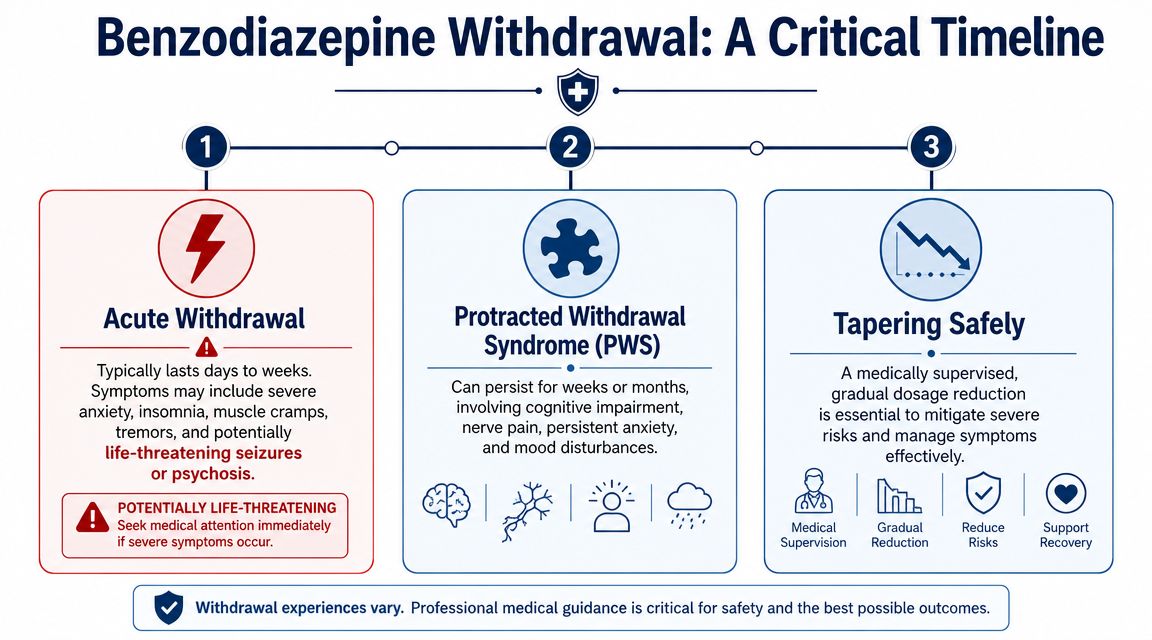
Clinical literature describes a clear tolerance and dependence cycle. With repeated use, the same dose may produce less effect. If the medication is stopped abruptly, withdrawal can include tremor, autonomic hyperactivity, hallucinations, and grand mal seizures, and expert guidance emphasizes slow tapering because withdrawal can be life-threatening, according to this PMC review on benzodiazepine withdrawal and tapering.
That's why home detox isn't a casual decision. For some people, it can become an emergency.
How withdrawal often unfolds
Withdrawal doesn't look identical in every person, and exact timing varies by medication, dose, duration of use, age, and general health. Still, families often notice a familiar pattern.
Early stage
Anxiety may surge. Sleep becomes worse. The person may seem restless, shaky, or unusually sensitive to sound and stress.
Acute stage
Symptoms may intensify into tremors, sweating, agitation, rapid heart rate, severe insomnia, perceptual disturbances, or seizures. This is the phase that carries the highest medical risk.
Longer recovery phase
Some people continue to deal with anxiety, poor concentration, disturbed sleep, or nervous system sensitivity after the most dangerous stage has passed. That doesn't mean recovery has failed. It means the brain may still be recalibrating.
Sudden cessation is not a test of strength. It's a medical risk.
For readers weighing options, medical detox for substance withdrawal is often the safest starting point when benzodiazepine dependence is established.
What families should do instead of pushing a fast stop
- Pause the argument: Pressure and panic can make a person hide use or stop unsafely.
- Seek an assessment: A clinician can determine whether tapering, detox, or a higher level of care is needed.
- Watch for red flags: Hallucinations, severe tremors, confusion, and seizure activity require urgent medical attention.
Evidence-Based Treatment Pathways to Recovery
A family may feel a rush of hope once a loved one agrees to get help, then hit a second wave of fear after hearing terms like detox, residential, PHP, and IOP. That reaction is understandable. Benzodiazepine recovery often happens in stages because each stage solves a different problem.
The first job is medical safety. The next is understanding why the medication became so hard to stop. After that, treatment shifts toward practicing daily life without depending on a pill to quiet the nervous system. This step-by-step approach is not a sign that someone is broken. It is how good care is built.
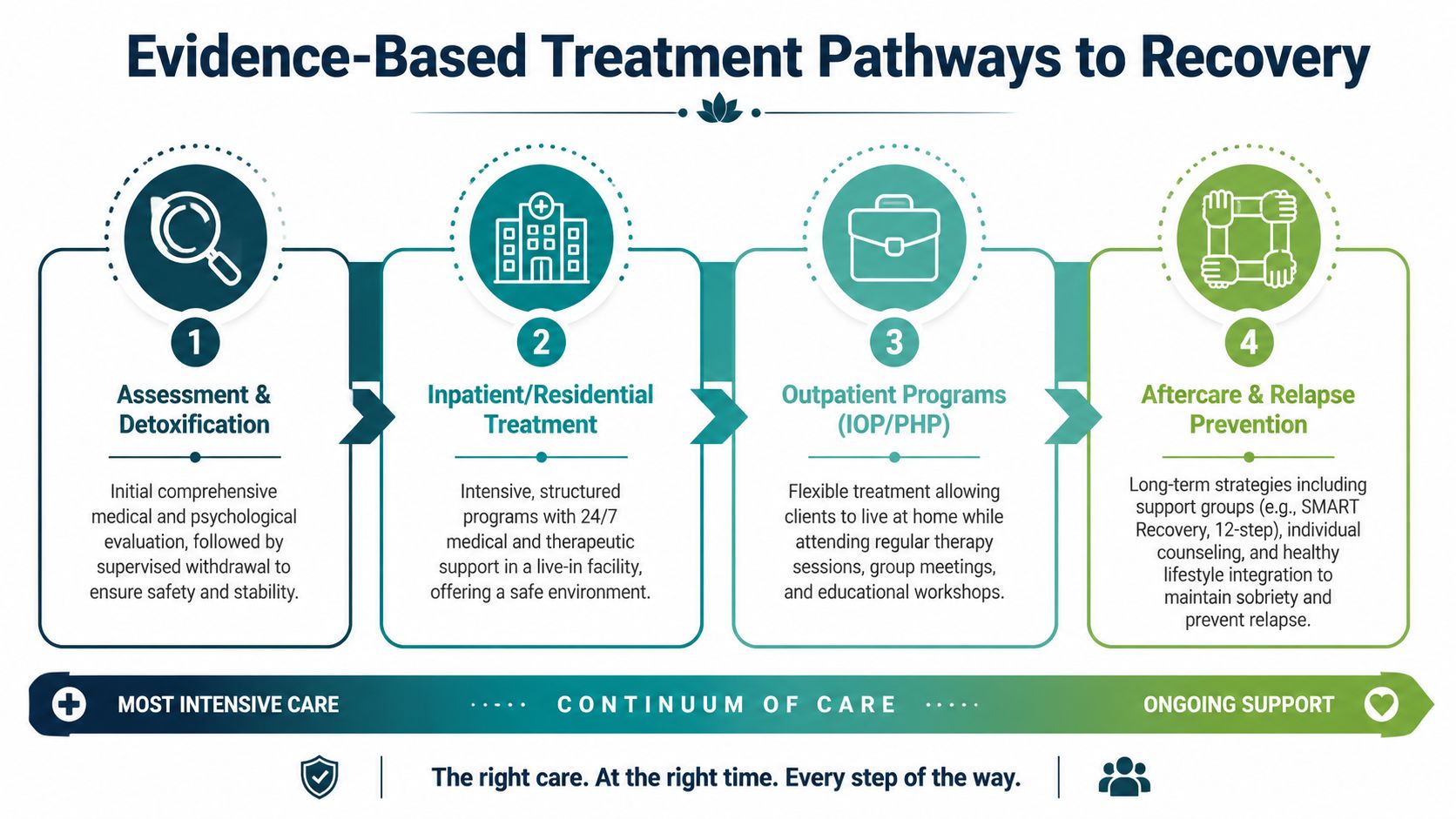
The continuum of care
Recovery care works a lot like rebuilding after a house fire. First, you secure the structure. Then you repair the hidden damage. Only after that can daily life feel livable again.
Assessment and stabilization
Treatment starts with a careful medical and psychological assessment. Clinicians look at which benzodiazepine is being used, how long it has been used, the current dose, and whether alcohol, opioids, or other substances are also involved. They also assess anxiety, trauma, depression, sleep problems, and any past withdrawal complications.
That information shapes the safest treatment plan. One person may need close medical supervision right away. Another may be stable enough for a different level of care.
Medical detox
Detox focuses on keeping the person safe while the body adjusts. For benzodiazepines, that often means monitoring symptoms, watching for complications, and using a gradual taper rather than a sudden stop.
Families sometimes expect detox to solve the whole problem. Detox is the starting point. It helps the brain and body get through the most unstable period so treatment can continue.
Residential treatment
Residential care gives a person time, distance, and structure. That matters because many people are trying to recover while exhausted, emotionally overwhelmed, and surrounded by the same triggers that kept the cycle going.
In a residential setting, the day becomes more predictable. Sleep can start to normalize. Therapy happens consistently. Psychiatric symptoms can be evaluated more clearly because clinicians are no longer trying to sort out what is caused by active benzo use and what reflects an underlying mental health condition.
Partial hospitalization and intensive outpatient care
PHP and IOP are step-down levels of care. They let a person keep getting frequent therapy and monitoring while beginning to re-enter work, family life, and ordinary responsibilities.
This phase is where coping skills get tested in real settings. Someone may learn how to handle a stressful commute, a tense family conversation, or a sleepless night without returning to benzodiazepines. That practice matters because recovery has to work at home, not only in treatment.
The Importance of Dual Diagnosis Care
Many people who become dependent on benzos were not chasing a high. They were trying to get relief. Panic, trauma symptoms, chronic worry, and insomnia can make a sedating medication feel less like a choice and more like a lifeline.
If treatment only removes the drug but leaves those problems untreated, the person is still suffering. That increases the risk of return to use. Dual diagnosis care addresses both sides at once: the substance use disorder and the mental health condition that may have fueled it.
A treatment plan often includes:
- Psychiatric evaluation: To clarify anxiety, depression, trauma, mood symptoms, or sleep-related concerns.
- Medication management: To review which medications are helping, which may carry risk, and which alternatives may be safer.
- Individual therapy: To work on triggers, fear patterns, avoidance, and the beliefs that keep the cycle in place.
- Group therapy: To reduce shame and help people learn practical recovery skills from others facing similar struggles.
- Family work: To rebuild trust, improve communication, and help loved ones support recovery without enabling.
Stable recovery is more likely when treatment addresses both benzodiazepine use and the pain that led to it.
For Orange County residents, this point is especially important. A local program that can assess mental health needs, provide multiple levels of care, and coordinate treatment across stages can reduce gaps that often derail progress. For example, Still Water Wellness Group is one center that provides medical detox, residential treatment, PHP, IOP, sober living, and dual-diagnosis services within one treatment system.
What progress often looks like
| Stage of care | Main purpose |
|---|---|
| Detox | Physical safety and withdrawal management |
| Residential | Structure, therapy, and protection from triggers |
| PHP or IOP | Skill-building while returning to daily life |
| Aftercare | Long-term stability, relapse prevention, and support |
Recovery rarely follows a perfect straight line. Some people need more time in one level of care. Some need to return to a higher level for added support. That does not mean treatment has failed. It means the plan is being adjusted to fit the person, which is exactly how evidence-based care should work.
Building a Foundation for Lasting Sobriety
Stopping the medication is only part of healing. Many people enter treatment with a dysregulated nervous system, poor sleep, strained relationships, and very little confidence in their ability to handle distress without a pill. Lasting sobriety grows when treatment helps rebuild daily life, not just remove a substance.

Healing the nervous system
Benzodiazepine recovery often leaves people feeling physically tense, emotionally raw, or easily overwhelmed. Complementary therapies can support the body while clinical treatment does the deeper diagnostic and therapeutic work.
Helpful approaches often include:
- Yoga and breathwork: These can help a person practice calm without sedation.
- Meditation and mindfulness: These build tolerance for anxious sensations without immediate escape.
- Nature-based activities: Walks and outdoor reflection can reduce overstimulation and improve grounding.
- Art or experiential therapies: These offer expression when words are hard to find.
These practices aren't extras. For many people, they become the first safe replacement for the “quick quieting” effect a benzo once provided.
Building practical recovery skills
A person in recovery also needs tools for ordinary life. That includes understanding triggers, recognizing relapse warning signs, setting boundaries, improving sleep habits, and learning what to do when anxiety spikes.
A relapse prevention plan often works best when it covers several areas:
- Internal triggers: Panic, shame, insomnia, loneliness, or agitation.
- External triggers: Certain people, old routines, pill access, or environments tied to use.
- Emergency responses: Who to call, where to go, and how to interrupt a spiral early.
- Daily maintenance: Therapy, support groups, movement, meals, rest, and structure.
Recovery includes the body, not just the mind
Many people coming off benzos also deal with exhaustion, poor sleep quality, and a lingering sense that their body “isn't right yet.” Supportive resources on topics like overcoming persistent weariness can help families understand how physical depletion may need attention alongside emotional recovery.
Healing becomes more durable when a person learns how to calm the body, name emotions, and ask for help before distress turns into relapse.
Families help most when they reinforce consistency. Encouragement matters, but routine matters too. Stable sleep, reduced chaos, honest communication, and realistic expectations all make recovery more likely to hold.
How to Find Help in Orange County Today
When a family decides it's time to act, overwhelm can stall the process. The most useful next step is usually simple. Call a treatment provider, describe what's happening, and ask direct questions about benzo-specific care.
Orange County residents have access to programs close to home, from Lake Forest to the coastal communities. For families in Irvine, Huntington Beach, and nearby areas, local care can make assessment, admissions, and family involvement much easier. Readers comparing options in the region can review this guide to drug rehab centers in Orange County for a local starting point.
Questions worth asking any program
- How do clinicians handle benzodiazepine tapering: A safe plan should never sound rushed.
- Is medical detox available: Benzo withdrawal can require close monitoring.
- Does the program treat co-occurring anxiety or trauma: Many people need both.
- What levels of care are available after detox: Recovery often continues through residential or outpatient treatment.
- How are families involved: Good communication helps repair trust and improve outcomes.
Don't let insurance fears stop the first call
Insurance verification is usually confidential and straightforward. Admissions staff can often explain benefits, next steps, and whether a higher or lower level of care may fit. The phone call doesn't force a commitment. It creates clarity.
For many families, that first conversation is the moment panic starts to ease. There's finally a plan, and there are people who understand the difference between dependence, addiction, withdrawal risk, and real recovery.
Help is available 24/7. Call (866) 450-0391 for a confidential consultation and take the first step.
Still Water Wellness Group offers confidential admissions support for people in Orange County who need help with benzodiazepine dependence, detox planning, and ongoing treatment options. Families can learn more about levels of care, insurance verification, and next steps at Still Water Wellness Group.