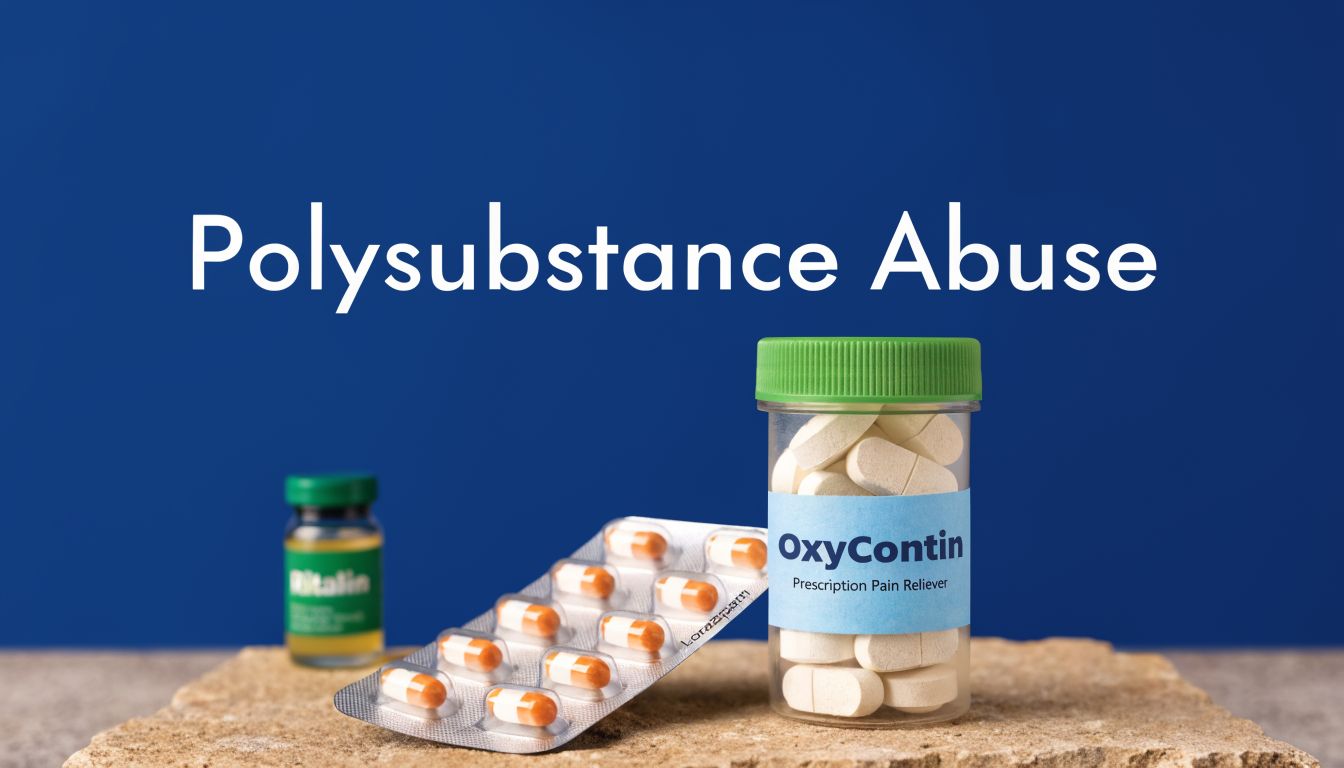
A person in Orange County might think the problem is alcohol, pills, or cocaine. Then a closer look shows something more complicated. Alcohol is being used to soften the comedown from a stimulant. A benzodiazepine is taken to sleep after using another drug. A pill bought casually may contain something unexpected. What looked like “one issue” is often a pattern involving more than one substance.
That pattern has a name: polysubstance abuse. The term can sound clinical, but it describes a situation that many individuals and families are already living with. It isn't a moral judgment. It's a practical way to define polysubstance abuse so the right kind of help can begin.
For many families, confusion is the hardest part. A loved one may insist that only one substance is the problem, while the body and brain are being affected by several. Recovery becomes clearer when the pattern is named accurately. Once that happens, treatment can address the full picture instead of only one piece of it.
An Introduction to Polysubstance Abuse
A family in Orange County may walk into treatment believing there is one clear problem to solve. Then the full pattern starts to come into focus. Alcohol shows up after stimulant use. A sedative is used to force sleep. A pill taken at a party may contain more than expected. What looked simple becomes layered very quickly.
That is why the term polysubstance abuse matters.
In plain language, it refers to the use of more than one substance, either together or close enough in time that one affects the impact of another. The substances may be legal, prescribed, bought on the street, or taken without full awareness of what is in them. The pattern can be intentional, such as using one drug to change the effects of another. It can also happen without planning, especially when the drug supply is unpredictable.
Why the term matters
Families often ask, “What is the main drug?” That question makes sense, but it can miss the true source of danger. In polysubstance use, the risk often comes from how substances interact, how often the pattern repeats, and what the person is trying to manage, such as anxiety, sleep, pain, withdrawal, or a crash after using another drug.
Treatment changes when that full picture is recognized. Detox may need closer monitoring. Mood symptoms may be harder to read at first. Cravings, withdrawal, and overdose risk can all become more complicated when more than one substance is involved.
Practical rule: If a person regularly uses one substance to increase, soften, replace, or recover from another, clinicians should assess the situation as polysubstance use.
This matters in real life, not just in a chart. A person may say alcohol is the issue, while pills, cannabis, stimulants, or opioids are also shaping sleep, behavior, and physical risk. If treatment targets only one substance, it can leave the rest of the pattern untouched.
Why families often miss it
Polysubstance abuse often blends into routine. Someone may drink at night, use pills on weekends, and rely on another drug only during stressful periods. Each choice can look separate. Put together, they work like overlapping currents pulling the same person farther from stability.
That confusion is common, and it is treatable. A clear definition helps families ask better questions, and it helps clinicians build care that fits the person in front of them. For people in Southern California, that can mean getting prompt, individualized help close to home at Still Water Wellness Group, where treatment can address the full pattern instead of only the most visible piece.
A Clear Explanation of Polysubstance Abuse
The simplest way to define polysubstance abuse is this: it involves more than one substance. But that short definition leaves out the details that matter most. Clinicians look at three parts of the pattern: the substances involved, the timing of use, and the intent behind it.
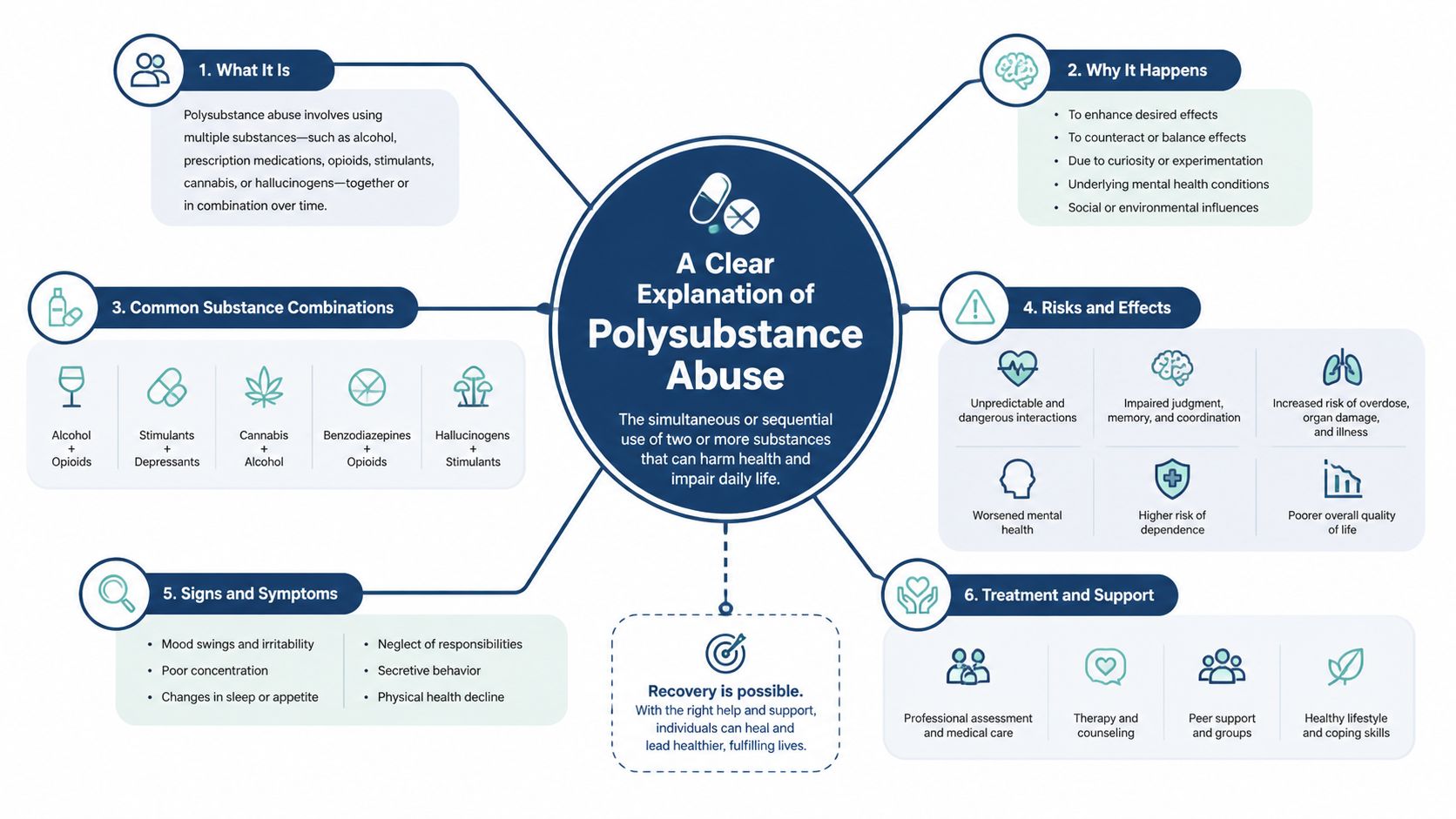
The three parts that shape the definition
A complete definition asks three questions.
| Part | What it means | Simple example |
|---|---|---|
| Substances | Which drugs or alcohol are involved | Opioids plus alcohol, or cocaine plus a sedative |
| Timing | Whether they were used together or close together | Drinking after taking pills, or using one drug to come down from another |
| Intent | Why the person combined them | To feel stronger effects, reduce anxiety, sleep, avoid withdrawal, or unknowingly take a contaminated drug |
This framework matters because two people can both be using multiple substances for very different reasons. One may intentionally combine drugs to intensify a high. Another may be trying to steady mood, fight withdrawal, or get sleep. A third may have no idea that the drug supply contains another substance.
Intentional and unintentional use
Many readers often encounter confusion regarding polysubstance abuse. Polysubstance abuse isn't only about someone making a deliberate decision to mix drugs. It can also involve unintentional exposure.
A person may buy what seems like one drug and end up taking several because of contamination or adulteration in the supply. That reality has changed the conversation around overdose and treatment. It also means families shouldn't assume that every combination was planned.
Polysubstance use is defined by the substances involved, the timing of use, and the intent behind it. In 2019, nearly half of U.S. drug overdose deaths involved polysubstance combinations, and combinations such as opioids with benzodiazepines can amplify respiratory depression by 2 to 5 times compared with a single substance, according to this review on polysubstance use concepts and overdose risk.
It isn't a separate diagnosis label
Another common misunderstanding is that polysubstance abuse is a stand-alone diagnosis in the way many people imagine. In practice, it's better understood as a pattern of substance use that can make a substance use disorder more dangerous and more difficult to treat.
That distinction matters. The goal isn't to pin a person with a more frightening label. The goal is to capture the full pattern so detox, therapy, medication support, and mental health care match what the person is dealing with.
For families in Southern California, that clarity can be a turning point. It shifts the focus from “Which drug is the problem?” to “What full pattern needs treatment?”
Common Substance Combinations and Patterns
Some combinations happen for a reason the person can explain. Others happen through habit. Either way, the pattern usually follows a familiar logic: one substance is used to change the effects of another.
Patterns people often describe
A person may use a stimulant to feel energized, social, or productive. Later, alcohol or a sedative enters the picture to quiet agitation, anxiety, or insomnia. Another person may use opioids and then add another substance to strengthen the effect or reduce withdrawal discomfort. Someone else may mix prescription medications with alcohol and not recognize the danger because both feel familiar.
These combinations aren't unusual in the wider drug environment. In 2022, nearly 50% of all drug overdose deaths involved polysubstance use, and 70.5 million Americans used illicit drugs or misused prescriptions in the past year. The same CDC page notes overlaps such as 8.6 million people misusing prescription pain relievers, which creates many opportunities for risky combinations in everyday life, as shown by the CDC overview of polysubstance use and overdose.
Why the combinations make sense to the user
From the outside, mixed substance use can look irrational. From the inside, it often follows a pattern that feels practical in the moment.
- To come down: A stimulant creates tension or sleeplessness, so alcohol or a sedative is used later.
- To push the high further: One drug is added because the original effect no longer feels strong enough.
- To blunt withdrawal: A second substance is used to avoid feeling sick, panicked, or restless.
- To self-medicate distress: Anxiety, trauma symptoms, depression, and irritability can drive repeated mixing.
A growing concern with contaminated supply
Some of the most dangerous combinations aren't planned at all. A person may think they're using one substance and get something else mixed in. That can happen with fentanyl, xylazine, or other additives that change the effect and the overdose profile.
For readers trying to understand how contamination raises risk, Still Water Wellness Group’s explanation of mixing fentanyl and xylazine gives a practical look at why modern street drugs can become far more dangerous than expected.
A family doesn't need to identify every exact drug combination before asking for help. It helps to recognize the broader pattern. If a person regularly uses one substance to manage the effects of another, the situation deserves professional assessment.
The Hidden Dangers and Magnified Health Risks
The biggest danger in polysubstance abuse isn't just “more drugs.” It's the way substances interact. One drug can intensify another. One can hide warning signs from another. The body doesn't sort these effects into neat categories.
Why mixed substances raise overdose risk
Depressants can compound sedation and slow breathing. Stimulants can make a person feel more alert than they are, which may hide how much stress the body is under. This false sense of control is one reason overdose becomes so unpredictable.
According to this summary of polysubstance risks and treatment concerns, stimulants masking opioid sedation can lead to a 4 to 10 times higher fatality risk than mono-substance use. The same source states that people with polysubstance use patterns have a 70% prevalence of co-occurring psychiatric disorders such as anxiety or bipolar disorder.
A person may look less impaired than they are. That doesn't mean the body is safe. It often means the warning signs are being masked.
Mental health makes the picture more complex
Polysubstance abuse often overlaps with panic, depression, trauma symptoms, insomnia, or unstable mood. Sometimes the mental health condition comes first. Sometimes substance use worsens it. Sometimes both keep feeding each other.
That overlap is one reason a simple “just stop using” approach rarely works. The person may be relying on different substances for different symptoms. One drug for energy. Another for sleep. Another for emotional numbness.
For families trying to understand the specific risks of sedatives, Providers for Healthy Living's blog on benzodiazepines offers useful context on why these medications can become especially dangerous when mixed with other substances.
Why self-management often fails
People often try to control the risk by spacing substances out, taking smaller amounts, or using one drug to “balance” another. That strategy isn't reliable. Timing, purity, tolerance, sleep deprivation, and mental health symptoms can all change the effect.
For a deeper look at one of the most dangerous substances in today’s supply, Still Water Wellness Group’s guide to fentanyl risks and recovery helps explain why quick action matters when fentanyl may be involved.
The central point is simple. Polysubstance abuse creates a moving target. That is why treatment needs medical oversight, not guesswork.
Recognizing the Signs and Symptoms
A parent in Orange County may see one version of their loved one on Friday night and a completely different version on Saturday morning. First they seem wired, talk fast, and cannot sit still. Hours later they are hard to wake up, unsteady, or emotionally flat. That kind of swing can feel confusing, but it often points to mixed substance use rather than a single drug problem.
The reason the signs seem inconsistent is simple. Different substances pull the body and brain in different directions. A stimulant can push someone up. Alcohol, opioids, or sedatives can pull them down. If a person uses more than one substance across the same day or week, the warning signs may look scattered unless you know what pattern to watch for.
Physical signs
Physical symptoms often shift with timing, dose, and the combination involved.
- Rapid changes in energy: Very sleepy at one point, unusually alert a short time later, or the reverse
- Breathing or coordination problems: Slurred speech, nodding off, slowed reactions, stumbling, poor balance
- Sleep disruption: Long periods without sleep followed by a hard crash
- Visible body changes: Sweating, shaking, nausea, vomiting, pinpoint pupils, enlarged pupils, unexplained drowsiness
- Cycle of being “up” and “down”: Looking overstimulated, then sedated, within a short window
One sign by itself does not confirm polysubstance abuse. Repeated clusters of conflicting symptoms deserve attention.
Behavioral signs
Behavior often gives families the clearest clues because it shows how the person is trying to manage the effects of different substances.
- Using one substance to change another effect: Drinking to come down, taking pills to sleep, using stimulants to push through a sedated state
- Hidden or scattered supplies: Alcohol, prescription bottles, loose pills, vape products, or drug paraphernalia showing up in more than one place
- Shifting routines: Missed work, missed classes, sleeping at odd hours, disappearing for stretches of time
- Changing explanations: Stories that do not line up, vague accounts of where medication went, defensiveness about mixing substances
- Risky decision-making: Driving impaired, taking unknown pills, mixing substances without knowing strength or contents
Warning sign: If someone says they need one drug to fix, soften, or extend the effect of another, that often signals a polysubstance pattern.
Psychological and relational signs
Families often notice these changes before they understand what is causing them. Mood may swing quickly. Thinking may seem foggy one day and impulsive the next. Trust at home starts to erode because the person is trying to hide a pattern they may not fully understand themselves.
| Area | What family may notice |
|---|---|
| Mood | Irritability, panic, emotional crashes, numbness, sudden anger |
| Thinking | Confusion, poor judgment, suspiciousness, memory gaps, trouble focusing |
| Relationships | Isolation, dishonesty, conflict, avoiding family contact |
| Functioning | Missed responsibilities, repeated crises, declining performance at work or school |
As noted earlier, mixed substance use is common among people who enter treatment for substance use disorders. Families should not dismiss these signs as rare or too complicated to treat. They are common, and they can be treated safely with the right level of care.
When to act quickly
Get emergency help right away if the person is hard to wake, breathing slowly, turning blue or gray, having a seizure, or is severely confused. Those can be signs of overdose.
If it is not an emergency, do not wait for the pattern to become clearer on its own. Polysubstance use tends to get more dangerous over time because the combination changes while the risk keeps building. A prompt assessment in Orange County can identify what substances may be involved, whether detox is needed, and whether options such as medication-assisted treatment for substance use recovery fit the person’s needs.
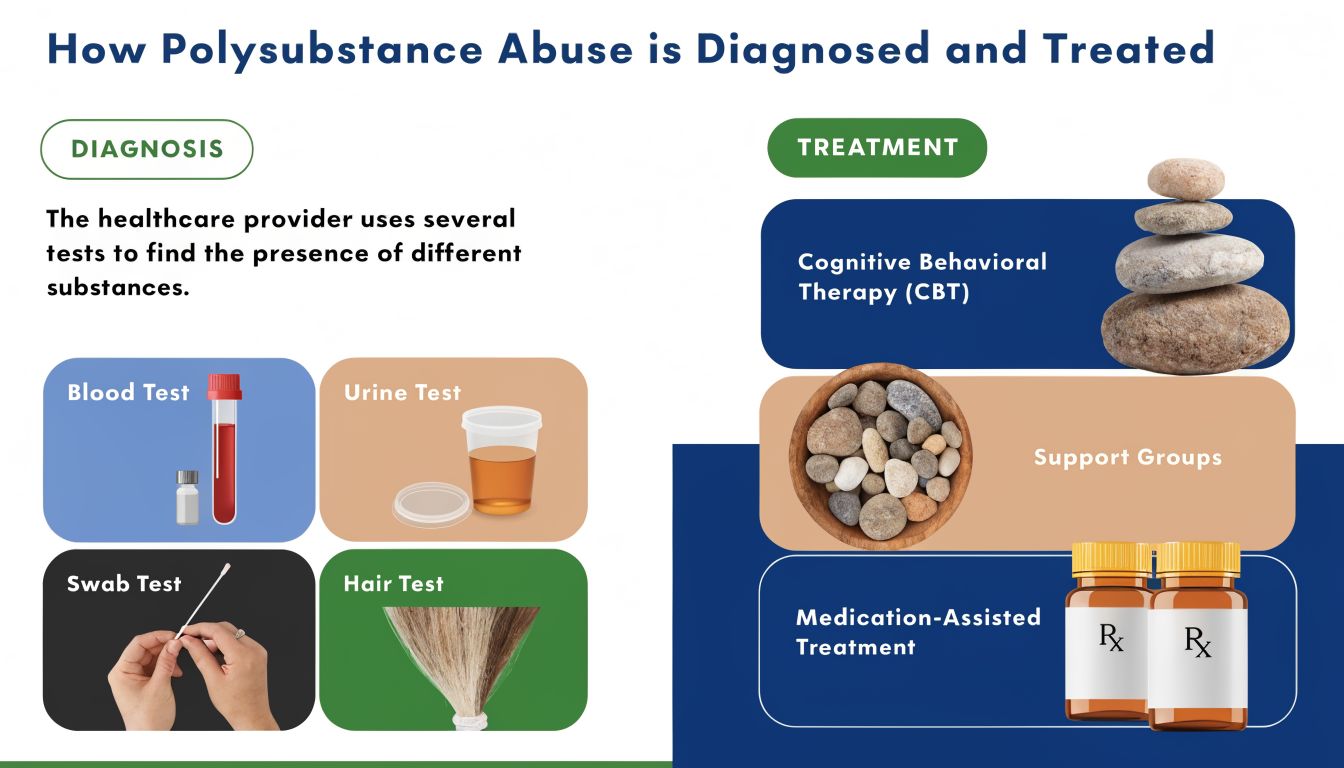
How Polysubstance Abuse is Diagnosed and Treated
Diagnosis isn't about attaching a harsher label. It's about building a treatment plan that matches reality. When multiple substances are involved, clinicians need a clear view of medical risk, withdrawal risk, mental health symptoms, and daily functioning.
What a proper assessment looks like
A strong evaluation usually includes several pieces working together.
- Substance use history: What was used, in what order, how often, and for what reason.
- Medical review: Current symptoms, overdose history, withdrawal concerns, and physical health needs.
- Mental health screening: Anxiety, depression, trauma symptoms, bipolar symptoms, eating concerns, and sleep problems.
- Toxicology and medication review: Clinicians look for a fuller picture than a person may be able to report accurately.
A person may name one “main” drug while the treatment team discovers a more layered pattern. That isn't a contradiction. It's one reason professional assessment is so valuable.
Why treatment must be integrated
Single-substance treatment can miss too much when someone is using multiple drugs or mixing drugs with alcohol. According to this discussion of dual-diagnosis and polysubstance treatment needs, effective care requires a customized continuum of care, especially when mental health disorders are present, and standard single-substance rehab is often insufficient because polysubstance users are twice as likely to have worse mental and physical health outcomes without an integrated dual-diagnosis approach.
That usually means combining medical and therapeutic care rather than treating them separately.
Treatment works better when clinicians treat the pattern, not just the favorite substance.
Common parts of care
Treatment plans vary, but many include:
- Medical detox when withdrawal or medical instability is a concern
- Medication support when appropriate for cravings, withdrawal, or stabilization
- Individual therapy to address trauma, grief, anxiety, depression, or relapse triggers
- Group therapy to reduce isolation and build practical recovery skills
- Step-down care through levels such as residential treatment, PHP, IOP, and aftercare
For readers who want to understand one evidence-based option, medication-assisted treatment at Still Water Wellness Group explains how medication support can fit into a broader recovery plan.
Good treatment doesn't ask a person to simplify a complicated problem. It meets the complexity with structure, safety, and a plan that can adapt over time.
Your Guide to Healing at Still Water Wellness Group
A person or family in Orange County doesn't need to solve polysubstance abuse alone. Recovery usually begins when someone stops debating whether the problem is “serious enough” and starts looking for the right level of care. That step can happen today.
Still Water Wellness Group serves adults and families in Orange County from a serene Lake Forest setting, with care designed for the realities described throughout this guide. That includes medical detox, medication-assisted treatment, residential treatment, PHP, IOP, sober living, dual-diagnosis support, and aftercare planning. For someone dealing with alcohol plus pills, stimulants plus sedatives, or uncertain contamination in the drug supply, that full continuum matters.
Why local, tailored care matters
Southern California residents often need help that goes beyond stabilization. They may need psychiatric support for anxiety, depression, PTSD, bipolar disorder, or eating disorders alongside addiction treatment. They may also need a setting where the nervous system can start to settle.
Still Water Wellness Group blends evidence-based care with complementary support such as yoga, meditation, art therapy, experiential therapy, nature-based activities, massage, breathwork, sound baths, and Reiki. Those services don't replace clinical treatment. They help many people reconnect with the body, manage stress, and practice recovery in daily life.
A hopeful next step for families
Families often worry that making the call will feel overwhelming or force an immediate decision. In most cases, the first conversation is a chance to ask questions, describe what's happening, and understand options. Insurance verification and confidential consultations can make that process easier.
For people who need a simple calming tool while preparing for treatment or supporting a loved one, these 5 minute guided meditation scripts can be a helpful resource for short, structured grounding moments.
Healing from polysubstance abuse takes honest assessment, medical safety, mental health support, and time. It also takes the right environment. In Orange County, that path is available.
If someone is struggling with mixed substance use, or if a family has started seeing the signs, reaching out now can prevent more harm and open the door to a more stable future.
Still Water Wellness Group offers compassionate, personalized addiction treatment in Lake Forest for adults and families across Orange County and Southern California. For confidential guidance, insurance verification, or immediate admissions support, contact Still Water Wellness Group or call (866) 450-0391.