
Watching a loved one drift further into addiction can make a family feel trapped. Every conversation seems to end the same way. They deny the problem, promise to cut back, or shut down completely. Meanwhile, the people around them carry the fear, the anger, the financial strain, and the constant question of what to do next.
Learning how to convince someone to go to rehab is rarely about finding the perfect sentence. It is about timing, preparation, and knowing what kind of resistance is happening. That matters even more when substance use is tangled up with depression, anxiety, PTSD, bipolar disorder, or another mental health condition. In those cases, a loved one may not be resisting help out of stubbornness alone. They may be resisting because their symptoms make treatment feel hopeless, threatening, or impossible.
A calm, structured approach usually works better than pressure. Families do best when they stop chasing the next crisis and start speaking with a plan.
Understanding Their Mindset Before You Speak
The most common mistake families make is starting with urgency instead of understanding. The urgency is real, but if the conversation begins as a lecture, individuals often stop listening almost immediately.
Someone in active addiction often feels more than denial. Shame, fear of withdrawal, fear of losing control, fear of being judged, and fear of facing damage they have caused can all be operating at once. If a mental health disorder is also present, the internal barriers can be even stronger.

Look at readiness, not just behavior
A person who says, “I do not have a problem,” needs a different conversation than someone who says, “I know this is bad, but I am scared.” Families often respond to both statements the same way. That usually backfires.
A simple way to think about readiness is:
- Not considering change: They minimize, blame others, or insist everything is manageable.
- Conflicted: They admit some harm but defend the substance use.
- Preparing: They begin asking practical questions about treatment, work, family, or cost.
When families match their approach to the loved one’s actual stage, the conversation becomes less chaotic and more productive.
Separate symptoms from character
It helps to stop labeling every difficult response as manipulation. Some responses are defensive. Some are dishonest. But many are also symptoms of a brain and body under strain.
That does not excuse harmful behavior. It does change how to respond.
A loved one who becomes irritable may be protecting access to substances. A loved one who seems flat or detached may be depressed. A loved one who panics when rehab is mentioned may be terrified of unfamiliar settings, medical withdrawal, or losing the only coping method they believe they have.
A useful rule for families is this. Address harmful behavior clearly, but do not confuse fear, apathy, or panic with proof that treatment is pointless.
Prepare before the first serious talk
Families have more influence when they prepare privately before speaking publicly. That means getting grounded, deciding on boundaries, and choosing the right setting.
A helpful preparation checklist includes:
- Pick a sober window: Do not start a serious treatment discussion when the person is intoxicated, escalating, or crashing.
- Choose privacy: Shame rises quickly when other people can overhear.
- Clarify the message: Focus on concern, specific examples, and a next step.
- Regulate tone: Anger may be understandable, but it rarely leads to agreement.
- Set realistic expectations: One conversation may open the door. It may not finish the job.
Use specifics, not global accusations
Families often say things like “you are ruining your life” or “everyone is worried about you.” Those statements may be true, but they are easy to argue with.
Specific observations are harder to dismiss:
- Health: “You have looked exhausted and unsteady lately.”
- Responsibilities: “You missed work again this week.”
- Family impact: “The children are scared when they see you like this.”
- Safety: “Driving after using has become a serious concern.”
Specific, recent examples keep the conversation anchored in reality. They also lower the chance that the discussion turns into a debate about personality.
Using Motivational Interviewing to Inspire Change
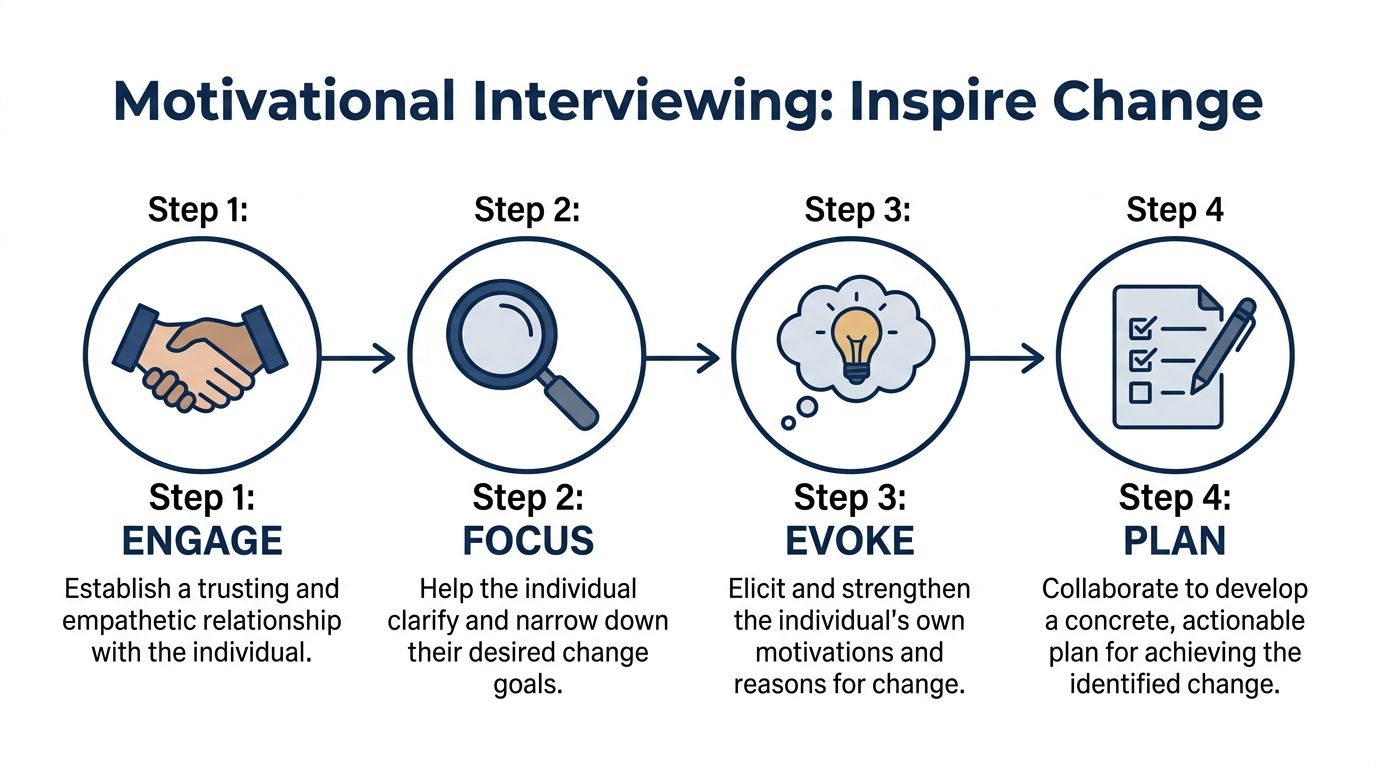
Pleading often fails. Arguing fails even faster. A more effective communication style is Motivational Interviewing, which focuses on helping a person hear their own reasons for change rather than forcing them to accept someone else’s.
According to guidance on Motivational Interviewing for treatment conversations, Motivational Interviewing doubles treatment entry rates (OR=2.34), and 12-month abstinence rates reach 40-50% versus 20% for standard advice. The same source notes that reflective listening alone can boost awareness of the problem by 60%.
Families do not need clinical training to borrow the core skills. They do need discipline. The method works best when the goal is to draw out honesty, not corner someone into surrender.
Use the OARS method
The most practical family version of Motivational Interviewing is OARS.
| Skill | What it sounds like | Why it helps |
|---|---|---|
| Open questions | “What has this month been like for you?” | Opens discussion instead of inviting a yes or no defense |
| Affirmations | “It took courage to admit that.” | Reinforces honesty and effort |
| Reflections | “Part of you is exhausted, and part of you is afraid to let go.” | Shows understanding and lowers defensiveness |
| Summaries | “You are worried about withdrawal, missing work, and whether treatment would help.” | Organizes the conversation and shows they were heard |
For families who want a deeper clinical overview, this explanation of motivational interviewing therapy gives useful background on how the method is used in treatment settings.
Ask questions that invite change talk
The strongest conversations are not built on the family proving a point. They are built on the loved one saying, in their own words, what is no longer working.
Questions that often help:
- Explore consequences: “What has substance use been costing you lately?”
- Identify values: “What matters most to you right now?”
- Highlight conflict: “How does using fit with the kind of parent or partner you want to be?”
- Open possibility: “If things got better, what would be different first?”
These questions do not accuse. They create space for the person to hear the gap between current behavior and personal values.
Respond to resistance without taking the bait
Resistance is common. It does not always mean the conversation is failing. It often means the family has touched something painful.
A few examples show the difference.
If they say: “I do not need rehab.”
A reactive answer is, “Yes, you do. Look at what you have done.”
A stronger answer is, “You do not see rehab as necessary right now. What would have to happen before you felt it was time to get help?”
If they say: “I can stop on my own.”
A reactive answer is, “You have said that before.”
A stronger answer is, “Part of you wants to handle this privately. What has made it hard to do alone so far?”
If they say: “Nothing will help me anyway.”
A reactive answer is, “That is ridiculous.”
A stronger answer is, “It sounds like you feel worn down and do not trust that things can improve.”
That last response is especially important when depression may be present. Reflection calms the conversation because it addresses emotion before problem-solving.
When a person feels understood, they often become more willing to discuss options. When they feel cornered, they focus on escape.
Keep the conversation collaborative
Motivational Interviewing does not mean being passive. Families can still be direct.
The balance sounds like this:
- “There is a real problem.”
- “Help is available.”
- “The decision matters.”
- “This conversation is not about punishment.”
A useful sequence is to engage, narrow the focus, draw out reasons for change, and then discuss an immediate next step. That next step could be a confidential assessment, a call with admissions, or agreeing to review treatment options that same day.
If the conversation becomes circular, stop before it turns destructive. A calm reset preserves credibility for the next attempt.
Navigating Resistance Caused by Mental Health Issues
Many families assume resistance means the loved one does not care enough to get better. In dual diagnosis cases, that reading is often wrong.
According to guidance on dual diagnosis and family persuasion, nearly 50% of people with a substance use disorder also have a co-occurring mental health disorder, and integrated treatment can boost program completion rates by 40%. This is why standard persuasion tactics often fail. Families may be addressing the substance use while ignoring the symptoms that keep driving it.

How symptoms change the conversation
A person with depression may not argue much at all. They may shrug, withdraw, or say nothing matters. Families sometimes mistake this for indifference. It may be hopelessness.
A person with anxiety may agree that help is needed and still resist every next step. Calling a center, packing a bag, meeting staff, or leaving home can all feel overwhelming.
A person with PTSD may react strongly to pressure, surprises, or anything that feels like loss of control. A person with bipolar disorder may cycle between insight and impulsive refusal. Someone dealing with attention problems can also struggle with substances in ways families do not immediately recognize. This overview of ADHD and substance abuse can help families understand that overlap more clearly.
Change the message they are hearing
When mental health symptoms are active, “you need rehab for your drinking” may be heard as “you are a problem.” That framing increases shame.
A more useful message ties treatment to relief:
- For depression: “This is not only about stopping substances. It is also about getting help for the emptiness and exhaustion.”
- For anxiety: “Treatment can give support for the panic too, not just the use.”
- For trauma: “You would not be expected to just talk about painful experiences without support. The setting should feel safe and structured.”
Many people use substances to manage symptoms they cannot name well, and this context is important. If the family talks only about drinking or drug use, the loved one may feel unseen.
What not to say in dual diagnosis situations
Certain phrases regularly shut the door.
Avoid:
- “You just have to want it.” This ignores the impact of severe symptoms.
- “Everyone gets anxious.” This minimizes real distress.
- “You are making excuses.” Sometimes the person is avoiding responsibility. Sometimes they are describing the barrier accurately.
- “Rehab will fix everything.” Overpromising destroys trust.
What tends to work better
A more grounded approach includes these elements:
- Name the struggle without diagnosing them at the kitchen table
- Connect help to both conditions
- Reduce uncertainty by explaining the first step only
- Offer practical support without taking over their agency
In dual diagnosis cases, resistance often softens when treatment is described as a place to stabilize, understand symptoms, and build coping skills, not just as a place to “stop using.”
Families should also listen for language that signals risk. Statements like “nothing helps,” “everyone would be better off without me,” or “there is no point” require immediate clinical attention. Safety comes before persuasion.
How to Organize a Structured Family Intervention
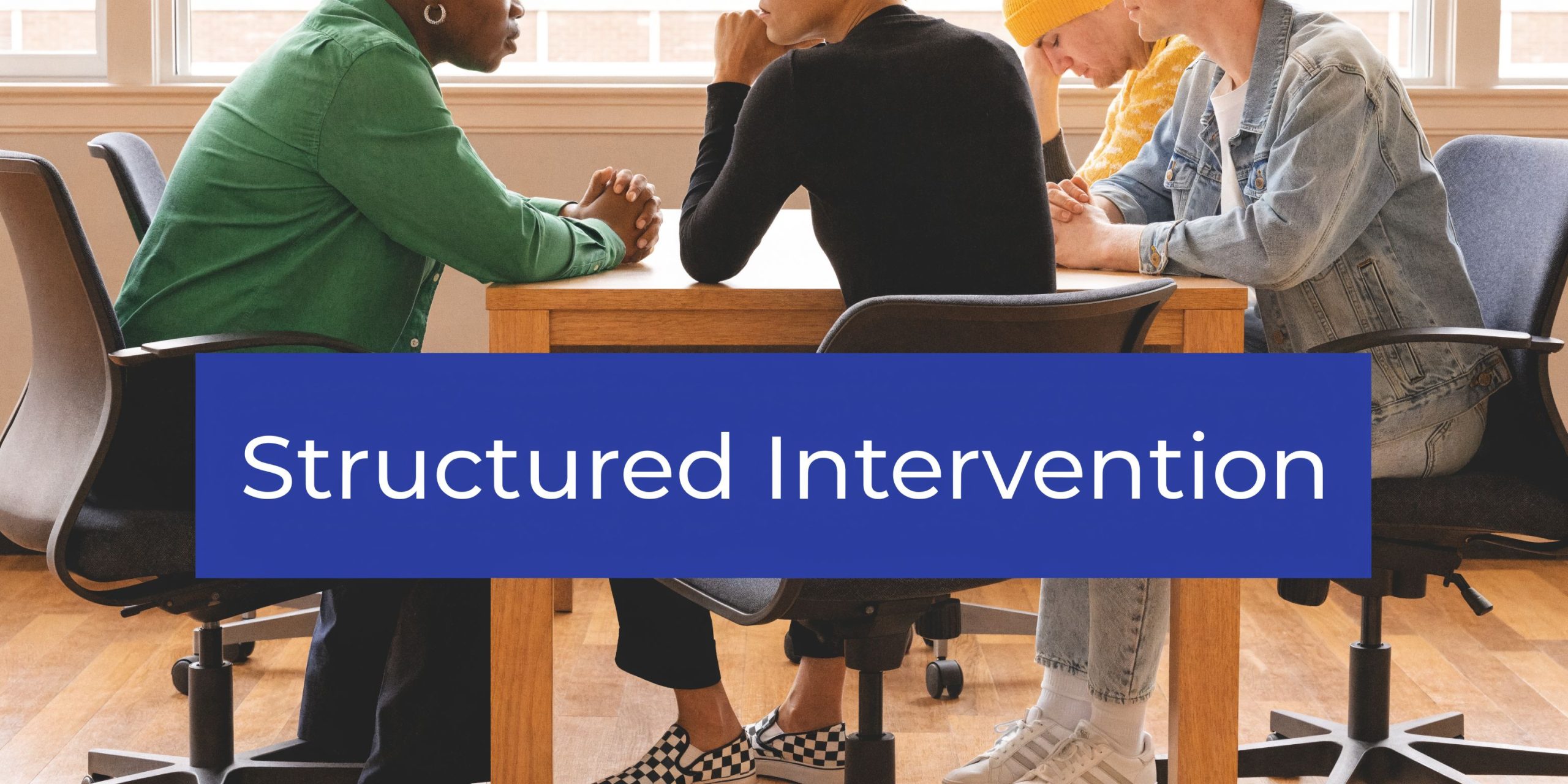
When repeated talks go nowhere, families often swing to the other extreme and stage a confrontation with no planning. That usually creates chaos. A structured intervention is different. It is organized, rehearsed, and built around a clear treatment option.
According to Mayo Clinic’s intervention guidance, a structured intervention, especially when guided by a professional, can achieve an 80-90% success rate in getting someone to agree to treatment. The same guidance emphasizes forming a team, rehearsing “I” statements, presenting specific evidence of harm, and setting firm boundaries if help is refused.
Build the right team
Not everyone should be in the room.
The strongest intervention group usually includes people the loved one trusts, people who can stay calm, and people who will follow through on boundaries. A relative who becomes explosive or a friend who secretly enables the addiction can undermine the entire process.
A good team often includes:
- Steady family members: People who can speak with warmth and clarity.
- A neutral professional: Especially valuable when emotions are high or safety is uncertain.
- Key supporters only: Keep the group focused and manageable.
Families who need guidance on preparing for that conversation can review how to talk to a family member about checking in to residential drug treatment.
Write and rehearse impact statements
The intervention should never sound improvised. Each person should prepare a short statement that covers three points:
- What has been observed.
- How it has affected the speaker.
- What change is being requested.
Examples work better than accusations.
Instead of “you are destroying this family,” a stronger statement is, “When you missed your daughter’s school event after using, it hurt her and frightened the rest of the family.”
Keep statements brief. Read them aloud in rehearsal. Remove sarcasm, old grievances, and side arguments. If the speaker cannot deliver the statement calmly, someone else should take that role.
Present one immediate path forward
An intervention is not a debate club. It should end with a direct option for treatment and immediate transportation if the person agrees.
That means the family handles logistics before the meeting:
- Confirm availability
- Know the intake steps
- Be ready to leave promptly
- Arrange childcare, pet care, or work communication if needed
A vague message like “you should look into rehab soon” invites delay. A clear message is harder to evade: “A place is ready to speak with you today, and transportation is arranged if you say yes.”
Set boundaries that are real
Boundaries are not threats. They are changes the family is prepared to make to stop participating in the addiction.
Examples may include:
- Housing limits: Not allowing substance use in the home.
- Financial boundaries: No more cash, debt rescue, or bill coverage that supports continued use.
- Access changes: Limiting contact when behavior becomes abusive or unsafe.
A boundary only works if every person involved is willing to keep it. Empty consequences teach the loved one that the family will bend under pressure.
If the intervention does not lead to immediate agreement, it is still not a failure. It can mark the first time the entire system stops adapting around the addiction.
Securing the Right Help and Handling Admissions
When someone says yes, speed matters. Motivation can fade quickly. Families should move from conversation to admissions steps with as little delay as possible.
This is also where many loved ones get overwhelmed. They may agree to treatment in principle but freeze when they hear words like detox, residential, PHP, IOP, medication, or insurance verification. The family does not need to present every detail at once. It is usually enough to explain the first stage and reassure them that the rest will be clarified by admissions and clinical staff.
Explain levels of care in plain language
A simple description usually works best:
- Medical detox: Support during withdrawal when substances make stopping risky or highly uncomfortable.
- Residential treatment: A structured live-in setting with therapy, routine, and close support.
- PHP and IOP: Day-based treatment options that provide strong clinical care with more flexibility.
- Sober living and aftercare: Ongoing structure after formal treatment ends.
Families often lose momentum by focusing on what the loved one will be “giving up.” A better frame is what each level of care is designed to solve. Detox addresses stabilization. Residential builds distance from triggers. Outpatient levels help people practice recovery skills in real life while still receiving support.
Make the case for staying long enough
A short stay may feel easier to sell, but it often creates false reassurance. According to rehab success rate data on treatment length, treatments lasting 90 days or more show 65-70% success rates, compared to 20-30% for shorter stays.
That does not mean every person needs the exact same timeline. It does mean families should be cautious about the “quick reset” mindset. Someone with a long history of relapse, unstable housing, trauma symptoms, or repeated attempts to quit often needs more than a brief interruption.
Keep the admissions conversation focused
Admissions tends to go more smoothly when families gather practical basics ahead of time:
- Insurance information
- Current substances being used
- Prescription medications
- Mental health history
- Recent safety concerns
- Preferred family contact
For families with logistical questions, these admissions FAQs can help clarify what the process usually involves.
A loved one who is ambivalent may tolerate admissions better when the family says, “Let’s just do the confidential call and hear the options.” That feels less threatening than forcing a commitment before they have spoken to anyone.
Your Role During Their Treatment and Aftercare
Once a loved one enters treatment, the family’s job changes. It does not disappear.
The next phase is not about monitoring every detail. It is about becoming part of a healthier environment around recovery. That usually means supporting the treatment process, staying consistent with boundaries, and preparing for life after discharge.
According to Hazelden Betty Ford’s patient outcomes study, patients discharged with staff approval had a 69.6% abstinence rate at one year, compared to 48% for those who left against medical advice. The same source notes that without aftercare, relapse risk can be as high as 85% in the first year. Families should take that seriously. The work after treatment is not optional support. It is part of recovery.
Support treatment without taking it over
Families help most when they do these things consistently:
- Respect the clinical process: Let therapists and medical staff do treatment work.
- Participate when invited: Family sessions can uncover patterns that fuel relapse.
- Avoid rescue behavior: Do not solve every discomfort for the loved one.
- Stay steady: Mixed messages create confusion and testing.
One common problem is premature reassurance. Families get so relieved that treatment has started that they begin promising quick returns, reduced expectations, or exceptions to old boundaries. That weakens the structure the loved one is trying to build.
Prepare for discharge before it arrives
Discharge planning should cover where the person will live, what support they will continue, and what the home environment needs to change. If the home is full of conflict, active use, or easy access to substances, treatment gains can erode fast.
A practical aftercare plan may include:
- Ongoing therapy
- Support groups
- Medication management if needed
- A relapse response plan
- Sober housing or structured living
- Family communication expectations
Some families also benefit from learning more about multi-faceted approaches in treating addiction, especially when the loved one responds well to stress-reduction practices, body-based recovery work, or wellness routines that support long-term stability.
Families do not need to create perfect conditions. They do need to create conditions that are safer, clearer, and more honest than the ones that existed before treatment.
Watch for progress, not perfection
Early recovery can include mood swings, fatigue, awkward communication, and fear of relapse. Those signs do not automatically mean treatment failed.
The more useful question is whether the person is staying engaged. Are they attending aftercare? Taking recommendations seriously? Asking for help sooner? Rebuilding trust through actions instead of promises? Those are stronger indicators than polished words.
Frequently Asked Questions From Families
What if they refuse help completely
Refusal does not mean the family should give up. It usually means the current approach did not create enough clarity or enough persuasive power. The next step may be another planned conversation, firmer boundaries, or a structured intervention.
Can a family force someone into rehab
That depends on the laws in the state and the level of immediate risk. In many cases, voluntary treatment is still the best path when it can be achieved. If there is danger to self or others, legal and emergency options may need to be explored with professionals in that jurisdiction.
Should the family wait for them to hit bottom
No. Waiting for a catastrophe is not a strategy. It increases risk and often deepens trauma for everyone involved. A thoughtful, timely conversation is better than waiting for the “perfect” crisis.
What if they agree, then change their mind the next day
That is common. Ambivalence is part of addiction. Move quickly when there is openness. Make the call, verify the logistics, and reduce delays.
How should families talk about cost
Keep it concrete and calm. Focus on what is covered, what can be verified, and what the next admissions step would be. Financial uncertainty feels less overwhelming when the family gets real answers instead of guessing.
How many conversations does this usually take
There is no fixed number. Some people agree after one direct talk. Others require several attempts, often with stronger boundaries over time. Consistency matters more than trying to deliver a flawless speech.
Still Water Wellness Group provides confidential, compassionate help for individuals and families seeking addiction treatment in Orange County. The program offers a full continuum of care, including detox, residential treatment, PHP, IOP, sober living, and dual-diagnosis support. To speak with admissions, verify insurance, or discuss options for a loved one, call (866) 450-0391 or visit Still Water Wellness Group.