'Coke jaw' is the informal name for the intense, involuntary jaw clenching, grinding, and muscle tension caused by cocaine's stimulant effects on the nervous system. It can happen during use or during the comedown, and it is not a separate disease.
A lot of people search for this after noticing a sore jaw, tight face, aching temples, or teeth that suddenly feel different. Some notice they can't relax their mouth. Others wake up with pain and wonder whether it's stress, TMJ, or something more serious.
The concern makes sense. Jaw clenching from cocaine can look like a small side effect, but it can be an early warning sign of broader oral damage and ongoing stimulant strain on the body. The most helpful way to understand it is to separate temporary muscle symptoms from structural dental damage, because those two problems don't always heal the same way.
Understanding Coke Jaw and Why It Happens
A person may first notice coke jaw while using cocaine, later that same night, or the next day when the jaw feels overworked and tender. The term sounds dramatic, but the meaning is straightforward. Coke jaw is an informal term for cocaine-related jaw clenching, grinding, or involuntary movements that can happen during use and the comedown period, and it is tied to cocaine's stimulant effects on the central nervous system rather than a separate disease, as described by The Balance on cocaine-related jaw clenching.
That point matters because many people assume the symptom only happens with one form of cocaine. It doesn't. The same source explains that it can occur whether cocaine is snorted, injected, or smoked.
What the term actually refers to
In plain language, this is a jaw and facial muscle response to overstimulation. The jaw may clamp down. The teeth may grind. The lower face may feel restless or tight. Some people also notice repetitive side-to-side movement or the feeling that they can't stop pressing their teeth together.
That can be frightening, especially when the movement feels partly out of control.
A clenched jaw during or after cocaine use isn't just a habit. It's a physical sign that the nervous system has been pushed into overstimulation.
Why readers often get confused
People usually confuse coke jaw with three other problems:
- Stress clenching: Everyday stress can cause jaw tension, but cocaine can make clenching more forceful, repetitive, and harder to stop.
- A dental problem only: Teeth can absolutely be affected, but the symptom starts as a nervous system and muscle problem.
- A separate diagnosis: It isn't a standalone disease. It's a slang term for a cocaine-related symptom pattern.
For people wondering whether this points to a larger issue, a useful next step is learning more about how addictive cocaine can be, because repeated exposure raises the chance that short-term clenching becomes a recurring problem with real health consequences.
The Science Behind a Clenched Jaw
Cocaine changes how the brain handles movement signals. A helpful way to picture it is a car engine that is being revved too high. The system doesn't settle into normal idle. It keeps firing.
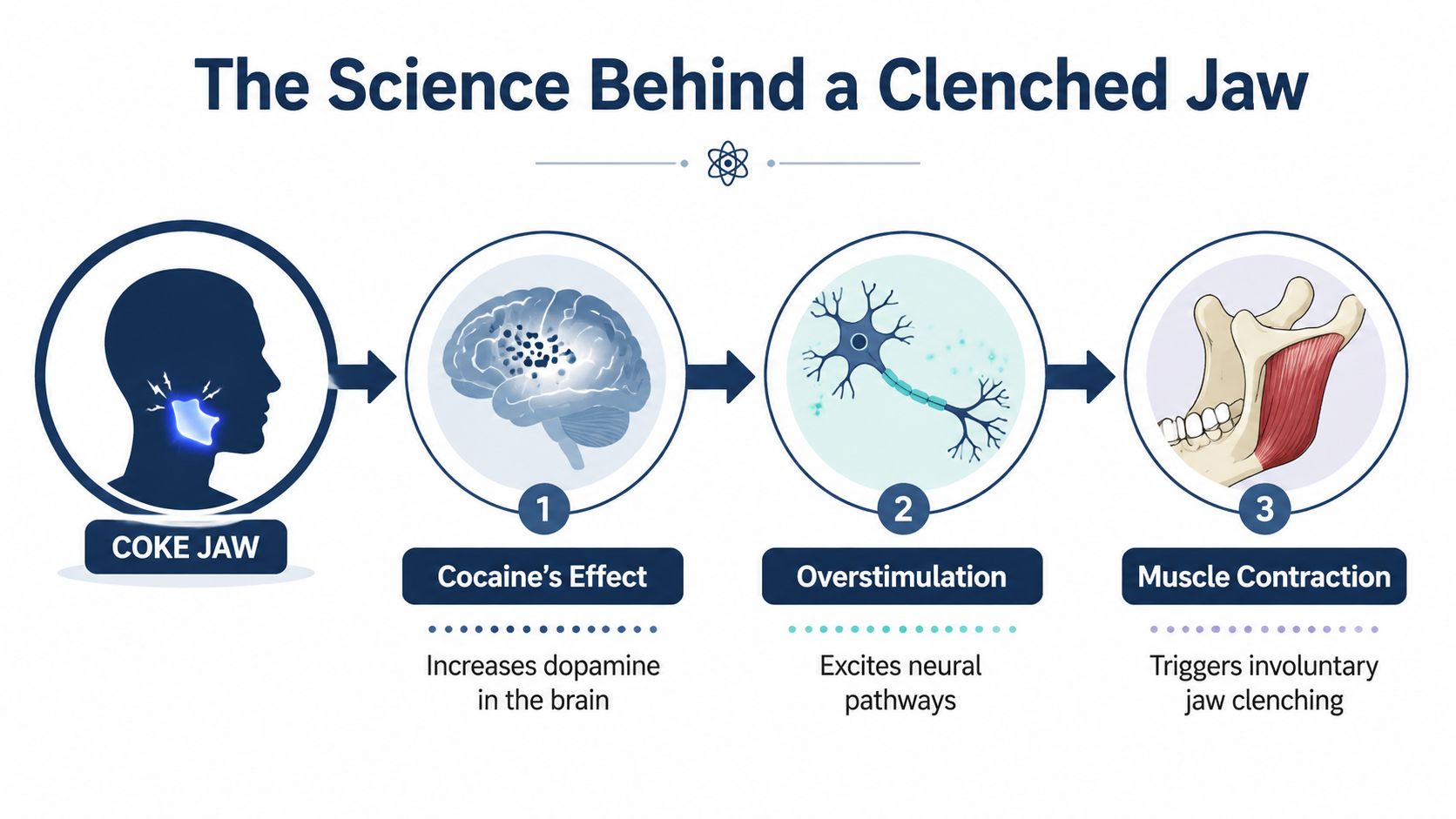
Mechanistically, cocaine's blockade of dopamine reuptake increases synaptic dopamine signaling, which can drive involuntary muscle activity in the lower face and neck. That symptom can occur regardless of route of administration and may persist for hours after use, according to Avenues Recovery on the mechanism of coke jaw.
How dopamine affects the jaw
Dopamine helps regulate reward, motivation, and movement. When cocaine blocks dopamine reuptake, those signals stay more active than they should. In some people, that overstimulation shows up as involuntary activity in the jaw, mouth, face, or neck.
The person isn't necessarily choosing to clench. The body is being chemically pushed toward muscle overactivity.
A simple chain looks like this:
| Step | What happens |
|---|---|
| Drug effect | Cocaine increases dopamine signaling |
| Nervous system response | Motor pathways become overstimulated |
| Muscle outcome | Jaw muscles contract, grind, or move involuntarily |
| Aftereffect | Soreness, fatigue, and strain can linger |
Why the problem isn't only muscular
Jaw clenching is the part people feel first, but it isn't the whole story. Cocaine can also leave the mouth dry and the oral tissues less protected. That means the jaw may hurt from muscle strain while the teeth and gums are also becoming more vulnerable.
Clinical takeaway: When cocaine causes repeated clenching, the symptom isn't random. It follows directly from the way the drug overstimulates movement pathways in the brain and body.
This is why someone can stop using for the night and still feel tightness, soreness, or strange jaw movement afterward. The drug's effects don't always switch off the moment the high ends.
Recognizing the Signs and Symptoms
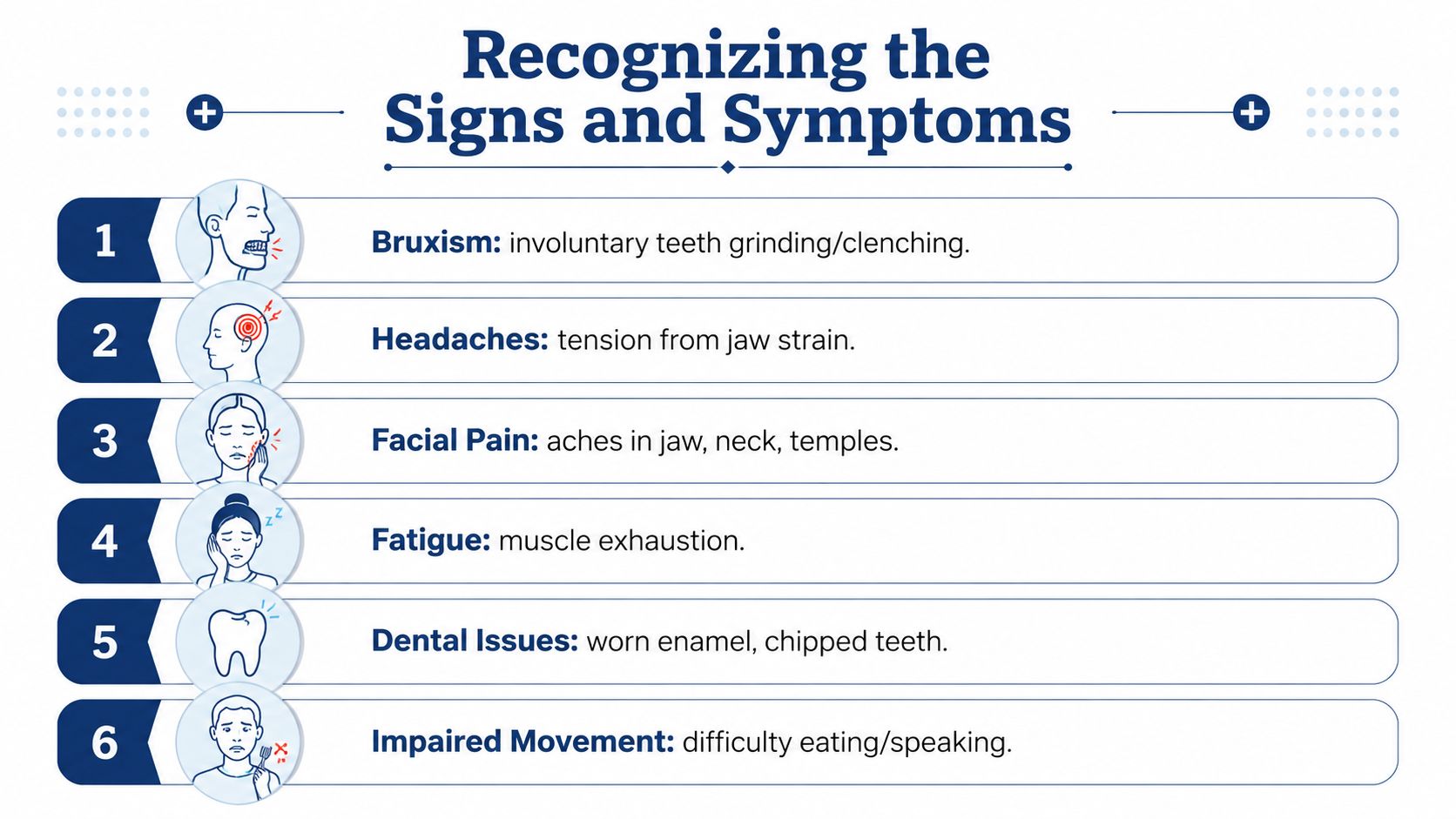
Some signs of coke jaw are obvious. Others are easy to dismiss until they start affecting eating, sleeping, or dental health. A useful medical description comes from Spring Hill Recovery on cocaine-associated bruxism, which describes it as involuntary jaw clenching, side-to-side jaw movements, and teeth grinding or gnashing related to stimulant-associated orofacial dyskinesia.
Common signs people notice
- Jaw clenching: The teeth stay pressed together, sometimes without the person realizing it until the jaw aches.
- Grinding or gnashing: This may happen while awake, during the comedown, or during sleep afterward.
- Side-to-side jaw movement: Some people notice repetitive shifting rather than straight clenching.
- Temple, face, or neck pain: Overworked jaw muscles can radiate pain outward.
- Headaches or ear-area discomfort: Jaw tension often gets felt near the temples and around the ears.
- Jaw clicking or reduced range of motion: Opening the mouth may feel stiff or uneven.
- Tooth sensitivity: Worn enamel can make hot, cold, or sweet foods feel sharp. A general resource on relief for sensitive teeth can help explain why that symptom appears.
- Trouble chewing or speaking comfortably: When muscles are inflamed, simple jaw movement can feel tiring.
When symptoms start to mean more
A single episode of soreness isn't the same as ongoing injury. Concern rises when the person notices repeat clenching, visible tooth wear, cracked teeth, persistent popping, or pain that doesn't settle after cocaine use stops.
If the jaw hurts once, that is a symptom. If the teeth, bite, or joint start changing, that points to damage that may need professional care.
Short-Term Pain vs Long-Term Damage
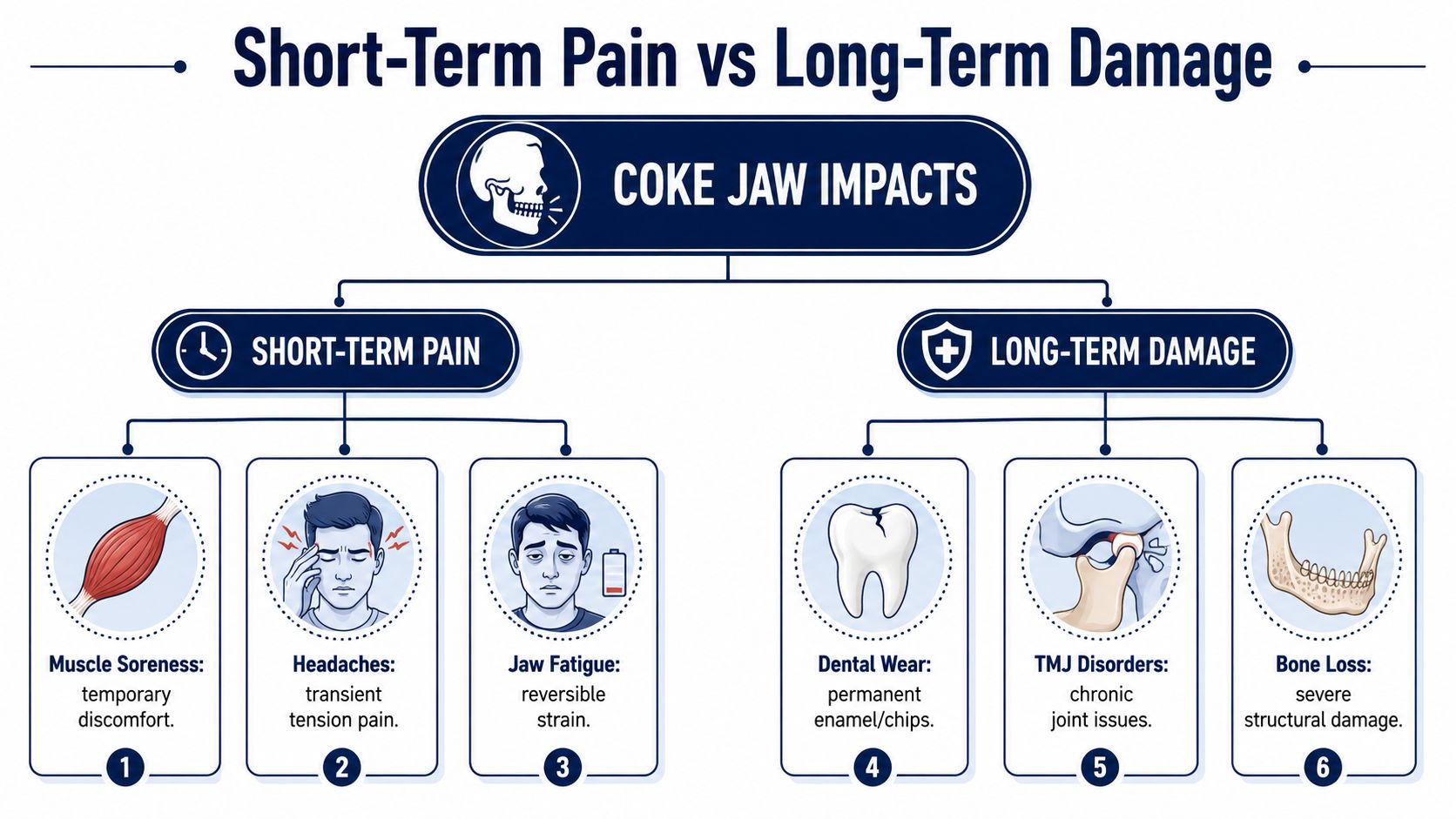
The most important distinction is this: muscle symptoms may improve, but structural damage may not fully reverse. That is where many articles leave readers stranded. They say to stop using, which is true and important, but they don't explain what may heal on its own and what may still need a dentist, oral surgeon, or TMJ specialist.
Repeated jaw clenching and dry mouth can contribute to enamel wear, cracked teeth, gum problems, and temporomandibular joint disorders over time. Cocaine also constricts blood vessels and reduces saliva production, increasing the risk of tooth decay and gum disease, according to Lighthouse Treatment on oral damage linked to coke jaw.
Symptoms that may improve after stopping use
These problems are often related to muscle overwork and acute irritation:
- Jaw soreness: Muscles can calm down once the stimulant effect wears off.
- Facial tightness: Tension may ease over time if clenching stops.
- Headaches from strain: These may improve when the jaw is no longer being overused.
- Jaw fatigue: A tired, overworked feeling often settles before structural injury does.
That doesn't mean they should be ignored. Persistent pain can signal that the joint is inflamed or that the clenching has been stronger than the person realized.
Damage that may not fully reverse without dental treatment
Structural problems are different because they affect tissue that doesn't "relax" back to normal.
| Problem | Why it matters |
|---|---|
| Enamel wear | Enamel doesn't grow back once it has been ground down |
| Cracked or chipped teeth | Fractures can worsen with chewing and temperature changes |
| Gum problems | Reduced saliva and blood vessel constriction can raise the risk of disease |
| TMJ disorders | The jaw joint can become chronically painful or limited in movement |
A useful warning sign is pain with biting, visible damage, gum bleeding, or a bite that suddenly feels "off." If pain becomes severe and immediate care is needed, this guide on ER help for a toothache can help explain what emergency departments can and can't usually do.
When to seek which kind of care
A practical roadmap looks like this:
- See a dentist for tooth sensitivity, chips, visible wear, gum bleeding, decay concerns, or pain when chewing.
- See a TMJ-focused clinician or oral specialist for jaw locking, popping with pain, reduced opening, or ongoing joint pain.
- Seek addiction treatment when clenching is tied to ongoing cocaine use, repeated binges, or inability to stop despite consequences.
For many people, it also helps to understand how long cocaine detox can take, because the early recovery period can include physical discomfort that needs monitoring while the body settles.
How to Manage Symptoms and Find a Real Solution
People usually want two answers right away. How can the jaw feel better now, and what stops this from happening again? Those are different questions.
Immediate steps may reduce discomfort. They don't remove the cause if cocaine use is still continuing.

What may help in the short term
- Hydration: A dry mouth leaves teeth less protected, so regular water intake may help reduce discomfort.
- Jaw rest: Soft foods and avoiding excessive chewing can reduce strain on irritated muscles.
- Heat or gentle relaxation: Some people find that calming the jaw area helps reduce tightness.
- Dental protection: A dentist may recommend a night guard if grinding continues during sleep. For general background on this kind of support, this page on an Upper East Side dentist for clenching explains how night guards are used for teeth clenching.
- Avoid self-testing the jaw: Repeatedly opening wide, clenching to "check it," or chewing gum can make soreness worse.
What these steps cannot do
They can't reverse a pattern of stimulant-driven clenching if cocaine use continues. They also can't repair enamel, close a crack in a tooth, or fully treat gum disease or TMJ injury.
Short-term symptom relief has value. It just isn't the same thing as recovery.
A deeper issue is often present when the symptom keeps returning. If cocaine use is driving the problem, the lasting solution is treatment for the substance use itself, along with dental follow-up for any damage already done. One option people in Southern California may consider is Still Water Wellness Group, which provides treatment for cocaine use disorder alongside mental health support and different levels of care.
Get Help Today at Still Water Wellness Group
Coke jaw is easy to dismiss because it starts in a small area of the body. But a clenched jaw can be a visible signal that cocaine is already affecting muscles, teeth, gums, and daily functioning. When the symptom keeps coming back, the body is not staying neutral. It is absorbing repeated harm.
Some people wait until there is a chipped tooth, severe pain, or obvious dental change. Others wait until family members notice the jaw movement. Treatment doesn't have to start at a crisis point. Earlier help can make it easier to address both the cocaine use and the health effects surrounding it.
What getting help can look like
For someone dealing with cocaine-related symptoms, care often works best when it addresses more than one problem at once:
- Stopping ongoing cocaine use: This is the step that removes the trigger behind repeated stimulant-related clenching.
- Assessing oral injury: Dental evaluation helps identify wear, fractures, gum problems, and possible TMJ involvement.
- Treating co-occurring mental health concerns: Anxiety, depression, trauma, and other conditions can make substance use harder to stop without support.
- Building a recovery plan: Detox, residential care, outpatient treatment, and aftercare all serve different needs depending on the person.
Still Water Wellness Group serves people in Orange County and Southern California who need support for cocaine use and related symptoms. Those looking for a focused treatment path can review its cocaine rehab program in Orange County.
Why acting sooner matters
A sore jaw may calm down. A cracked tooth won't. Gum disease doesn't resolve because the mouth hurts less. TMJ irritation can become a chronic quality-of-life issue if it keeps getting aggravated.
Recovery is not only about ending the high. It is also about limiting the damage that keeps going after the drug wears off.
There is also a practical reason to move quickly. Once jaw clenching becomes part of a repeated cocaine pattern, people often find themselves trying to manage symptoms instead of addressing the cause. That loop tends to delay the care that would protect their health.
Anyone who recognizes these symptoms in themselves or in someone they love can take the next step today. Confidential admissions support is available around the clock at (866) 450-0391.
Still Water Wellness Group offers confidential support for people dealing with cocaine use, jaw clenching, and the broader physical and emotional effects of addiction. To learn about treatment options, verify insurance, or speak with admissions at any time, contact Still Water Wellness Group.