
A family usually lands on this search page at the worst moment. A son has disappeared for two days. A spouse is shaking, promising this time will be different. A parent is searching from a parking lot after another crisis, trying to tell the difference between real help and slick marketing.
That fear is real. The confusion is real too. Southern California has a huge treatment network, which is good news for access, but it also means families have to sort through a crowded, uneven system while under pressure.
Finding Hope in a Difficult Time
It is 11:40 p.m. Your phone rings. A loved one is high, scared, promising to get help, and asking you to find a place tonight. In that moment, families do not need a glossy sales pitch. They need a clear next step, a safe admission plan, and someone honest on the other end of the line.
Southern California gives families a real chance to find treatment quickly. It also forces them to sort through a crowded system while emotions are running hot. Some programs do excellent clinical work. Some are weak. Some are built to chase insurance payments instead of helping people recover. Families need to know the difference before they hand over trust, money, and a vulnerable person.
Hope starts getting real when the search becomes practical.

What families usually need right away
Families searching for drug treatment centers in southern california usually need four answers first.
- Does this person need detox now? Withdrawal can be dangerous. If there is a risk of seizures, severe alcohol or benzodiazepine withdrawal, heavy opioid use, or major medical instability, start with medical screening and detox placement.
- Is mental health making this worse? Panic, depression, trauma, psychosis, or unstable mood can completely change the right placement and treatment plan.
- Will insurance cover care, and what is the actual out-of-pocket cost? Get that answered early so delays do not derail admission.
- Is this recommendation ethical? Ask directly whether the program pays for referrals or uses outside marketers who are compensated for steering patients.
That last point deserves more attention than families usually give it. Patient brokering is one of the ugliest parts of this field. It happens when a person or company profits by sending a patient to a specific center, regardless of whether that center is the right clinical fit. If a caller dodges basic questions, pushes for immediate commitment, or refuses to explain why a level of care makes sense, slow down. A legitimate admissions team should be able to explain the reasoning clearly and point you to a plain-language overview of the levels of addiction treatment and how placement decisions are made.
A rushed admission into the wrong setting costs time, money, and trust. A careful admissions call can change the outcome.
What to look for in the first call
The strongest programs do not start by selling a bed. They start by assessing risk, substance use history, mental health symptoms, current safety concerns, medications, and family support. They ask enough questions to decide whether the person needs detox, residential care, or a lower level of structure.
Families should also expect direct answers. Who is doing the assessment? What happens in the first 24 hours? How is family communication handled? What happens if the person arrives and needs a different level of care than expected?
Clear answers reduce panic. They also help families shift from crisis mode into decision mode, which is exactly where good treatment begins.
Decoding the Levels of Care in Southern California
A family usually reaches this point exhausted. The phone has been ringing, promises are flying, and every program seems to say it can help. Cut through that noise first. The question is not which center sounds nicest. The question is which level of care fits the person’s medical risk, psychiatric needs, and ability to stay safe.
That is how good placement works.
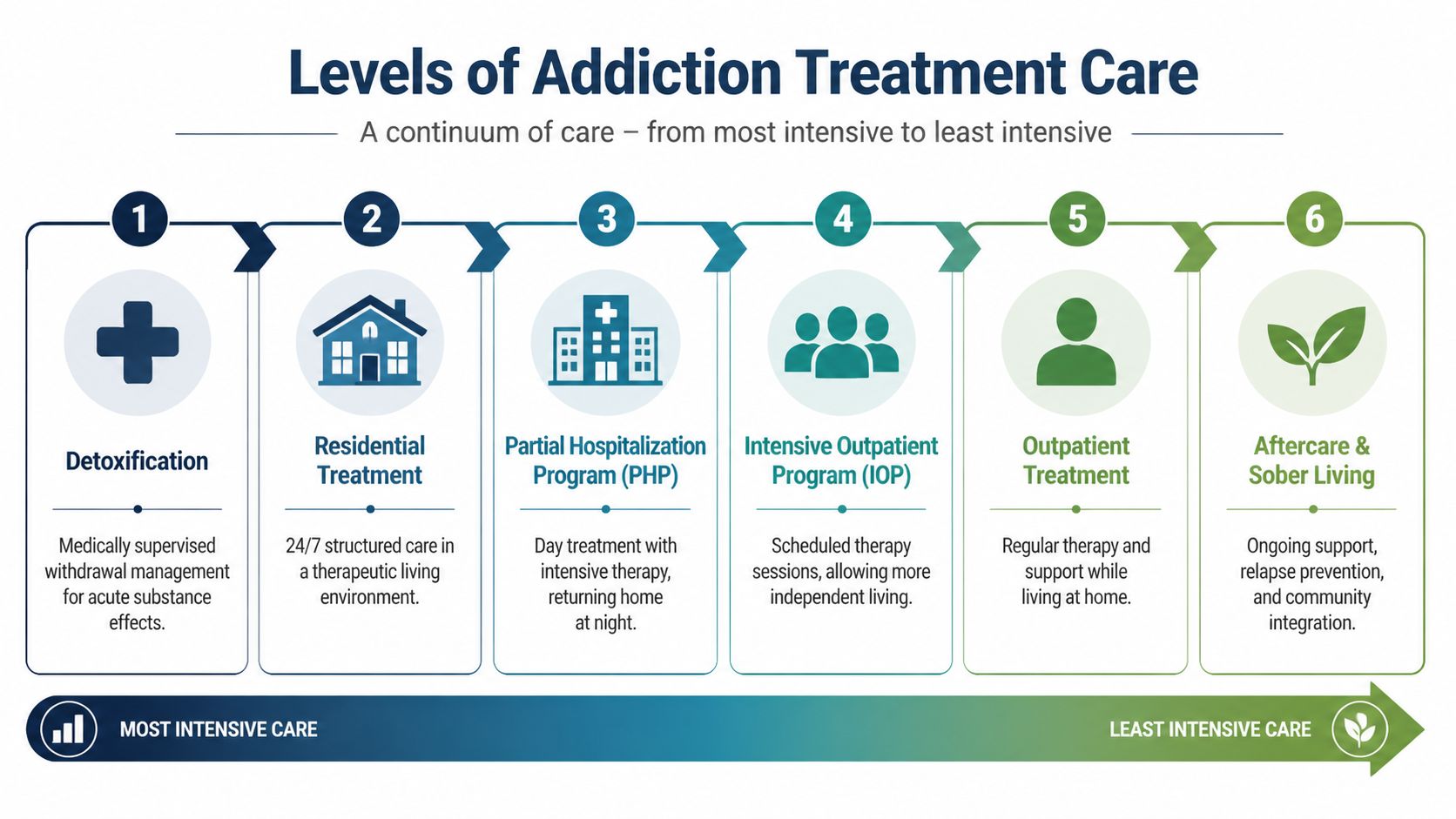
Addiction treatment follows a continuum. Someone may start in detox, move into residential care, then step down to PHP, IOP, or outpatient support as stability improves. Someone else may begin at PHP or IOP if withdrawal is not a concern and the home environment is safe enough to support recovery. If you want a plain-language breakdown, review these levels of addiction treatment and how placement decisions are made.
Detox and residential care
Medical detox is for safe withdrawal management. It addresses immediate physical risk, monitors symptoms, and helps the person get through the acute phase of stopping alcohol, opioids, benzodiazepines, or other substances. Families should expect stabilization here, not a full recovery plan in three days.
Residential treatment provides round-the-clock structure after detox, or as the starting point if detox is not needed. The person lives on site, follows a full clinical schedule, and gets distance from the people and routines that kept the addiction going. This is often the right call when relapse risk is high, mental health symptoms are active, or the home setting is chaotic.
Here is the simplest way to sort the two:
| Level of care | Main purpose | What daily life looks like |
|---|---|---|
| Detox | Safe withdrawal management | Medical monitoring and stabilization |
| Residential | Intensive early recovery work | 24/7 structure and therapy in a live-in setting |
PHP and IOP
Partial Hospitalization Program (PHP) offers full-day treatment without overnight housing. It suits people who need strong clinical structure but can sleep at home or in supportive sober housing. PHP often works well as a step-down from residential care, though some people start there if they are medically stable and still need a highly structured day.
Intensive Outpatient Program (IOP) lowers the intensity another step. Clients attend scheduled therapy several days a week while rebuilding normal responsibilities. IOP only works when the person has enough stability to handle more freedom without slipping back into old patterns.
One clear warning sign deserves attention. A center that places every caller into the same level of care is not doing careful admissions. It is filling beds.
Outpatient, sober living, and aftercare
Outpatient treatment supports people who no longer need daily clinical oversight. The focus shifts to ongoing therapy, accountability, relapse prevention, and handling real-world stress without returning to use.
Sober living is housing, not treatment. It can still be a smart part of the plan. For someone leaving residential or PHP, a structured, substance-free home can provide the buffer needed to keep progress intact.
Aftercare is where long-term recovery is protected. That can include therapy, family sessions, medication management, recovery meetings, alumni support, and a written relapse-response plan. Families should ask for that plan before discharge, not after a setback.
Where MAT fits
Medication-Assisted Treatment (MAT) can be used across multiple levels of care when clinically appropriate. It is not its own separate rung. A person may receive MAT during detox, residential treatment, outpatient care, or all three.
Some families still hear outdated opinions about MAT and get pulled off course. Ignore the ideology. Ask better questions. Is the medical team qualified to evaluate whether medication is appropriate? Do they explain the benefits, risks, and goals clearly? Are they using every legitimate clinical tool to improve safety, reduce cravings, and support recovery?
That is the standard to use.
The Critical Importance of Dual-Diagnosis Treatment
A son finishes detox, sounds clearer on the phone, and promises he is ready to come home. Two weeks later, the panic attacks are back, he cannot sleep, and he is using again. Families often call this a relapse. I call it incomplete treatment.
Substance use and mental health symptoms often feed each other. Trauma, depression, anxiety, bipolar symptoms, chronic insomnia, and emotional shutdown do not disappear just because the drugs or alcohol stop. If a program treats only the substance use, it leaves a major part of the problem untouched.
That is why dual diagnosis matters. It means the addiction and the mental health condition are evaluated and treated together, by the same treatment team, under one plan.
Families searching for drug treatment centers in southern california need to be careful here. Some programs advertise co-occurring disorder care because it sounds reassuring. That does not mean they provide real psychiatric assessment, trauma-informed therapy, medication management, or a treatment plan that connects the pieces. For a clear example of what integrated care should address, review this dual-diagnosis treatment resource.

Dual-diagnosis treatment also protects families from one of the biggest traps in this field. Patient brokers and referral hustlers know that scared families respond to promises. They will say a center can handle trauma, anxiety, depression, and addiction, then push for immediate admission without giving clear answers about who provides psychiatric care or how treatment is coordinated. That is a sales process, not clinical admissions.
Why addiction-only treatment often falls short
A person with untreated PTSD may stop using briefly, then return to substances when nightmares, hypervigilance, or sudden triggers hit. Someone with severe anxiety may get sober, then feel so flooded and physically agitated that using starts to look like relief. A person with depression may follow the rules in treatment but lose all momentum after discharge because the hopelessness was never addressed directly.
This is why families should ask whether the center can explain the whole case in plain language. What is driving the use. What mental health symptoms are present. Who is treating them. How progress is reviewed when symptoms change.
Questions families should ask
Keep the questions simple and direct.
- Who diagnoses and treats the mental health condition? Ask for actual roles. Psychiatrist, therapist, medical provider, case manager.
- What therapies are used for both conditions? Look for specific answers such as CBT, DBT, trauma-informed therapy, psychiatric care, and medication management when appropriate.
- How do the clinicians coordinate care? A real dual-diagnosis program should describe one integrated treatment plan, not two separate tracks.
- How does the center handle symptom changes or setbacks? Families need to hear how the team adjusts care when depression deepens, anxiety spikes, or trauma symptoms surface.
- What is the communication process during admissions and treatment? Families should expect clear, private, professional communication. This guide to secure healthcare communication is a useful reference for what responsible healthcare outreach should look like.
If a program gets polished when talking about amenities but vague when talking about psychiatric care, keep looking. That instinct will save you time, money, and often another crisis.
How to Choose a High-Quality Southern California Treatment Center
Many families make one costly mistake. They assume a polished website means solid treatment. It doesn't. Some excellent programs look simple online, and some weak programs look impressive online.
The only useful approach is a checklist. Families searching for drug treatment centers in southern california should screen each option like a hiring decision, not a vacation booking.
What to verify before admission
Start with the basics. A center should be able to answer clear questions without evasiveness.
- Licensing and compliance: Ask whether the program is state licensed and what levels of care are provided on site.
- Clinical model: Ask which evidence-based therapies are used and how treatment plans are individualized.
- Medical capability: Clarify whether detox, psychiatric support, and medication management are available when needed.
- Family involvement: Ask how the center communicates with loved ones and whether family sessions are part of care.
- Aftercare planning: Discharge should never feel like a cliff. It should feel like a transition.
Families also need safe, confidential communication during the admissions process. A practical resource for evaluating how healthcare organizations should handle outreach and privacy is this guide to secure healthcare communication.
The red flag families need to know about
One of the most damaging problems in this field is patient brokering. That happens when a person or organization steers someone into a treatment program for financial gain instead of clinical fit.
This isn't just unethical. It's dangerous. A dangerous practice known as patient brokering can lead to a 20 to 30% increase in treatment non-completion rates, and families should ask directly whether a center rejects broker referrals, based on research examining patient brokering in substance use treatment.
That single question can reveal a lot. Ethical programs don't dance around it.
A short screening table for families
| Ask this question | What a solid answer sounds like | What should concern families |
|---|---|---|
| How was this placement recommended? | Based on assessment, symptoms, and safety needs | “A partner sent the referral” without clinical detail |
| Do you reject broker referrals? | Direct yes or a clear ethics policy | Evasive language or no answer |
| What happens if this level of care isn't right? | Reassessment and step-up or step-down planning | Pressure to admit immediately no matter what |
| How do you involve family? | Structured updates and family work with consent | “We’ll figure that out later” |
Families should trust the center that asks more clinical questions, not the one that promises the fastest sale.
Quality usually looks calm, not flashy
A strong admissions team doesn't pressure. It listens. It asks about substance history, mental health, medical concerns, current safety, prior treatment, medications, and home environment. It explains why a recommendation fits.
That process may feel slower than a sales call. Good. It should.
Navigating Admissions and Insurance
Admissions feels overwhelming until it's broken into plain steps. Families don't need to solve the whole problem in one night. They need to complete the next right action.
Step one is the confidential phone call
The first call should be simple. The family explains what’s happening, what substances are involved, whether there are mental health concerns, and whether the person is willing to come in now.
A competent admissions team should then clarify immediate risks, recommend the likely level of care, and explain what happens next without pressure. If the family is in crisis, the call should create order.
Step two is insurance verification
At this juncture, many people freeze. They assume treatment will be impossible to afford or too complicated to understand. In many cases, that fear delays care.
Insurance verification should be handled by the admissions team. The family provides policy details, and the center checks benefits, confirms likely coverage, and explains any expected out-of-pocket responsibility in straightforward language. A useful starting point is this insurance verification page for treatment admissions.
Step three is preparing for arrival
Once placement and coverage are clearer, practical details matter. Families usually need help with timing, transportation, medications, and what to pack.
A smooth transition often includes:
- Confirming the admission window so the person doesn't lose momentum between decision and arrival.
- Reviewing medication and medical needs so the receiving team is prepared.
- Packing essentials only with simple, treatment-appropriate clothing and approved items.
- Setting family expectations about communication, visitation rules, and the first few days.
The first twenty-four hours matter. Families should choose a program that can turn a verbal yes into a coordinated arrival quickly and calmly.
What families should have ready when they call
A short prep list helps the process move faster.
- Insurance information: Member ID, carrier name, and policyholder details.
- Clinical basics: Primary substances, recent use, withdrawal concerns, and any mental health diagnoses.
- Medication list: Prescription meds, dosage if known, and prescribing providers.
- Logistics: Current location, transportation needs, and who will support the admission.
The call to action should be simple because the moment is already hard enough. Families who need immediate guidance can call (866) 450-0391 for a confidential admissions conversation.
Your Partner in Recovery Still Water Wellness Group
Families often reach a point where they stop looking for slogans and start looking for fit. Does the program offer the right levels of care? Can it address trauma, depression, anxiety, or other co-occurring conditions? Will the environment support healing instead of adding more stress?
One option in Orange County is Still Water Wellness Group, a Lake Forest treatment center that provides medical detox, residential treatment, PHP, IOP, MAT, sober living support, and dual-diagnosis care in a Southern California setting near Saddleback Mountain and Laguna Beach. That matters because families often need one provider that can support a patient through multiple phases instead of forcing a disconnected handoff every time the level of care changes.

What families should look for in a setting like this
The setting isn't the treatment, but it does affect the treatment experience. A calm environment can help patients settle, sleep, regulate stress, and engage in therapy more fully.
Equally important is the treatment mix. Families should look for programs that combine evidence-based therapy with practical supports such as relapse-prevention planning, individual counseling, group work, experiential therapy, and appropriate integrative services like yoga, meditation, art therapy, nature-based activities, or breathwork. Those supports don't replace clinical care. They strengthen it when they're integrated well.
Why continuity matters
A fragmented system often creates drop-off points. The patient completes detox, then struggles to connect with residential. Or does well in residential, then leaves without enough structure. Or starts outpatient care without a realistic aftercare plan.
A stronger model gives the patient a coherent path through treatment with one clinical team or one coordinated framework. For families, that usually means fewer surprises, better communication, and a more stable handoff from one stage to the next.
When a family is ready to move, the next step should be clear. Call (866) 450-0391 and ask direct questions about level of care, dual-diagnosis support, insurance, and admissions timing.
Frequently Asked Questions for Families
How can a family help if a loved one refuses treatment
Pushing harder usually doesn't help. Clear boundaries often do.
Families can stop covering up the consequences of active addiction. That may mean ending financial rescue, refusing to lie to employers or relatives, or setting rules around housing and contact. The goal isn't punishment. The goal is ending the cycle that lets the addiction keep running the home.
At the same time, families should speak in calm, specific language. Focus on behavior, safety, and next steps. Avoid long lectures during intoxication or active conflict.
What role should family play during treatment
Family involvement matters because addiction affects the whole household. Trust breaks down. Communication gets distorted. Roles become unhealthy. One person over-functions, another withdraws, and everyone starts reacting instead of responding.
A good treatment process helps loved ones learn boundaries, communication skills, and realistic expectations for recovery. Family sessions can help relatives stop doing addiction's job for it. They also help families support progress without becoming the monitoring system.
Recovery improves when the family changes its pattern, not just when the identified patient stops using.
How long does treatment usually last
There isn't one fixed answer that fits everyone. A person with severe withdrawal risk, trauma history, and repeated relapse needs a different timeline than someone entering treatment early with strong support at home.
The better question is whether the person is progressing through the right stages of care without being rushed. Detox may be brief. Residential may need more time. Step-down care often matters just as much as the first placement. Families should be cautious of any center that treats duration like a one-size-fits-all package.
What if the person agrees now but changes their mind later today
That happens often. Motivation can be real at 9 a.m. and gone by noon.
Families should act quickly once a loved one says yes. Complete the admissions call, verify insurance, arrange transportation, and reduce the time between decision and arrival. Momentum matters in addiction treatment because ambivalence is part of the illness.
What should families ask on the first call
Keep it simple and practical.
- What level of care seems appropriate right now
- Can the program treat mental health issues alongside addiction
- How fast can admission happen
- What does insurance likely cover
- How does the center involve family
- Does the program reject broker referrals
Those questions will tell a family more than any glossy brochure.
When a family needs direction, Still Water Wellness Group offers confidential guidance, insurance verification, and admissions support in Orange County. The next step can start with one calm phone call to (866) 450-0391.