Sleep medication dependence often starts subtly. A person in Orange County can't sleep, takes Lunesta as prescribed, gets relief, and moves on with work, parenting, or school. Months later, the problem looks different. Missing one dose can bring a racing mind, anxiety at bedtime, and the sinking feeling that sleep no longer happens without a pill.
That experience confuses a lot of people because it doesn't match the reassuring language they may have heard at the start. The withdrawal symptoms of lunesta can be mild for some people, but for others, especially long-term or high-dose users, stopping can feel destabilizing and frightening. What matters most is recognizing the pattern early and treating it like a real medical issue, not a failure of willpower.
The Hidden Risk of Stopping Your Sleep Aid
A common pattern looks like this. Someone starts Lunesta during a period of stress. It works. Sleep returns, mornings get easier, and the medication seems manageable. Then bedtime begins to revolve around whether the prescription is available, whether travel will interrupt the routine, and whether one missed dose will mean a sleepless night.
That shift is where many people get stuck. They don't identify as having an addiction problem. They're still showing up to work. They're still handling responsibilities. But they notice something important. The medication that once reduced anxiety about sleep now creates anxiety about stopping.
Why people doubt what they're feeling
Part of the problem is the gap between official trial results and what treatment settings see every day. Clinical trial data has reported significant withdrawal in only 2% or less of users at therapeutic doses, while treatment programs regularly manage far more severe real-world symptoms in chronic users, including tremors, panic attacks, and seizures, as described in this review of real-world Lunesta treatment concerns.
That disconnect makes people second-guess themselves.
They may think:
- It was prescribed: so it can't be that hard to stop.
- It helped at first: so the current distress must mean the original insomnia is back.
- It isn't a street drug: so dependence must not really apply.
None of those assumptions makes withdrawal safer.
Many people seeking help for Lunesta don't look impaired from the outside. They look exhausted, frightened, and trapped in a nightly cycle they can no longer control.
What the struggle often looks like at home
The first sign isn't always dramatic. Sometimes it's fear of bedtime without the medication. Sometimes it's lying awake and watching anxiety build hour by hour. Sometimes it's restarting the pill after a miserable night and deciding it's impossible to function without it.
For people in Southern California living fast, working long hours, and trying to keep life stable, that cycle can continue for a long time before anyone asks for help. When that happens, a confidential conversation can make the next step much clearer. Support is available at (866) 450-0391.
Physical and Psychological Symptoms of Lunesta Withdrawal
The withdrawal symptoms of lunesta don't show up in one neat pattern. Some people mainly feel sleep disruption and anxiety. Others also develop stomach upset, shaking, intense mood changes, or more severe neurological symptoms.
Common Lunesta withdrawal symptoms
| Symptom Type | Common Examples |
|---|---|
| Physical | Sweating, nausea, upset stomach, tremors, fatigue, vomiting, cramping, high blood pressure |
| Psychological | Anxiety, irritability, panic, mood swings, depression, uncontrolled crying, cravings |
| Sleep-related | Rebound insomnia, vivid or abnormal dreams, difficulty falling asleep, fragmented sleep |
| Severe neurological or psychiatric | Hallucinations, psychosis, seizures |
Why the body reacts this way
Lunesta works on the brain's calming system, especially GABA-related signaling. With repeated use, the nervous system adapts to having that outside sedative effect. When the drug is removed too fast, the brain doesn't instantly return to normal balance. Instead, many people feel the opposite of calm. They feel overstimulated, restless, and unable to settle.
This is why withdrawal can feel both physical and emotional at the same time. The body may shake, sweat, or feel sick. The mind may race, panic, or swing into despair. It's a neurochemical rebound, not a character issue.
Physical symptoms people often notice first
The earliest complaints are often bodily.
- Sleep loss: The person may have severe trouble falling asleep, even when exhausted.
- Stomach distress: Nausea, upset stomach, or vomiting can show up early.
- Autonomic activation: Sweating, shakiness, and rising physical tension are common.
- Exhaustion: Fatigue builds quickly because the person feels awful and isn't sleeping.
For many people, these symptoms are bad enough to trigger relapse. The person doesn't restart Lunesta to get high. They restart it to stop feeling physically unwell.
Psychological symptoms can feel more alarming
The mental and emotional side of withdrawal is often what scares people most.
A person may feel:
- Intense anxiety: not ordinary stress, but a keyed-up, hard-to-control surge.
- Irritability: small frustrations feel impossible to manage.
- Panic: bodily symptoms can feed catastrophic thinking.
- Mood instability: crying spells, anger, or emotional crashes can happen with little warning.
- Abnormal dreams: vivid dreams can make sleep feel threatening rather than restorative.
People often misread these symptoms as proof they can never stop. That's the wrong conclusion. More often, it means the stopping process wasn't structured safely enough.
When withdrawal becomes dangerous
Significant withdrawal at therapeutic doses is reported in 2% or less of participants, but the risk rises with high-dose misuse. Abrupt cessation after chronic high-dose use above 3 mg nightly has been associated with severe neurological effects, including seizures in 1% to 5% of cases, linked to a 20% to 30% reduction in GABA receptor density, according to this clinical summary on Lunesta withdrawal risks and brain adaptation.
That changes the safety conversation.
Practical rule: If symptoms include hallucinations, psychosis, severe confusion, or seizure activity, this isn't a rough night. It's a medical emergency.
A related sedative-hypnotic pattern can help some readers understand the broader risk profile. This overview of how to face Ambien withdrawal can be useful because these medications share important dependence and tapering considerations.
Mapping the Lunesta Withdrawal Timeline
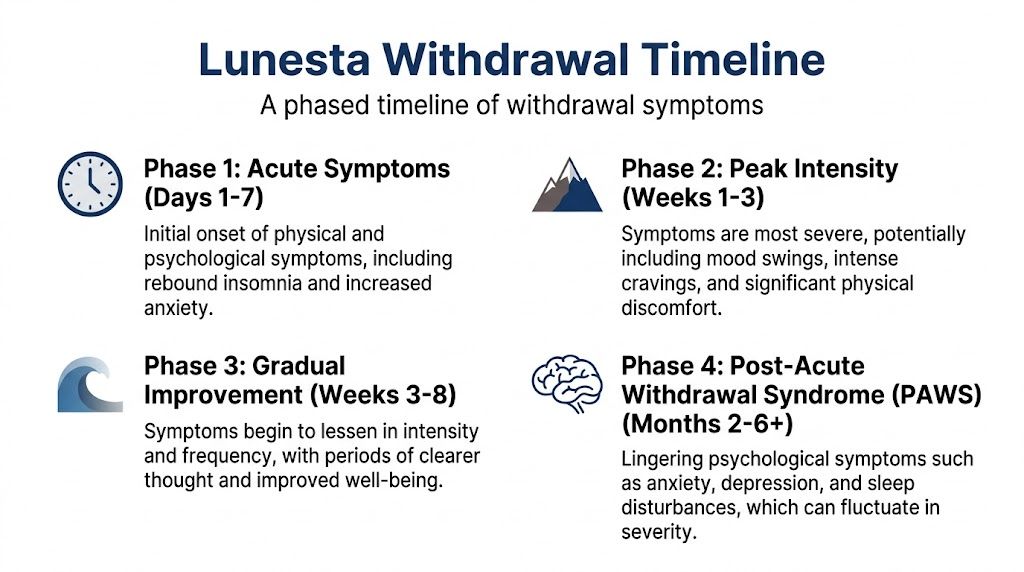
People usually cope better when they know what phase they're in. Withdrawal feels more chaotic when every symptom seems random. Lunesta tends to follow a recognizable pattern because of its 6 to 8 hour half-life and relatively rapid metabolism.
The first phase
The withdrawal timeline often begins within 12 to 48 hours of the last dose. This early period commonly brings rebound insomnia and anxiety. People often expect one bad night. Instead, they may find that sleep becomes far worse than expected and that their mind feels unusually activated.
During this window, common experiences include:
- Rebound insomnia: sleep is worse than baseline.
- Restlessness: the body can't fully relax.
- Edginess: stress feels amplified.
- Sweating or irritability: the nervous system is revved up.
The peak phase
Symptoms usually peak around days 4 to 7, when both physical and psychological distress can feel most intense. This is often the point where people become convinced they can't continue.
In this stretch, a person may deal with:
- Vomiting or cramping
- Mood swings
- High blood pressure
- Uncontrolled crying
- Strong relapse urges
This phase matters because symptom severity can push people toward impulsive decisions. Many cold-turkey attempts fail here, not because the person lacked commitment, but because the distress outpaced what they could safely manage at home.
The worst point in withdrawal often arrives after motivation is already depleted. That's one reason unsupported quitting goes so badly.
The acute recovery phase
By day 21, acute physical symptoms often begin to fade. That doesn't mean a person feels fully normal. Improvement is usually uneven. Someone may have a better night, then a rough one. Physical agitation may lessen while sleep remains fragile and mood stays unpredictable.
What often remains in this period:
- Fatigue
- Milder insomnia
- Irritability
- Emotional sensitivity
That uneven recovery can be discouraging, especially for people who expect a clean endpoint.
The delayed phase called PAWS
Post-acute withdrawal syndrome, often called PAWS, may peak 4 to 8 weeks after detox and can include persistent anxiety and depression, as outlined in this review of the Lunesta withdrawal timeline and PAWS pattern.
PAWS doesn't mean treatment failed. It means the brain is still recalibrating.
What PAWS can look like
- Anxiety returns in waves
- Mood drops without obvious triggers
- Sleep becomes inconsistent
- Cravings show up when stress rises
For chronic or high-dose users, this phase may last much longer than expected. That's why a short detox alone usually isn't enough. The person also needs monitoring, therapy, and a practical plan for handling rough weeks without going back to the medication.
Key Factors That Influence Withdrawal Severity
Two people can stop the same medication and have very different experiences. That's frustrating, but it makes clinical sense. Withdrawal severity depends on how the drug was used, what else is going on in the person's body and mind, and whether other substances are involved.

Dose and duration matter
People who use higher doses generally face a harder stop. Longer use also makes withdrawal more difficult because the brain has had more time to adapt to nightly sedation.
This is why someone who took Lunesta for months may feel blindsided. What looked like routine adherence can still produce physical dependence.
Polysubstance use changes the risk
When Lunesta is combined with alcohol, benzodiazepines, opioids, cannabis, or other sedating substances, withdrawal gets less predictable. Symptoms can overlap. Judgment may worsen. Sleep architecture may already be disrupted before stopping begins.
Home detox becomes especially risky in this setting. People often try to manage rebound insomnia by adding another depressant, which can complicate the withdrawal picture quickly.
Co-occurring mental health conditions intensify distress
Untreated anxiety, depression, trauma symptoms, or other psychiatric conditions can make withdrawal feel much worse. Part of the reason is simple. The original problem may still be there when the medication is removed. Then withdrawal piles on top of it.
A person may feel:
- Bedtime dread because anxiety was never really treated
- Mood instability because sleep loss lowers emotional resilience
- Panic symptoms triggered by normal withdrawal sensations
That doesn't mean the person is failing detox. It means the treatment plan has to address both substance dependence and mental health.
Why one-size-fits-all advice fails
Generic advice like "just stop," "switch to over-the-counter sleep aids," or "push through it for a few days" ignores the underlying variables that drive severity.
The same symptom can mean very different things depending on dose history, mental health, and what else the person has been taking.
A safe plan has to match the person, not the internet comment thread. Someone with months of nightly use, co-occurring anxiety, and alcohol use on top of Lunesta needs a very different level of support than someone with brief, uncomplicated use.
Why Medically Supervised Detox Is Essential
The biggest mistake people make with Lunesta is assuming that because it was prescribed, it can be stopped casually. For some short-term users that may be true. For many others, especially long-term or high-dose users, it isn't.

Cold turkey creates avoidable risk
Abrupt discontinuation puts the nervous system into a sharp rebound state. That often means worse insomnia, worse anxiety, and a much greater chance the person will restart the drug just to make the symptoms stop.
Cold turkey also leaves no room for adjustment. If nausea escalates, panic spikes, or sleep disappears for several nights, the person is left improvising. That usually leads to one of three outcomes:
- Relapse: the person restarts Lunesta.
- Substitution: the person adds alcohol or another sedative.
- Crisis: symptoms become severe enough to require urgent medical help.
What supervised detox changes
Medical detox doesn't eliminate discomfort, but it reduces chaos. Clinicians can taper the medication instead of removing it all at once, track symptom patterns, monitor safety concerns, and use targeted support for specific problems.
In treatment settings, tapering plans may use gradual reductions such as 25% to 50% dose cuts biweekly, alongside symptom-targeted medications, according to this overview of Lunesta detox structure and medical tapering. The exact schedule still has to be individualized.
That matters because the goal isn't speed. The goal is stability.
What tends to work better than self-detox
A structured detox plan usually includes several layers of care.
- Medication tapering: The dose is lowered in planned steps rather than stopped abruptly.
- Symptom management: Nausea, autonomic symptoms, and prolonged anxiety can be treated directly.
- Dual-diagnosis support: If anxiety or depression helped drive the Lunesta use, treatment addresses that too.
- Monitoring: Staff can tell the difference between expected discomfort and dangerous escalation.
For some patients, outside records also need to be reviewed quickly and accurately before treatment planning, especially if prescriptions or prior care happened in another country. In that situation, a resource like Medical Record Translation Without Risk can help families understand how accurate translation supports safe medical decision-making.
Safe detox is not just about getting the drug out of the body. It's about preventing panic, protecting sleep as much as possible, and reducing the chance of a failed attempt that makes the next one harder.
Finding Your Path to Recovery in Orange County
Detox is the beginning, not the whole treatment plan. Once the acute withdrawal symptoms of lunesta are stabilizing, the next question is what will help the person stay off it and recover real sleep, emotional balance, and day-to-day functioning.
In Orange County, effective care usually follows a continuum. The right level depends on symptom severity, relapse risk, home stability, and whether co-occurring mental health issues are present.
What recovery often needs after detox
Many people need more than a safe taper. They also need treatment for the reasons the medication became necessary or difficult to stop in the first place.
That commonly includes:
- Insomnia treatment: not just sleep hygiene tips, but deeper work around conditioned arousal and fear of sleeplessness.
- Anxiety treatment: especially when nighttime worry and physical tension were driving the dependence.
- Relapse prevention: because one rough week can trigger a return to the old pattern.
- Lifestyle rebuilding: stress management, routines, and healthier coping methods.
A lot of families also feel confused about who should manage which part of the mental health picture. For a simple overview, this explanation of the difference between a therapist and a psychiatrist can help clarify where therapy, medication management, and diagnostic support fit in recovery planning.
Levels of care that support lasting change
Different settings serve different purposes.
Residential treatment
Residential care gives the person a protected environment after detox, with daily structure and distance from the triggers that often drive relapse. This can be especially helpful when sleep is still unstable, anxiety remains high, or the home setting doesn't support recovery.
Partial hospitalization
Partial Hospitalization Programs, often called PHP, offer intensive daytime treatment with strong clinical support while allowing more independence than residential care. This works well for people who are medically stable but still need close therapeutic involvement.
Intensive outpatient care
IOP can help people transition back into work, family, and community life while staying connected to therapy and accountability. That matters because relapse often happens during re-entry, when stress rises and the person tries to function normally before recovery skills are fully established.
Dual-diagnosis treatment matters here
People rarely struggle with Lunesta in isolation. Many also deal with anxiety, depression, trauma, bipolar disorder, or eating disorders. If those conditions aren't treated, the person may stop the medication but stay miserable. That creates a high risk of return to use.
Dual-diagnosis care treats both problems together.
Common components include:
- CBT: to challenge catastrophic thinking around sleep and anxiety
- DBT-based skills: to regulate distress and impulsive urges
- Individual therapy: to identify the patterns that make relapse likely
- Group therapy: to reduce shame and isolation
- Medication review: to sort out what helps, what harms, and what needs careful monitoring
Why the Orange County setting can help
Environment isn't a cure, but it does influence nervous system recovery. A calm setting can reduce stimulation and give people a real chance to rest, reflect, and practice new routines without the same daily pressure.
In Orange County, access to nature, quieter routines, and a structured healing environment can support recovery in practical ways. Many patients benefit from a blend of evidence-based and supportive care practices such as meditation, yoga, art therapy, breathwork, and nature-based activities. Those approaches don't replace medical treatment. They support it by lowering stress and helping the body relearn calm without a sedative-hypnotic.
Choosing the next step with clarity
The right next step usually comes down to a few questions:
- How unstable is sleep right now?
- Are anxiety or depressive symptoms making relapse more likely?
- Is the home environment calm enough for recovery?
- Has the person already tried and failed to quit alone?
If the answer to several of those points raises concern, more structured care is usually the safer choice. For people comparing options locally, this overview of drug rehab centers in Orange County can help frame what different treatment settings offer.
Recovery from Lunesta dependence is possible. The process works best when treatment is matched to the person's actual risk, not the assumption that a sleep aid should be easy to stop. In Orange County, confidential guidance and insurance verification are available by calling (866) 450-0391.
Frequently Asked Questions About Lunesta Withdrawal
Is Lunesta withdrawal physically dangerous?
It can be. Some people have milder symptoms, especially after shorter-term therapeutic use. Others can develop severe neurological or psychiatric complications, particularly with abrupt stopping after chronic high-dose use. Seizures, hallucinations, severe confusion, and psychosis require urgent medical attention.
What is the difference between rebound insomnia and withdrawal?
Rebound insomnia is one piece of withdrawal. It means sleep gets worse after the medication is stopped, often worse than the person's original baseline for a period of time. Withdrawal is broader. It can include rebound insomnia plus anxiety, nausea, sweating, tremors, mood swings, panic, and other physical or psychological symptoms.
How long do withdrawal symptoms of lunesta last?
The answer varies. Some symptoms begin quickly after the last dose, while others improve over the next few weeks. Some people also experience a later phase of emotional or sleep-related symptoms that fluctuates after the acute stage. The key point is that recovery isn't always linear, and a rough week doesn't mean progress has stopped.
Can someone taper off Lunesta at home?
For some people with lower-risk use, a physician-directed taper may happen outside an inpatient setting. But self-directed tapering is different. Trying to design and manage the process alone is risky, especially if the person has used Lunesta for a long time, taken higher doses, mixed it with other substances, or has co-occurring mental health symptoms.
Can insurance help cover treatment in Orange County?
In many cases, yes. Coverage depends on the plan, the medical necessity of care, and the level of treatment recommended. The fastest way to get a clear answer is to verify benefits directly with an admissions team that can review options confidentially.
When should someone ask for help?
As soon as stopping feels scary, symptoms appear between doses, or sleep becomes impossible without the medication. Waiting usually doesn't simplify the process. It often makes the next attempt harder.
Still Water Wellness Group offers confidential help for people struggling with Lunesta dependence, withdrawal, and co-occurring mental health concerns in Orange County. From medical detox to residential treatment, PHP, IOP, and aftercare planning, the team provides personalized support in a calm Southern California setting. To discuss options or verify insurance, call (866) 450-0391 or visit Still Water Wellness Group.