So, what exactly is a sponsor? In the world of recovery, a sponsor is someone who has walked the path of sobriety ahead of you and offers to be your guide. They are a mentor, a confidant, and an accountability partner, all rolled into one, typically within the framework of programs like Alcoholics Anonymous (AA) or Narcotics Anonymous (NA). For those seeking treatment and a new life in Orange County, understanding this role is a critical first step.
The Role of a Sponsor in Your Recovery Journey
Imagine trying to navigate a dense, unfamiliar forest without a map or a compass. That's what early recovery can feel like. A sponsor is the experienced guide who knows the terrain—they know where the pitfalls are, which paths lead to clearings, and how to stay on track when you feel lost.
They aren’t a paid professional or a therapist. Instead, they’re a peer who offers something incredibly valuable: their own lived experience. They’ve faced the cravings, navigated tricky social events in Southern California, and weathered the emotional storms of getting sober. Because they’ve been there, they can offer a level of understanding that no textbook can.
Guiding You Through the 12 Steps
The core responsibility of a sponsor is to help you work through the 12 Steps. This isn't just about reading a book; it's about actively applying these principles to your life, and a sponsor is your hands-on guide for that process.
What this looks like in practice is:
- Sharing their own story about how they tackled each step.
- Breaking down concepts that might seem abstract or overwhelming.
- Holding you accountable for the work, like making amends or taking a personal inventory.
- Providing encouragement when the work gets tough, reminding you that you're not alone.
This mentorship is a cornerstone of long-term recovery, giving you a solid foundation for a new way of life. For anyone in Orange County leaving a treatment program, this kind of peer support is an essential tool for staying the course.
A sponsor is more than a sober friend. They are an accountability partner who holds you to the commitment you made to yourself and your recovery. This shared responsibility is a powerful force for change.
A Proven Pillar of Support
The impact of sponsorship isn't just a feel-good story; it’s backed by real-world results. Research published in the Journal of Substance Abuse Treatment consistently shows that people in 12-Step programs who have a sponsor have significantly better outcomes, including higher rates of abstinence and more engagement in their program.
One study, for instance, found that participants with a sponsor were 27% more likely to be sober after six months. This relationship fosters a deeper commitment that often makes all the difference. You can read the research summary to understand more about sponsor effectiveness and see the data for yourself.
It’s vital, however, to understand the boundaries of this role. A sponsor provides invaluable peer support, but they are not a substitute for professional clinical care.
Sponsor vs. Therapist: Understanding the Key Differences
People often get confused about where a sponsor's role ends and a therapist's begins. Both are crucial, but they serve very different functions in your support network. Think of it as having both a coach (sponsor) and a doctor (therapist) on your team.
This table breaks down the main distinctions:
| Aspect | Recovery Sponsor | Clinical Therapist (e.g., at Still Water Wellness) |
|---|---|---|
| Foundation | Based on shared personal experience with addiction and recovery. | Based on professional education, clinical training, and licensure. |
| Primary Role | To guide you through the 12 Steps and offer peer support. | To diagnose and treat substance use disorder and co-occurring mental health conditions. |
| Relationship | Informal, peer-to-peer mentorship. | Formal, professional, and bound by clinical ethics and confidentiality laws. |
| Focus | Daily application of recovery principles and staying sober today. | Addressing underlying trauma, behaviors, and mental health issues driving addiction. |
| Cost | Free. This is a volunteer role within a fellowship. | A paid professional service, often covered by insurance. |
Having both a sponsor and a therapist creates a comprehensive, well-rounded support system that addresses recovery from every angle. While your sponsor helps you navigate the day-to-day journey of sobriety, a therapist helps you heal the deeper wounds. If you're still unsure about the distinction, our guide on what substance abuse counseling provides offers more clarity.
If you or a loved one in Southern California are ready to build a strong foundation for sobriety, our compassionate admissions team can help you integrate all levels of support. Call us today at (866) 450-0391 for a confidential conversation about your path forward.
What a Good Sponsor Actually Does Day-to-Day
The idea of a sponsor can feel a bit abstract at first. But what does this relationship actually look like in your daily life? It’s not a casual friendship; it's a hands-on partnership designed to help you navigate sobriety one day, sometimes one minute, at a time.
A good sponsor provides consistent, practical support that builds a solid foundation for your recovery. They’re the person who helps you turn the principles you learn into real-life actions, especially when things get tough.
Building a Foundation of Accountability
At its core, sponsorship is about having a reliable person to answer to. This isn't about getting in trouble; it's about building a safety net of accountability for your early recovery journey.
Some of the most common day-to-day actions include:
- Daily Check-In Calls: Many sponsors will ask you to call them every single day. These aren't meant to be long, drawn-out conversations. It’s a quick touchpoint to start your day focused on recovery and to stay connected.
- Working Through the Steps: A sponsor is your guide through the 12-Steps. They won't just tell you to read the book; they'll share their own experiences to help the words on the page make sense in your life.
- Being Your First Call: Within healthy boundaries, a good sponsor is there when you're facing a craving, a wave of emotion, or a challenging situation. They become your first line of peer defense against relapse.
This consistent interaction is crucial for bridging the gap between the clinical skills we teach at Still Water Wellness and putting them into practice in the real world. If you need help building this kind of support system, our admissions team is here for you. Call us for a confidential chat at (866) 450-0391.
From Theory to Real Life
It’s one thing to talk about recovery in a meeting. It’s another thing entirely to live it during a stressful work week or a lonely weekend. This is where a sponsor's guidance becomes invaluable.
For example, a sponsor might:
- Help you plan out and rehearse a tough conversation, like telling your family you're sober.
- Genuinely celebrate your 30-day chip with you, because they know exactly how hard you worked to earn it.
- Give you practical tips for handling a social event in Orange County, like a beach bonfire or a work party, so you can go without feeling triggered or left out.
"A sponsor is the person who gets the call you’re too scared to make to anyone else. They don’t just tell you what to do; they show you how they did it themselves."
This active mentorship turns recovery concepts into a concrete blueprint for living life on life's terms, without a drink or a drug.
The Proof Is in the Numbers
Sponsorship isn't just a nice idea—it provides a measurable, data-backed boost to your chances of success. The evidence clearly shows that this relationship makes a real difference.
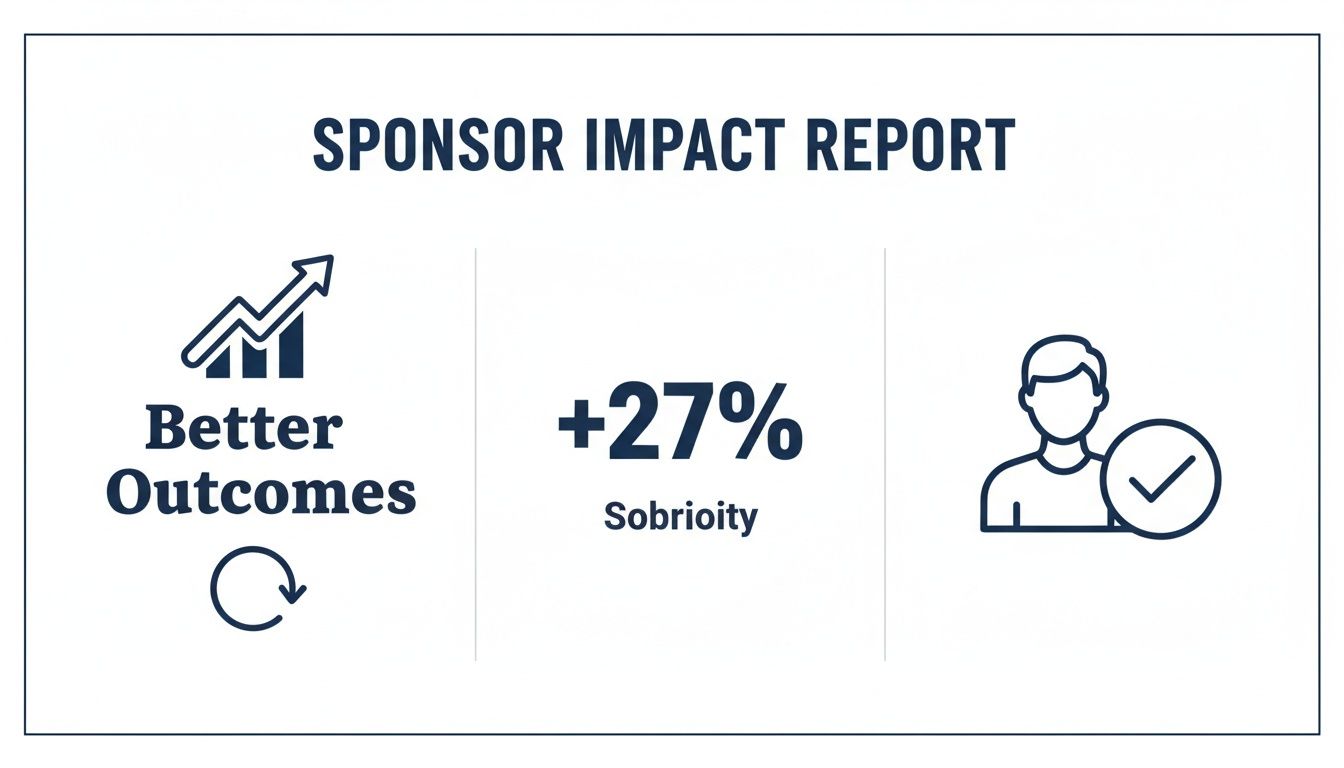
The numbers speak for themselves. In a landmark study of AA members, those with sponsors were found to attend 62% more meetings and had 2.5 times higher odds of staying sober after one year.
This support is especially vital when transitioning from residential treatment back into daily life. Data shows a 50% increase in continuous abstinence over 12 months for people who work with a sponsor during this critical period. It’s clear that the structured guidance and accountability a sponsor provides is a powerful tool for long-term recovery. You can explore the full study on sponsor effectiveness to see the detailed findings.
Establishing Healthy Boundaries in Sponsorship

Knowing what a sponsor does is half the battle. The other half—and arguably the more important part—is understanding what a sponsor does not do. A strong, effective sponsorship is built on clear, respected boundaries that keep the focus exactly where it needs to be: on working the 12 Steps.
Think of these boundaries as the guardrails on a winding road. They aren't there to restrict you; they're there to keep you safe and prevent the relationship from swerving into unhealthy territory. Without them, the whole thing can become unstable and even put your sobriety at risk.
What a Sponsor Is Not
When the lines get blurry about a sponsor’s role, it’s a fast track to problems like codependency, resentment, and a total breakdown of support. To keep that from happening, it's crucial to remember that a sponsor is a guide, not a professional service provider or a stand-in for other life resources.
A sponsor should never be your:
- Financial Lender: Their job is to offer spiritual and step-work guidance, not to be an ATM. Asking for money puts an unfair strain on the relationship and distracts from the real work of recovery.
- Taxi Service: Sure, a sponsor might offer you a lift to a meeting now and then. But they aren't your personal chauffeur. Part of rebuilding your life is learning to manage your own transportation and responsibilities.
- Romantic Partner: This one is a huge red flag. It's highly recommended to find a sponsor of the same gender to avoid any romantic or sexual entanglements. The relationship has to stay platonic to work.
- Emergency Contact or Babysitter: A sponsor isn't on call 24/7 for every life crisis or to handle your personal affairs. They have their own life and recovery to maintain.
Setting these ground rules right from the start isn't about being difficult. It’s about protecting the single most important function of the relationship.
Why Boundaries Are Essential for Recovery
Clear boundaries are what stop sponsorship from turning into just another dependency. The entire point of recovery is to build self-sufficiency, accountability, and a life you can manage on your own terms. A relationship that enables you to lean on someone for money or daily logistics actively works against that goal.
A sponsor's job is to help you stand on your own two feet, not to become a crutch you can't walk without. Healthy boundaries ensure the relationship empowers you rather than enables you.
For our clients in Orange County who are also navigating a dual diagnosis, this distinction becomes even more critical. A sponsor provides incredible peer support for your journey through sobriety, but they are absolutely not trained or equipped to treat co-occurring mental health conditions like PTSD, anxiety, or depression.
The Sponsor and Dual Diagnosis Care
Managing a mental health condition takes specialized, professional care. This is where the different roles in your support system must be respected. Think of it as a team effort: your sponsor guides you through the 12 Steps from their own lived experience, while your therapist at a center like Still Water Wellness provides evidence-based treatment for your mental health.
These two roles are designed to work together, not replace each other. Your sponsor can offer encouragement for the hard work you're doing in therapy, but they can't provide the therapy itself. If your mental health is a struggle, the right person to call is a clinical professional, not your sponsor.
The team here at Still Water Wellness has years of experience helping clients in Orange County build a well-rounded support network that integrates both clinical care and peer guidance. If you need help creating a balanced and sustainable recovery plan, give our admissions team a call at (866) 450-0391 for a completely confidential conversation.
How to Find the Right Sponsor in Orange County
Finding a sponsor can feel like one of the biggest, scariest hurdles in early recovery. It’s a huge step that asks you to be vulnerable, and that takes real courage. The good news is that if you know where to look and what qualities to seek out, the whole process becomes a lot less daunting.
Your search begins in the rooms of 12-Step meetings. By getting out there and trying different meetings across Orange County—from the coast in Newport Beach to the communities in Irvine—you’ll hear from a wide range of people with all kinds of recovery experiences.
For now, your only job is to listen. Really listen. Pay attention to how people share their stories. Does someone's experience click with yours? Do they talk about their sobriety in a way that you admire or hope to have for yourself one day? That little spark of connection is often where a great sponsorship begins.
What to Look For in a Potential Sponsor
Just because someone has been sober for a long time doesn't automatically make them the right sponsor for you. This relationship is too important to leave to chance. As you sit in meetings, keep an eye out for people who have a few key things going for them.
You’re looking for someone who:
- Has the kind of sobriety you want. Their life doesn't need to be perfect, but you should see something in the way they live that inspires you.
- Has worked all 12 Steps. A sponsor can only take you as far as they’ve gone themselves. It's critical that they've actually completed the step-work.
- Has their own sponsor. This is a huge green flag. It shows they’re still committed to their own program and understand how vital it is to have accountability and guidance.
These three qualities are the foundation of a solid sponsor. They ensure the person you ask has both the experience and the humility needed to guide someone else through the work.
The Process of Asking Someone
Once you’ve found someone who seems like a good fit, the next part is mustering up the courage to ask. It can be nerve-wracking, for sure, but remember this is a normal and respected part of the program.
Here’s a simple way to approach it:
- Introduce Yourself: Hang back after a meeting, walk up, and just say hello. You can mention that something they shared resonated with you.
- Keep it Simple: You don't need a big, formal speech. Something as straightforward as, "I'm looking for a sponsor, and I was wondering if you would be willing to sponsor me?" works perfectly.
- Be Ready for Any Answer: Hopefully, they say yes! But sometimes they have to say no for their own reasons.
Remember, a "no" is not a personal rejection. It's actually a sign of a healthy program. It means that person knows their limits and isn't able to give a new sponsee the time and attention they deserve right now.
If they aren't available, just thank them and ask if they can recommend anyone else. This question often points you directly to another great potential sponsor.
For many people navigating early sobriety, a supportive home environment makes all the difference. To learn more about how structured housing complements your recovery work, you can explore our guide on sober living in Orange County.
Overcoming Fear and Taking the Leap
That fear of asking is completely real, but it’s a hurdle you can clear. Your recovery is worth a few moments of discomfort. The right sponsor will become a cornerstone of your new life, offering peer guidance that works hand-in-hand with the clinical care you receive.
Here at Still Water Wellness, we know how pivotal this step is. We frequently help our clients find their footing in the local Orange County recovery community and connect with the right people. If you're struggling and ready to build a life free from addiction, our admissions team is here to talk. Give us a call at (866) 450-0391 for a confidential conversation about getting started.
Weaving Sponsorship into Your Professional Treatment Plan
Recovery isn't a matter of choosing between professional treatment and a 12-step program. The most durable, long-term sobriety comes from weaving them together. Think of clinical care and sponsorship as two different but equally vital parts of your support system, each making the other stronger.
Your clinical team—the therapists, doctors, and case managers at a facility like Still Water Wellness—are the architects of your treatment. They design the blueprint for your recovery, pour the foundation, and build the sturdy frame. Your sponsor is the mentor who walks through the framed house with you, showing you how to actually live in it. They help you arrange the furniture and learn how to use the coping tools in your daily life. You need both to create a life you can live in safely for the rest of your life.
This teamwork is what makes recovery stick. The skills you learn in therapy sessions become real, practical actions you take every day, and the struggles you face out in the world become valuable material to bring back to your therapist.
Making Clinical Skills Work in the Real World
In treatment, you’ll dig into the “why” of your addiction. Through individual and group therapy, you learn to spot your triggers, build a toolbox of coping skills, and practice healthier ways of communicating. But the real test comes when you walk out the door and back into your daily life.
That's where a sponsor acts as a crucial bridge, helping you apply the concepts you learned in a safe setting to messy, unpredictable, real-world situations.
Here’s what that can look like:
- After a relapse prevention group: You just learned about the HALT acronym (Hungry, Angry, Lonely, Tired). That night, you're feeling irritable and restless. Your sponsor helps you make a concrete plan: "Let's make sure you have easy snacks ready. And if you feel that anger creeping up, call me before it boils over."
- Following a family therapy session: You've identified that certain family dynamics trigger your urge to use. With a big family dinner coming up, you and your sponsor can role-play the conversations you need to have, giving you the confidence to set and hold firm boundaries.
- Learning mindfulness in holistic therapy: Meditating for 15 minutes in a quiet room is one thing. Your sponsor can help you use a 30-second breathing technique to navigate a craving while you’re stuck in traffic on the 405.
A sponsor’s job is to help you translate the "what" you learned in treatment into the "how" of day-to-day sober living. They provide the on-the-ground coaching needed to make recovery second nature.
A Key Piece of Your Aftercare Plan
Leaving a structured environment like a residential or partial hospitalization program is a huge step. You're shifting from a place of constant support and accountability back to the wildness of everyday life. This is precisely why having a sponsor lined up before you discharge is so important.
A solid discharge plan is more than just a list of appointments. It’s a network of real, human support waiting for you. By finding a sponsor before you leave treatment, you ensure you have a trusted guide in the recovery community from your very first day on your own. This simple, proactive step makes the transition feel less like a cliff-edge and more like a supported handover. To understand how this support continues, you might find it helpful to check out our guide on how an intensive outpatient program works and see how the levels of care evolve with you.
At Still Water Wellness, we don't just say goodbye at the door. We actively help our clients build this connection into their aftercare plan, knowing that a strong sponsor relationship is one of the best predictors of long-term success here in Orange County.
If you’re ready to build a recovery plan where clinical excellence and dedicated peer support work hand-in-hand, our team is here to help. Call our admissions specialists at (866) 450-0391 for a completely confidential conversation.
Putting It All Together: Your Next Steps to Lasting Sobriety
We’ve covered a lot of ground in this guide, really digging into what it means to have a sponsor. Think of them as a personal guide for your recovery—someone who’s walked this path, knows the terrain, and can point out the pitfalls before you get there. They're your accountability partner and a lifeline to real-world sober living experience.
But a sponsor is one crucial piece of a bigger picture. The most successful recoveries we see are built on a foundation that combines this invaluable peer support with professional clinical care. If you're in Southern California and feeling lost, please know that you absolutely do not have to figure this out on your own. Real help is available right here, right now.
Building Your Personal Recovery Team
Making the choice to get help is a powerful, life-altering decision. It's you making a promise to yourself for a future that isn’t defined by addiction. A full, vibrant life of sobriety is completely within your reach, and it all starts with surrounding yourself with the right people.
A truly resilient support network includes a few key players:
- Clinical Experts: Your therapeutic and medical team. They help you get to the root causes of addiction and provide the tools to manage your mental health, which is essential for long-term healing.
- A Sponsor: Your mentor for the 12 Steps and your go-to person for navigating the day-to-day realities and challenges of living sober here in Orange County.
- A Sober Community: Your fellowship. These are the people who just get it. They’ll celebrate your victories and support you through the tough days without judgment.
To give yourself every advantage, it’s also wise to explore additional comprehensive recovery resources that can complement the work you do with your team.
Picking up the phone to ask for help might feel like the hardest thing you’ll ever do, but it’s not a sign of weakness. It’s an act of incredible courage—a declaration of hope for a better life.
If you’re ready to start building that life, our team is here to listen. Our compassionate admissions specialists are available 24/7. Call Still Water Wellness at (866) 450-0391 for a completely confidential call. Let’s talk about how we can help you begin your journey to lasting wellness today.
Common Questions About Finding and Working With a Sponsor
It’s completely normal to have a ton of questions about sponsorship as you start your recovery journey. The whole idea can seem a bit strange at first. Let's clear up some of the most common worries and questions people have when they're new to the process.
Think of this as your quick-start guide to understanding the practical side of sponsorship, so you can feel more confident taking this crucial step.
What If My Sponsor Isn't the Right Fit?
It happens. Sometimes, you connect with someone and a few weeks later realize it’s just not working. It’s perfectly okay—and sometimes necessary—to change sponsors.
The whole point is to find a guide you trust, someone you can be brutally honest with, and whose sobriety you respect and want to emulate. This isn't a marriage; it's a mentorship. "Firing" a sponsor is a normal, accepted part of recovery. The most important thing is your sobriety, so if you feel you can't be open or their guidance isn't helping, it's on you to find someone who is a better match.
How Much of My Time Will a Sponsor Take?
The time commitment really depends on the two of you, but consistency is key. A very common and effective practice is a quick, daily check-in call. This simple habit helps you start the day with accountability and a focus on your sobriety.
You should also expect to meet regularly, usually once a week, to actually work through the 12 Steps. The best approach is to talk about expectations right away. Having that conversation upfront ensures you and your potential sponsor are on the same page about what the relationship will look like.
Sponsorship is an active partnership, not a passive one. The time you invest in communicating with your sponsor and working the steps is a direct investment in your own long-term sobriety and well-being.
Can I Have a Sponsor of a Different Gender?
While there's no official rule against it, it is strongly recommended that you find a sponsor of the same gender. There's a very simple reason for this long-standing tradition: it keeps the focus strictly on recovery.
Introducing a different-gender dynamic can unintentionally open the door to romantic feelings or complications. That kind of distraction is dangerous when you're doing the life-saving work of the 12 Steps. The goal is a safe, platonic relationship where you can be completely vulnerable without any other agendas. This boundary is there to protect both of you and the integrity of your recovery work.
At Still Water Wellness, we know that building a solid support system is the foundation for lasting recovery in Orange County. If you have more questions about sponsorship or you're ready to get started, our compassionate team is here. Call our admissions specialists 24/7 at (866) 450-0391 for a confidential talk about our personalized treatment programs.