When you're searching for answers about "what is drug rehab like," your mind probably jumps to a hundred different places, most of them shaped by dramatic movies and TV shows. It's easy to feel overwhelmed or even scared by those images.
The truth is, drug rehab is a space for healing, not punishment. It's a place where you can finally take a breath, step away from the daily pressures and triggers, and get the focused support you need to rebuild your life.
Your First Look Inside Drug Rehab in Orange County
Imagine a place that feels less like a sterile hospital and more like a peaceful retreat. Here in Orange County, we believe your environment is a key part of your recovery. It's about creating a calm, safe space where you can finally disconnect from the chaos and start reconnecting with yourself.
The entire experience is built around a few simple, powerful ideas:
- Keeping You Safe: For many, the first step is getting through withdrawal. We ensure this happens under medical supervision, so you can manage symptoms safely and as comfortably as possible.
- Healing from the Inside Out: Through individual and group therapy, you'll start to explore the "why" behind the addiction and develop new, healthier ways to cope with life's challenges.
- Building a Life You Love: Getting sober is just the beginning. The real goal is learning how to live a full, rewarding life without drugs or alcohol.
Think of it this way: Addiction can feel like the foundation of your house has crumbled. Rehab brings in the expert builders, the best materials, and a safe, dedicated worksite to help you rebuild that foundation—stronger and more solid than ever before. You're the architect of your new life; we're the supportive crew helping you build it.
Understanding the Phases of Treatment
Seeing the entire road ahead can feel daunting. That's why we break the journey down into clear, manageable stages. Each phase has its own purpose and builds on the one before it, creating a steady, supportive path toward a future you can feel good about. While everyone's path is their own, this structure helps make the process feel less like a mystery.
To give you a clearer picture, here’s a typical roadmap for the recovery journey at our Orange County facility.
Your Journey Through Rehab: A Step-by-Step Overview
| Phase | Primary Goal | What to Expect |
|---|---|---|
| Detoxification (Detox) | Safely manage withdrawal | Medically supervised care, symptom management, and rest. The focus is on stabilizing your body. |
| Residential/Inpatient | Immerse in healing | Living onsite at our Orange County center, you'll participate in daily therapy (group & individual), educational workshops, and holistic activities. |
| Partial Hospitalization (PHP) | Transition with high support | You live at home or in sober living but attend treatment most of the day, 5-7 days a week. It’s a bridge to more independence. |
| Intensive Outpatient (IOP) | Integrate recovery into daily life | Attending therapy for a few hours, several days a week, while balancing work, school, or family responsibilities. |
| Sober Living & Aftercare | Maintain long-term sobriety | Living in a supportive, substance-free community and engaging in ongoing support like alumni groups or weekly check-ins. |
This step-by-step process ensures you get the right level of support exactly when you need it, gradually empowering you to stand confidently on your own two feet.
If you’re wondering where you or a loved one might fit into this journey, we're here to talk. A completely confidential call with our admissions team can bring so much clarity and peace of mind. Call us anytime at (866) 450-0391 to get the answers you need.
Finding Your Place: The Different Levels of Drug Rehab
When people ask, "What is drug rehab like?" they're often picturing a single, one-size-fits-all program. But the reality is much more personal and flexible. Effective recovery isn’t a single event; it's a journey through what we call the continuum of care. This is just a way of saying that treatment comes in different levels, each designed to give you the right support at the right time.
Think of it like physical therapy after an injury. You don't start by running a marathon. You begin with gentle, guided movements to build strength, and as you get stronger, the exercises change. Healing from addiction works the same way. You start where you are and move forward at a pace that ensures you're building a solid, lasting foundation for your new life.
The First Step: Medical Detox
For most people, the journey begins with medical detoxification. This is the process of letting your body safely clear itself of substances in a controlled and comfortable environment. Trying to quit on your own can lead to painful, and sometimes dangerous, withdrawal symptoms. Detox is about making sure that doesn't happen.
The entire point of detox is to get you physically stable so you can start the real work of recovery. Our medical team is there around the clock to manage your symptoms and make sure you're safe. We want you to start healing with a clear mind, not while fighting your body.
Once you’re stable, you’re ready to dive into the heart of the recovery process: therapy and learning new skills for living. The components all work together to support you.
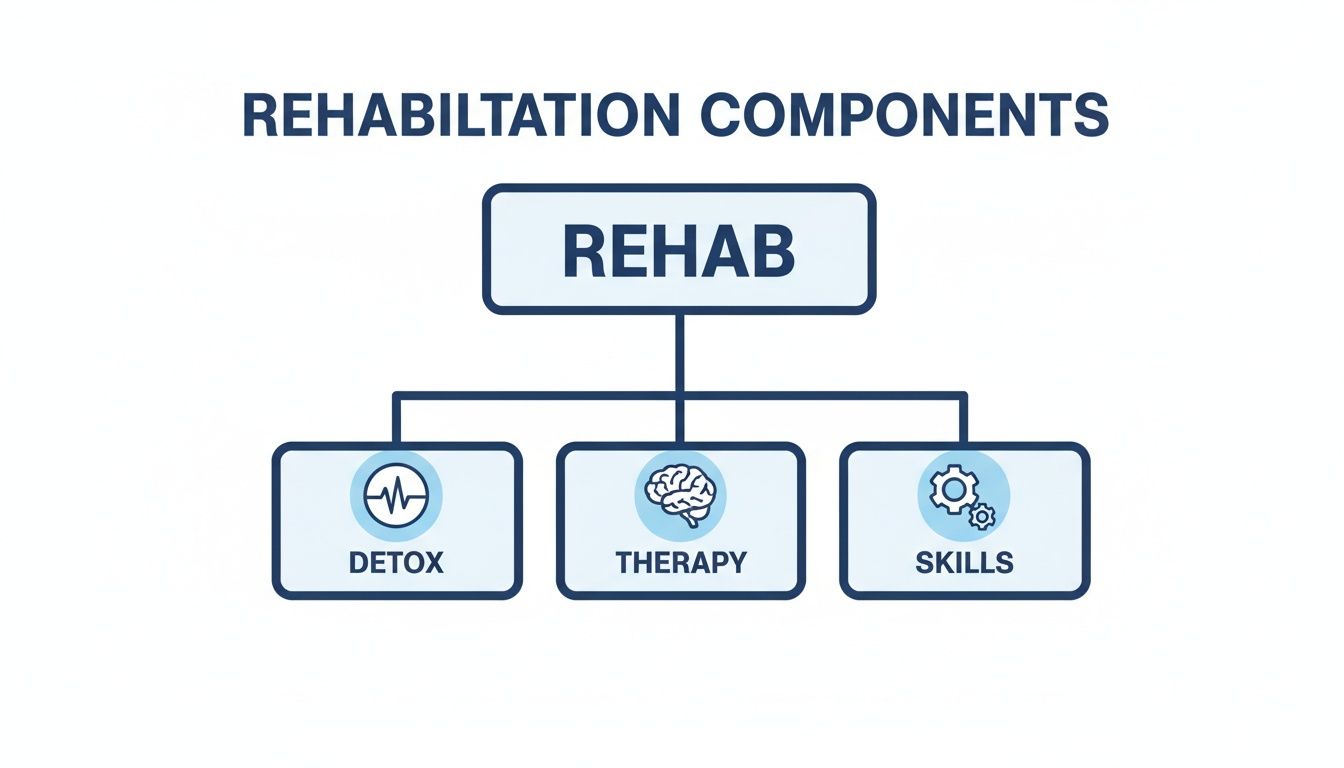
As you can see, rehab isn't just about stopping drug use. It’s a comprehensive approach that addresses the physical dependency (detox), the underlying reasons for the addiction (therapy), and the practical tools you need to build a new life (skills).
Total Focus: Residential Treatment
After detox, many people find their footing in Residential Treatment, often called inpatient care. This is the most intensive level of support, where you live onsite at our peaceful Orange County location. It's a chance to step completely away from the people, places, and stressors that trigger your substance use, allowing you to focus 100% on getting well.
Life in residential care is structured and supportive. Your days will be filled with:
- Individual Therapy: Private sessions with a therapist to dig into your personal story and set goals for your future.
- Group Therapy: Powerful sessions where you connect with others who truly get what you’re going through. This is where so many people realize they aren't alone.
- Holistic Therapies: We believe in healing the whole person. This includes activities like yoga, art therapy, and simply spending time in nature to reconnect with yourself.
This immersive environment is a safe harbor where you can build the core strength you'll need for long-term sobriety.
Building Independence: PHP and IOP
As you grow stronger and more confident in your recovery, you won't need as much intensive support. The next steps are designed to help you ease back into your daily life without losing the safety net of treatment.
- Partial Hospitalization Program (PHP): Think of PHP as a full-time job focused on your recovery. You’ll be at our facility for treatment several hours a day, five to seven days a week, but you'll head home or to a sober living house at night.
- Intensive Outpatient Program (IOP): IOP offers even more flexibility. Treatment sessions are shorter—just a few hours a day, three to five days a week—making it easier to manage work, school, or family obligations while staying committed to your recovery.
Each of these "step-down" programs is a vital part of the transition. You can get a closer look at how we tailor this journey on our page explaining the different levels of care.
The Bridge Back to Your Life: Sober Living
The final piece of the puzzle for many is Sober Living. This is a substance-free home where you can live with peers who are also committed to recovery. It’s the perfect bridge between the highly structured world of residential treatment and the full independence of being back on your own. It provides accountability and a built-in support system as you begin to test your wings.
This entire continuum is designed to meet you where you are and walk with you every step of the way. If you're in Orange County and feel ready to find your place on this path, give our admissions team a call at (866) 450-0391. We’re here for a confidential, no-pressure chat about what comes next.
What a Typical Day in Residential Treatment Looks Like
It’s completely normal to feel nervous about what rehab is really like. Most people picture a cold, sterile hospital or something even worse. That’s why one of the first questions we get is, "So, what do you even do all day?" Let's pull back the curtain and show you.
Forget any harsh, clinical images you might have. A day in residential treatment, especially here in our peaceful Orange County setting, is structured, but it's also incredibly supportive. The entire day is thoughtfully planned to help you heal—there's no pointless busywork, just purpose.
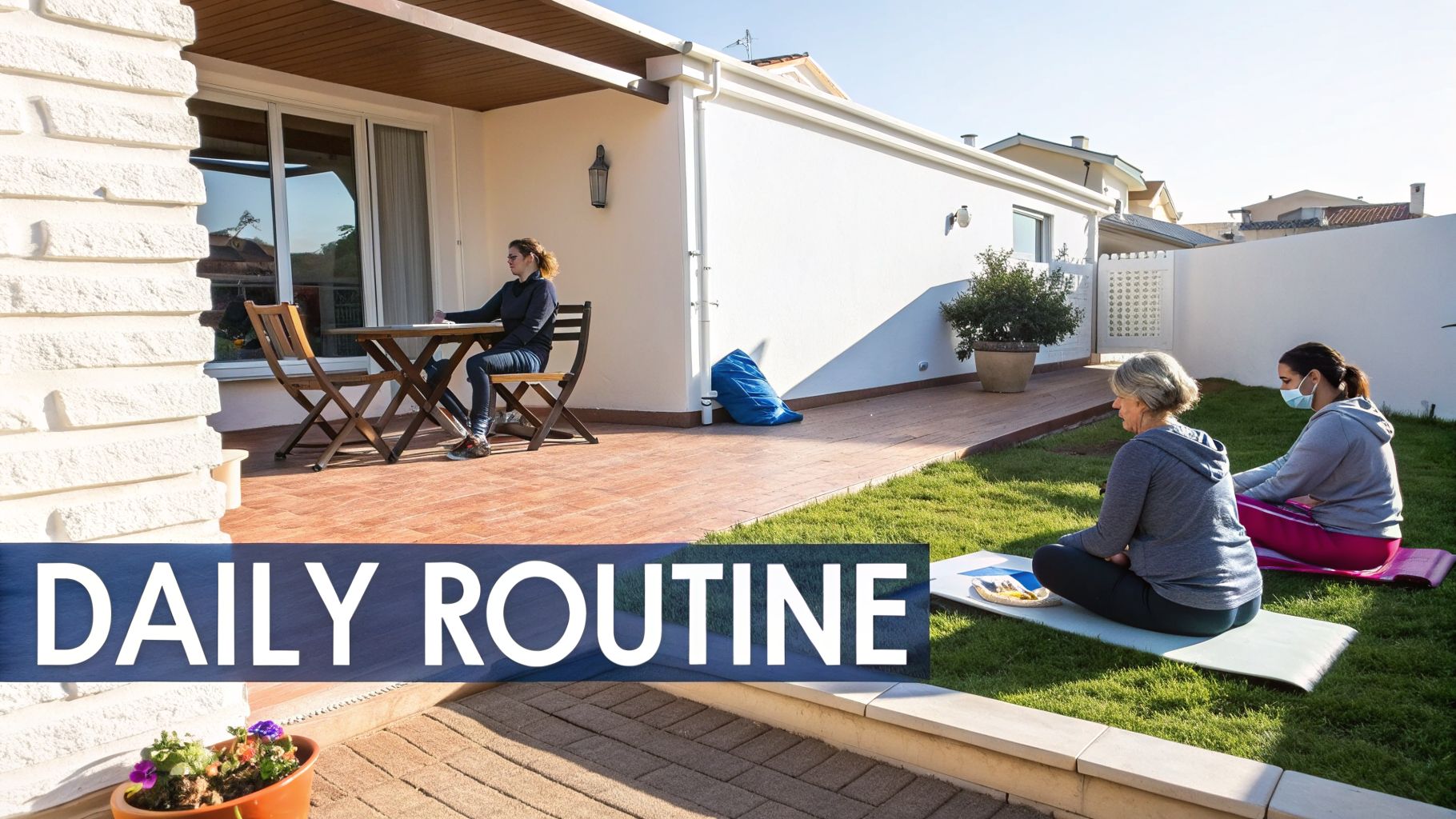
A Grounded Start to the Morning
Mornings here aren't about harsh alarms and rushing around. We start the day by grounding ourselves, which makes all the difference for the work that comes later.
You might find yourself in a guided meditation session to quiet the racing thoughts or a gentle yoga class to get back in touch with your body. These practices are amazing for easing anxiety and setting a calm, focused tone for the day. Afterward, you’ll join the community for a nutritious, chef-prepared breakfast that actually makes you feel good.
The Core of Your Day: Therapy and Real-World Skills
The middle of the day is when the deep healing work really happens. This is where you’ll learn, process, and start building a new set of skills in a place where you feel completely safe to do so. Your schedule will be a mix of different types of therapy.
- Individual Therapy: This is your one-on-one time with your dedicated therapist. It’s a private space to dig into the personal reasons behind your addiction, work through trauma, and chart a course for the future you want.
- Group Therapy: There's nothing quite like sitting in a room with people who just get it. In group, you share your experiences and listen to others without fear of judgment. It’s a powerful reminder that you aren’t carrying this weight alone.
- Educational Workshops: This is the "how-to" part of recovery. We cover practical topics like the science of addiction (so you know what you’re up against), how to spot your triggers, and what to do when a craving hits.
Think of this part of the day like building a toolkit for your new life. Each therapy session and workshop adds another essential tool—a coping skill, a communication technique, a self-care practice—that you can rely on long after you leave our Orange County center.
This is the foundation of a strong recovery. Our job is to give you the insight and the strategies to handle life’s curveballs without falling back on old habits. If you're ready to start building that foundation, call us at (866) 450-0391 for a completely confidential conversation.
Afternoons for Reconnecting, Evenings for Reflection
Recovery is about more than just therapy; it’s about learning how to live a full, balanced life again. We intentionally balance the morning’s deep emotional work with activities that heal your mind, body, and spirit, all set against the backdrop of our beautiful Orange County location.
Afternoons might be spent:
- Finding new ways to express yourself in Art Therapy.
- Clearing your head and moving your body on a Nature Hike.
- Letting go of stress during a deeply relaxing Sound Bath.
This mix is so important for whole-person healing. You can explore more examples by reading about our inpatient rehab activities and see how they fit into the bigger picture.
As evening approaches, the pace slows down. It's a time for quiet reflection, maybe by attending a 12-step meeting, journaling about the day's breakthroughs, or just unwinding with your peers. This calm, structured end to the day helps you absorb everything you’ve learned and rest up for another day of healing.
The Therapeutic Heart of Recovery
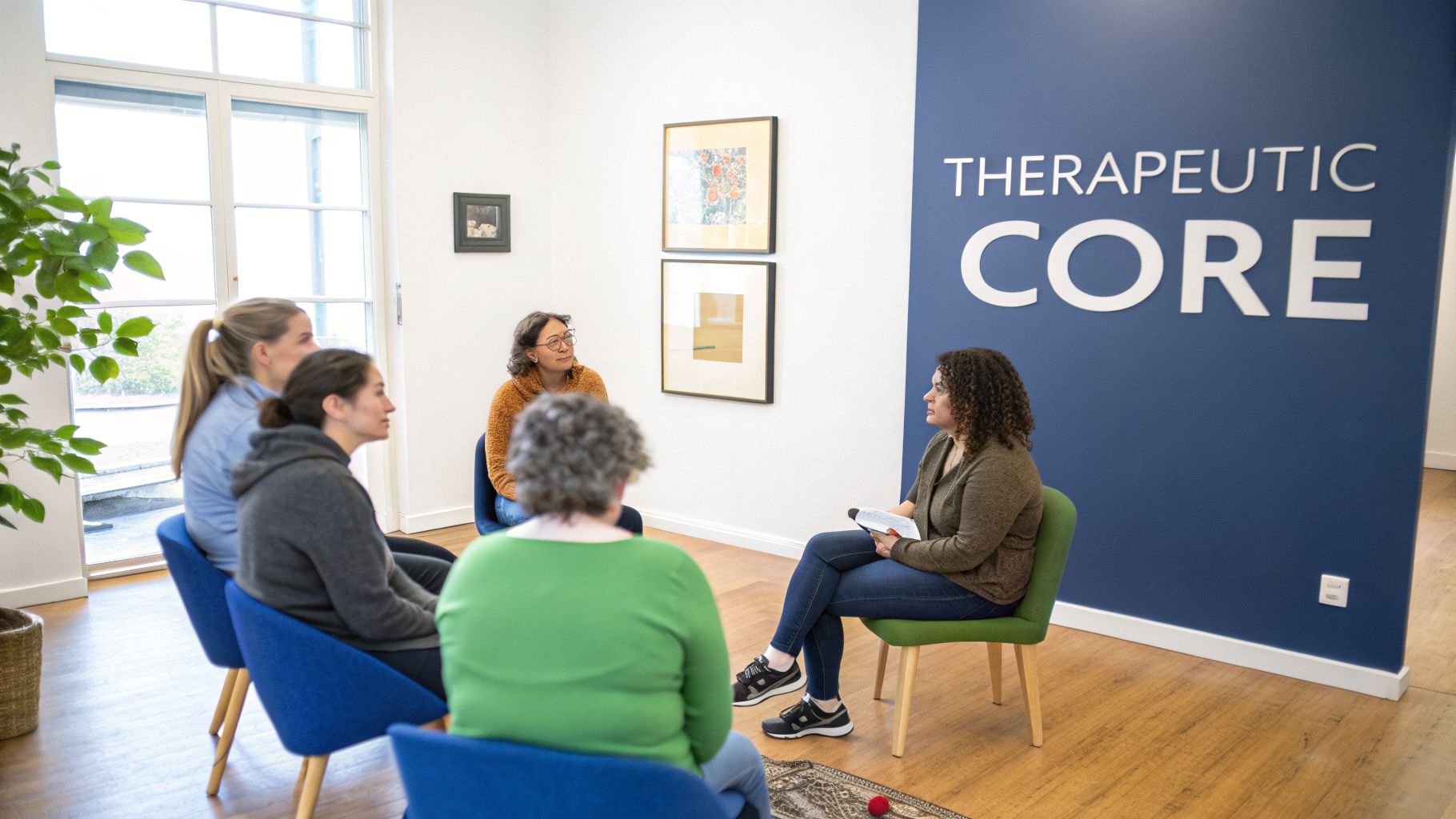
While a safe space and a predictable schedule are the foundation of rehab, therapy is where the real, life-altering work happens. This is where we move beyond simply not using and start digging into the why—the feelings, thoughts, and past experiences that fuel addiction. It’s a process of gently rebuilding from the inside out.
Because this journey is so personal, we don't believe in a one-size-fits-all approach. We combine a number of powerful therapeutic practices to find what truly clicks for you. The point isn’t just to talk; it’s to equip you with real, practical tools for a completely new way of living.
Rewiring Your Brain with Evidence-Based Therapies
We know from years of research that addiction isn't a moral failing; it actually changes the physical pathways in your brain. The therapies we use are proven methods designed to help you forge new, healthier neural pathways.
Think of your brain as a forest. Over time, addiction has worn deep, easy-to-follow trails that lead straight to substance use. Therapy doesn't just put a roadblock on those old trails. It helps you clear, pave, and light entirely new ones. Eventually, these new paths become your natural, go-to routes for navigating life’s challenges.
Two of the most effective tools for this are Cognitive Behavioral Therapy (CBT) and Dialectical Behavior Therapy (DBT).
- Cognitive Behavioral Therapy (CBT): This is all about learning to catch and challenge the automatic negative thoughts that drive addictive behavior. You’ll learn to recognize a thought like, "I've had a terrible day, I deserve to use," and consciously replace it with something more true and empowering, like, "I've had a terrible day, and I deserve to handle it in a way that I’ll be proud of tomorrow."
- Dialectical Behavior Therapy (DBT): DBT is a game-changer, especially for those of us who feel hijacked by intense emotions. It teaches four core skills: mindfulness, tolerating distress, regulating emotions, and building healthier relationships. It gives you the incredible power to sit with discomfort without feeling the overwhelming urge to escape.
These aren't just abstract discussions; they are hands-on training for your mind. You'll practice these new skills in a supportive setting, building the confidence to use them when you walk back out into the world. It’s also common for addiction to walk hand-in-hand with other mental health challenges, and part of this work involves understanding the connection between cannabis and mental health, as well as its relationship with other substances.
The Power of One-on-One and Group Sessions
Your therapy experience is a blend of two crucial settings.
Individual therapy is your time. It’s a completely private space with your dedicated therapist to unpack personal history, trauma, and anything else that feels too sensitive for a group. This is where you can be totally vulnerable and build a recovery plan that is 100% yours.
Group therapy, on the other hand, is where you discover the most healing phrase in existence: "Me too." There is an incredible power in sharing your story with others who just get it. It dismantles the shame and isolation that addiction feeds on and builds a powerful bond of shared experience that often becomes a lifelong support system.
Healing the Whole Person: A Holistic Approach
We know that true, lasting recovery goes beyond the mind. It means healing your body and spirit, too. That’s why we weave holistic practices into every person’s treatment plan, helping you reconnect with your whole self and find healthy ways to manage stress.
Some of the holistic therapies we offer include:
- Yoga and Meditation: These ancient practices are amazing for calming an agitated nervous system, reducing anxiety, and teaching you to stay grounded in the present moment—a vital skill for riding out cravings.
- Art and Experiential Therapy: Let's be honest, sometimes words just aren't enough. Expressing yourself through a painting or finding clarity on a hike can unlock feelings and insights that talk therapy alone might not reach.
- Reiki and Sound Baths: These gentle therapies use subtle energy and sound frequencies to promote deep relaxation, helping to release emotional blockages and support your body’s own healing intelligence.
By combining proven, evidence-based methods with these soulful, holistic practices, we help you build a recovery that's resilient from every angle. If you're curious to learn more about our specific approaches, we have a helpful guide on what motivational interviewing therapy is and how it empowers change.
If you’re ready to see how this approach can make a difference for you or someone you love, our team is here to listen. Give us a call at (866) 450-0391 for a confidential, no-pressure conversation.
Starting Your Journey to Recovery in Orange County
Making the decision to seek help takes incredible courage. We know that the time between deciding you need help and actually getting it can be filled with anxiety and a million questions. What will it be like? Can I afford it? What do I even say on the phone?
We get it. That's why we’ve made our admissions process as simple and human as possible. There are no hoops to jump through and no confusing forms to fill out. It all begins with a simple, confidential conversation.
A Straightforward Path to Getting Help
When you’re ready, help should be ready for you. Our entire process is designed to meet you where you are, with compassion and clarity. An experienced guide from our team will walk with you through every step.
Make a Confidential Call: The first step is to call us at (866) 450-0391. This call is 100% confidential and completely free of any obligation. Think of it as a safe space to ask your questions, share what's been going on, and just get a feel for who we are.
A Conversation About You: During that first call, one of our caring admissions coordinators will gently guide you through a free clinical assessment. This isn't a test or an interrogation; it's a conversation. It’s how we begin to understand your story—your experiences with substance use and any mental health struggles you're facing—so we can be sure we’re the right team to help you.
This initial chat is simply about connection. It's the first step in creating a recovery plan that truly fits you. We're here to listen and understand, ensuring the path we map out is built on your unique needs from the very start.
We'll Handle the Logistics, You Focus on Healing
Concerns about insurance, travel, and cost can feel like a huge barrier. Our team is here to take that weight off your shoulders. We handle the practical details so you can put all your energy into what matters most: getting better.
Verify Your Insurance: We know the cost of treatment is a real concern for most people. We accept most major insurance plans and will take care of the entire verification process for you. Our specialists work directly with your insurance provider to figure out your coverage, making sure you understand everything clearly with no surprises.
Plan Your Arrival: Once the insurance details are sorted out, we’ll help you plan your travel and set an admission date. Whether you're coming from just down the road in Irvine or from across the state, we'll work with you to make your arrival at our Orange County facility as smooth and stress-free as possible.
What Should I Pack for My Stay?
Thinking about what to bring can be stressful, so we’ve put together a simple list to help you prepare. The goal is to be comfortable so you can settle in and focus on your recovery.
- Comfortable Clothing: Plan on bringing about a week's worth of casual clothes. Think layers that work for indoor group sessions and comfortable shoes for light outdoor activities like walks around the property.
- Personal Toiletries: Please bring new, unopened, and alcohol-free hygiene products. This includes your toothbrush, toothpaste, shampoo, soap, etc.
- Important Documents: Don't forget your ID, insurance card, and a list of any prescription medications you're currently taking.
- A Journal and Pen: Many people find that writing is a powerful way to process thoughts and feelings during their stay. We highly recommend it.
- Contact Information: It's a good idea to bring a written list of phone numbers for family members and other supportive people you'd like to stay in touch with.
Taking this step is a true act of hope. Our team is here and ready to welcome you with the support and guidance you deserve. Call us at (866) 450-0391 whenever you're ready to start the conversation.
Building a Life of Lasting Sobriety After Rehab
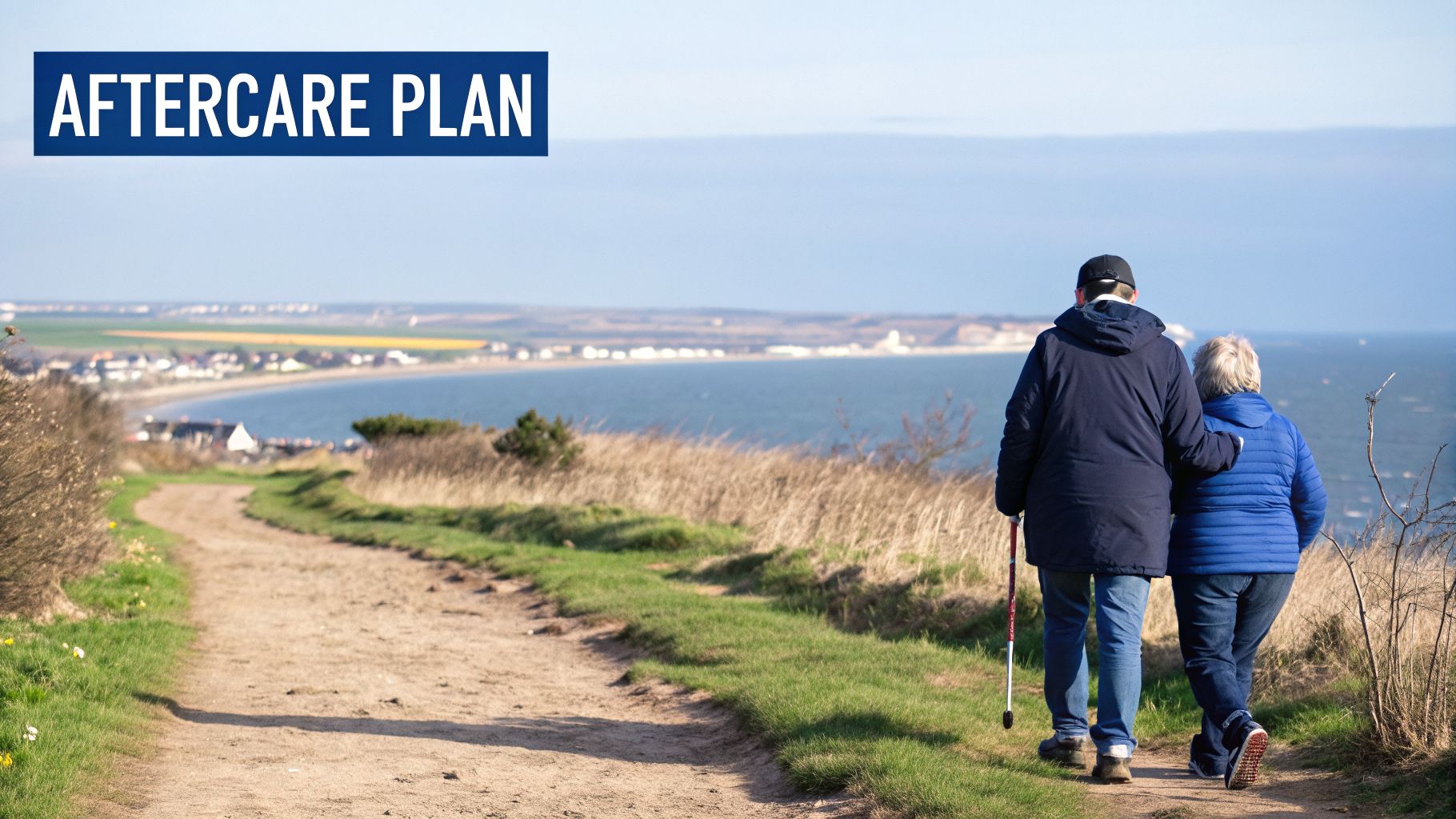
Graduating from our Orange County drug rehab program is a huge accomplishment, and you should be incredibly proud. But here’s the thing we’ve learned from years of experience: it’s not the finish line. It’s the starting line for the rest of your life in recovery.
The real work of staying sober begins the moment you step back into your daily routine. That’s why we never just say "goodbye and good luck." Instead, we make sure you leave with a solid, personalized aftercare plan in hand.
Think of your aftercare plan as a personalized game plan for life after treatment. It's your guide to navigating challenges, knowing who to call for support, and staying on track when life gets complicated.
This isn't just a formality; it’s a practical tool we build with you. It’s designed around your specific history, your strengths, and the real-world situations you’ll be facing.
Your Blueprint for Long-Term Success
Your aftercare plan is a living document, meant to adapt as you grow in your recovery. It’s arguably one of the most important parts of your time with us, giving you the structure and confidence needed to transition home.
A strong plan typically includes a few key elements:
- Ongoing Therapy: Continuing with individual therapy or group sessions helps you keep building on the skills you worked so hard to learn.
- Support Group Meetings: We’ll help you find and connect with local 12-step groups like AA and NA, or other peer communities that fit your needs.
- Sober Living Arrangements: If you need more structure before returning home, we can help arrange a move into a safe and supportive sober living environment.
- Relapse Prevention Strategies: Together, we’ll identify your personal triggers and create a clear, step-by-step plan for what to do when cravings or tough situations arise.
Understanding Relapse as Part of the Journey
It's so important to talk openly about relapse. The fear of it can feel heavy, but we see it for what it is—a potential setback in managing a chronic health condition, not a moral failing. The National Institute on Drug Abuse notes that relapse rates for addiction are between 40 and 60 percent in early recovery.
That number might sound scary, but it’s similar to relapse rates for other chronic illnesses like asthma or high blood pressure. And the news gets much better: after five years of continuous sobriety, the risk of relapse drops to less than 15 percent. To learn more about recovery statistics, you can explore these insights on addiction recovery.
Knowing this helps take away the shame. If a relapse happens, it doesn’t mean you’ve failed; it simply means your treatment plan needs a tune-up. Our commitment to you doesn’t end at graduation. We’re here to help you get back on your feet, adjust your strategy, and keep moving forward.
Our entire goal is to prepare you for a fulfilling life long after you leave our facility. If you’re ready to build a hopeful, sustainable future for yourself or someone you love, call us at (866) 450-0391.
Frequently Asked Questions About Drug Rehab in Orange County
It’s completely normal to have a ton of questions when you’re thinking about rehab. In fact, it’s a good thing. It means you’re taking this step seriously. Let's walk through some of the most common concerns we hear from people just like you, so you can get the clear answers you deserve.
How Do I Know if I Really Need Drug Rehab?
This is often the first and biggest hurdle. If you're asking the question, it's a sign that something feels wrong. A good rule of thumb is this: if using drugs or alcohol is causing problems in your life—with your health, your job, your family, or your finances—and you can't seem to stop on your own, it's time to get help.
Rehab isn't a punishment; it's a safe, supportive place to figure out why you're using and learn how to live without it. A quick, confidential call with our team at (866) 450-0391 can help you figure out what’s next, with no pressure or commitment.
Can I Lose My Job for Going to Rehab?
This is a huge source of anxiety for so many people, and it's a valid fear. The good news is, you have rights. Federal laws like the Family and Medical Leave Act (FMLA) and the Americans with Disabilities Act (ADA) are in place to protect your job while you seek treatment for a substance use disorder.
Our admissions team has a lot of experience helping clients handle this part. We can walk you through the process and help you figure out the best way to manage things with your employer, discreetly and professionally.
Your health has to come first. Taking the time to get well is a sign of incredible strength, and you shouldn't have to risk your career to do it.
What Is Dual Diagnosis Treatment?
You'll hear this term a lot. Dual diagnosis simply means that someone is dealing with two things at once: a substance use disorder and a co-occurring mental health condition like depression, anxiety, or PTSD. It’s incredibly common.
At Still Water Wellness, we treat both conditions simultaneously. Think of it this way: addiction and mental health are deeply intertwined. Trying to treat one without addressing the other is like trying to patch a tire without pulling the nail out first. An integrated approach is the only way to create real, lasting recovery.
How Much Does Rehab Cost and Does Insurance Cover It?
Cost is another major worry, but it’s often more manageable than people think. The exact price depends on the level of care you need and how long you stay, but most major insurance plans provide coverage for addiction treatment.
Our admissions specialists are experts at this. They’ll work directly with your insurance company to make sure you get the maximum benefits you’re entitled to, which dramatically reduces what you have to pay out-of-pocket. We offer a fast, free, and totally confidential insurance check to give you a clear picture right away.
At Still Water Wellness Group, our job is to bring clarity and support to this process. We want you to feel confident taking this life-changing step. If you're ready for a compassionate, no-judgment conversation about our programs in Orange County, please call us today at (866) 450-0391 or get more information at https://stillwaterwellness.com.