
Finishing detox or residential treatment can feel strangely quiet. The schedule disappears, the support team steps back, and a family suddenly has to answer a new question, what kind of place helps recovery hold together in the world?
That question matters even more in Costa Mesa, where sober living is dense, visible, and tightly regulated. A good home can give someone room to practice daily routines, rebuild trust, and stay connected to support. A poor fit can add confusion, conflict, and risk at the exact moment stability matters most.

For families trying to understand the emotional side of this transition, a helpful companion read is supportive housing and mental health, especially when depression is part of the picture.
Your Next Step After Treatment
A discharge day can bring relief and panic in the same hour. A person may leave detox, residential treatment, or a partial program feeling clear-headed, then realize that going straight home could put the gains at risk. That's where a sober living home often fits, as a bridge between intensive care and independent life.
Sober living homes Costa Mesa are most useful when recovery still needs structure after the clinical part of treatment ends. The house provides accountability, routine, and a place to live while a person practices the habits learned in treatment, such as keeping appointments, using coping skills, and staying connected to support.
Practical rule: if the home environment is chaotic, triggering, or too easy to isolate in, the next step should add structure, not remove it.
Costa Mesa matters because it's not a generic housing market. The city has become a closely watched recovery hub, which means families need to think about more than availability. They need to think about legality, neighborhood fit, and whether a home is built to support recovery without crossing into treatment services it isn't allowed to provide.
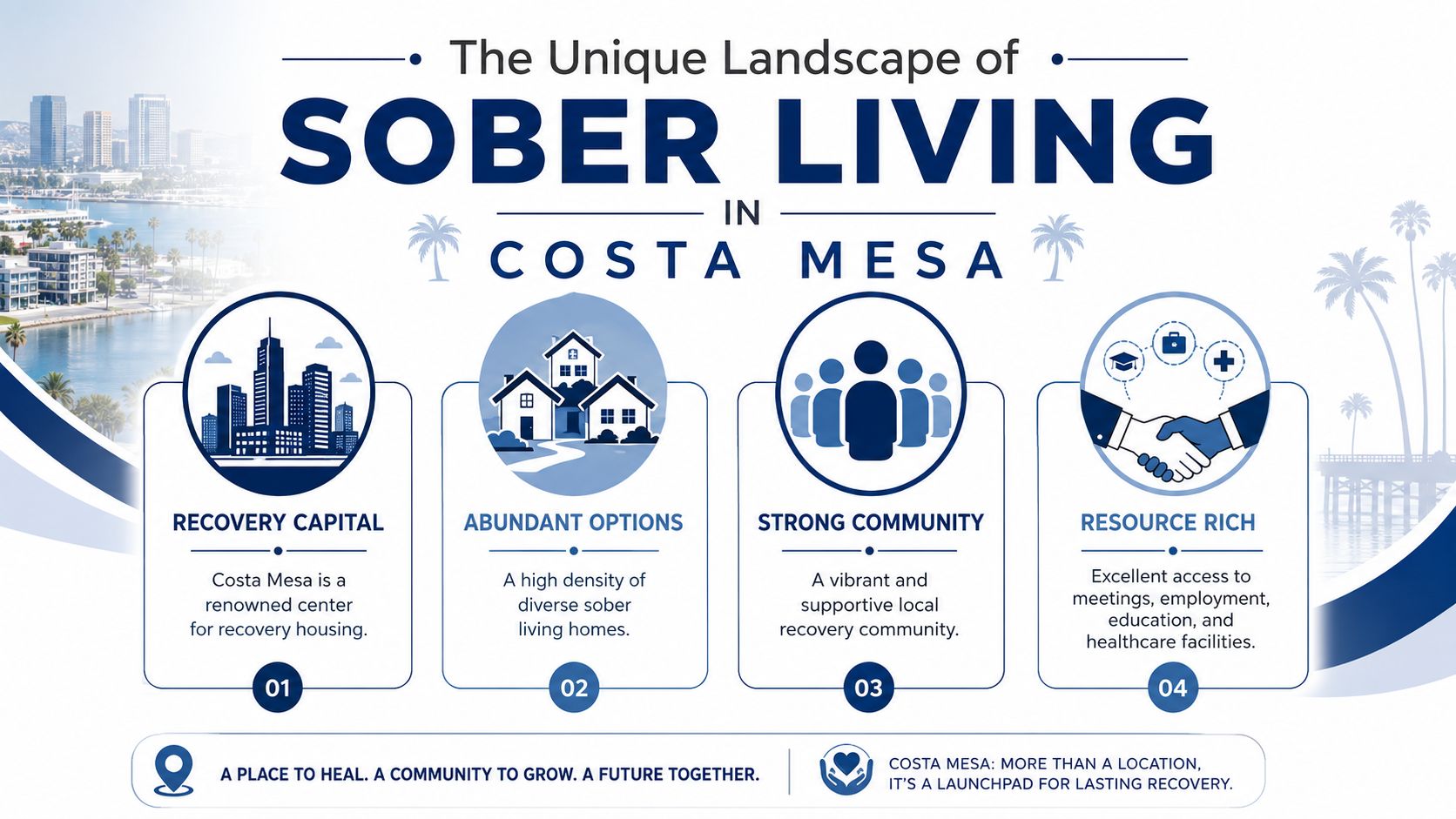
The strongest homes don't promise to do everything. They create a stable place to live, they set expectations, and they give residents room to keep rebuilding day by day.
Understanding Sober Living in Orange County
A family may feel relieved after treatment ends, then realize that a quiet return home can leave too much room for old habits to creep back in. Sober living fills that gap by giving a person a place to live while they keep practicing recovery routines in everyday life.
Sober living homes Costa Mesa are peer-supported, non-clinical residences. In Costa Mesa, the city says these homes are not permitted to provide detoxification, counseling, or formal recovery-planning services, and residents must be enrolled in outside support groups like AA or NA City of Costa Mesa general information. That line matters because it separates housing from treatment. A sober home provides a stable place to live in recovery, while therapy and clinical care still happen elsewhere.
A useful way to understand the setup is to see it as a practice field, not a clinic room. The resident still needs to attend meetings, follow house expectations, and handle real-life responsibilities. The home supports those habits through structure, but it does not replace outpatient care or other clinical services.
What the daily structure usually does
House rules exist to make early recovery more predictable. Curfews, testing, chores, meeting attendance, and expectations around work or school may all be part of that routine. The point is not punishment. The point is to reduce the number of choices a person has to make while judgment is still rebuilding.
A house manager often keeps the home organized and enforces expectations. Residents may be asked to wake up on time, keep the property clean, and stay connected to recovery meetings. Those routines can look ordinary on paper, yet they matter because early recovery often slips in unstructured hours, not during planned appointments.
Costa Mesa's own framework makes the residential nature of these homes even clearer. The city says larger homes and licensed recovery facilities belong in multi-family zoning, while single-family areas are limited to six or fewer residents Costa Mesa group home information. That zoning difference shapes the feel of each neighborhood, and it also shapes what kind of home can legally operate there. Families who want to compare options should also understand how local rules affect nearby care access, including resources such as detox centers in Costa Mesa.
For families comparing options, the key question is not only whether a bed is available. It is whether the home creates an ordinary, steady daily life that helps someone stay sober when no one is watching.
The Unique Landscape of Sober Living in Costa Mesa
A family can tour several sober homes in Costa Mesa and still feel unsure which one is the right fit. The challenge is not only finding a bed, but understanding how the city's rules shape where a home can operate, how close it can be to another facility, and what kind of daily structure it can legally maintain.
Costa Mesa became a major recovery housing market because the supply grew quickly and the city had to respond. Between January 2014 and September 2015, the city reported a 25.4% increase in sober-living and residential care facilities in multiple-family zones, along with 142 additional beds, a 20.6% increase in capacity Costa Mesa report. By September 2015, the city said it had 84 residential facilities in that zoning category. That density is one reason the city still draws so much attention, and it helps explain why families need to look beyond appearances.
The local market also became unusually regulated. Costa Mesa requires a conditional use permit in many cases and a 650-foot separation from another sober living home or DHCS-licensed recovery facility. In plain language, a property can look suitable on one block and become unusable a few streets away if it falls inside the buffer.
That matters for families because density affects more than availability. It affects oversight, neighborhood fit, and the chance that a home has cleared local requirements before it opens its doors. A home that can explain its permit status, zoning fit, and resident limit is giving the kind of information a serious consumer should ask for. Families who are also comparing care paths after detox can review detox centers in Costa Mesa to understand how that step connects to residential placement.
The legal history also helps explain why Costa Mesa stands out. A later court decision upheld the city's ordinances and noted the six-resident limit and 650-foot buffer Ninth Circuit affirmation. That does not make every home a good fit, but it does show that the local rules are part of a long-running effort to balance recovery housing with neighborhood planning.
Watch for this: a home that will not clearly explain how it fits Costa Mesa's zoning and permit rules deserves extra scrutiny.
How to Evaluate and Choose the Right Home
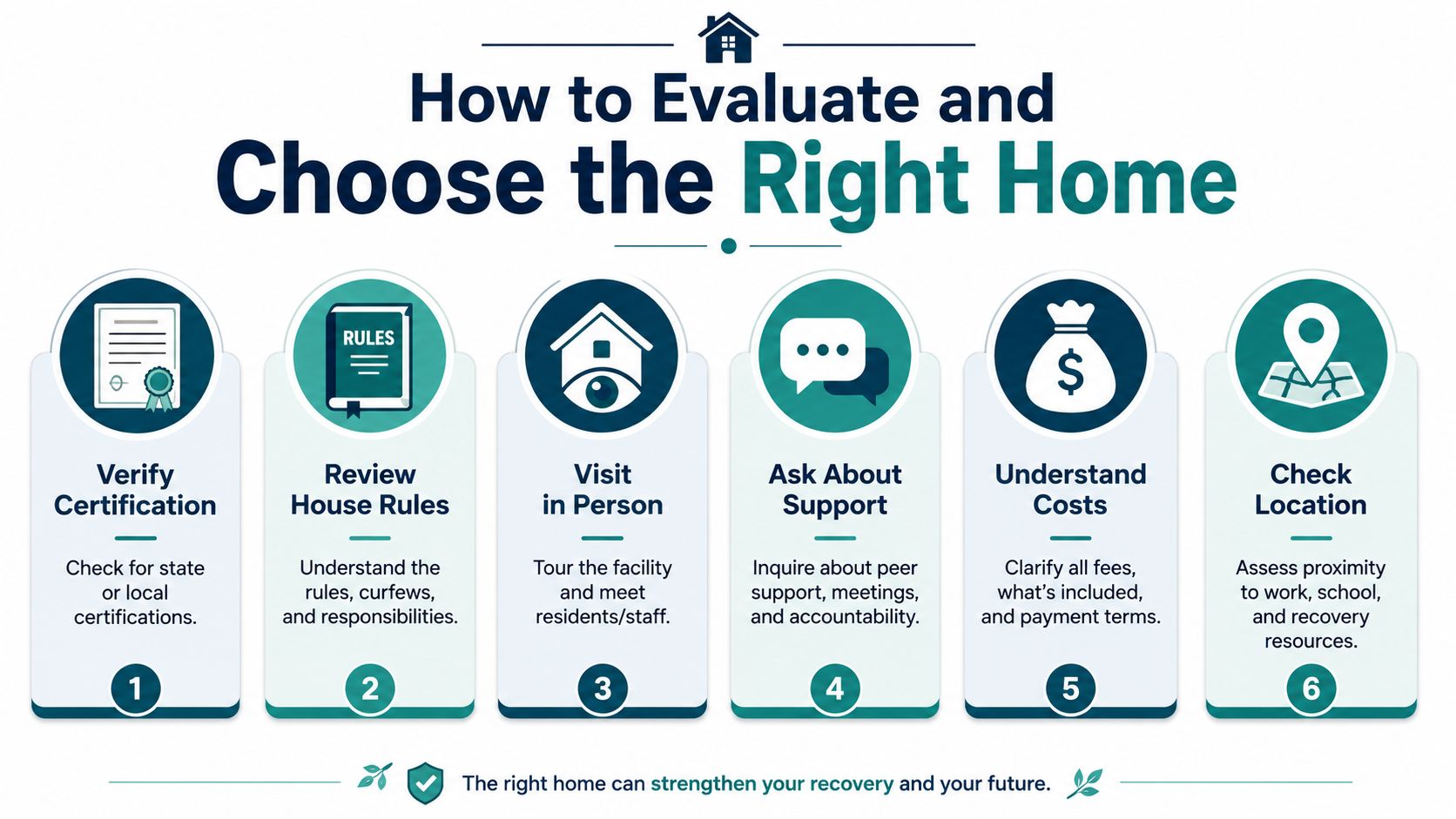
The safest way to shop for a sober home is to ask for specifics and compare the answers, not the décor. Photos can make almost any property look calming. The key difference shows up in the rules, the staff's consistency, and the way the house handles hard days.
Ask about accountability before you ask about amenities
Start with the basics. Ask how sobriety is monitored, how often residents are tested, what happens if someone relapses, and how house rules are enforced. A home that answers clearly is usually easier to trust than one that stays vague.
Also ask who runs the home. Costa Mesa's 2017 rule revisions required operators to disclose their ownership interests and whether they had held a similar permit elsewhere and whether it had ever been suspended or revoked Los Angeles Times report. That's useful information for families too, because a transparent operator should be able to answer the same kind of questions without hesitation.
Look at culture, not just compliance
A house can meet technical rules and still be a bad fit. Families should pay attention to how residents speak to each other, whether the space feels calm, and whether staff or house leadership seem organized. If the tone is chaotic or defensive, that often shows up later in how the home handles conflict.
The best questions are practical:
- What happens if a resident is late or misses a required meeting?
- How are guest policies enforced?
- What expectations are there for work, school, or volunteering?
- How much notice is required for a change in schedule?
- Are residents expected to participate in recovery meetings off-site?
Red flags that deserve attention
Some warning signs are easy to miss when a family is under stress. High turnover, unclear rules, pressure to sign quickly, or a refusal to discuss relapse procedures can all point to a weak setup. So can a home that pushes a specific outpatient program as the only acceptable choice, because that can blur the line between housing and treatment coordination.
For residents who still need treatment planning alongside housing, an internal resource like sober housing network can help frame the bigger transition, especially when the next step needs to include both structure and clinical support.
A legitimate home should be able to explain how it works in daily life, not just how it looks online.
Practical Considerations Cost Duration and Local Resources
A family often feels the financial side first. Sober living is usually housing, not medical care, so rent is often separate from treatment costs. That means the room, the recovery support, and any outpatient services need to be sorted out as different pieces of the plan. If a person still needs clinical care, keep that conversation separate from the housing decision and use a sober living program as one part of the next step, not the whole answer.
The easiest way to avoid confusion is to ask what the monthly payment covers. Some homes include utilities or testing in the rent, while others list those items separately. The structure can vary. The important part is that the family understands the total cost before move-in.
What to clarify before move-in
- Rent and billing timing: Ask when payment is due and whether there are late fees or deposit terms.
- Included services: Confirm whether testing, utilities, internet, or transportation help are included.
- Separate care costs: If the resident is also in therapy or an outpatient program, confirm those charges are separate.
- Budget reality: Make sure the resident can keep up with the monthly commitment without relying on unstable income.
Costa Mesa's local rules also shape the housing choice in practical ways. In single-family zones, sober living homes are limited to six or fewer residents and must keep a 650-foot buffer from similar facilities. That matters because a smaller resident count changes privacy, roommate mix, and the feel of the home itself. Families should ask directly how the house meets those requirements and how that affects daily living.
Local planning should include the everyday basics
A stable recovery plan needs more than a room. The resident still has to get to work, meetings, and appointments without constant strain. So it helps to check transportation, commute time, and whether the location fits the person's routine. A home that looks fine on paper can become difficult if the resident has no reliable way to get around.
Insurance questions can matter too, especially when a family is helping sort out the rental side of recovery. A California renters insurance guide can be a useful reference when reviewing coverage questions tied to a housing situation.
Costa Mesa can work well for recovery, but only if the plan matches real life. The person still needs a bed, a schedule, a way to get to treatment or meetings, and enough stability to keep showing up.
A Smooth Transition to Sober Living with Still Water
A good sober living decision is usually part of a larger aftercare plan, not a stand-alone fix. When the timing is right, the right home can help a person stay accountable while moving back into work, school, family life, and daily responsibility. That's the goal, stable progress, not a rushed return to independence.
For families who want help sorting through the available local options, Still Water Wellness Group offers treatment and aftercare planning that can include sober living support through its sober living program. That kind of coordination matters in a city like Costa Mesa, where the rules are specific and the differences between homes can be easy to miss.
A strong transition plan starts with honest questions. Does the person need detox first, outpatient care, a sober residence, or a combination of those steps? Does the home fit the person's recovery stage, transportation needs, and support level? Those answers should guide the decision, not the pressure of a discharge date.
A CTA for Still Water Wellness Group. Call (866) 450-0391 for a confidential conversation about aftercare planning, sober living options, and the next safe step in recovery.